
Yes No Oracle
Yes No Oracle is a free tarot-inspired tool that provides instant Yes, No, or Maybe signals to help you reflect on decisions and reduce uncertainty.
Visit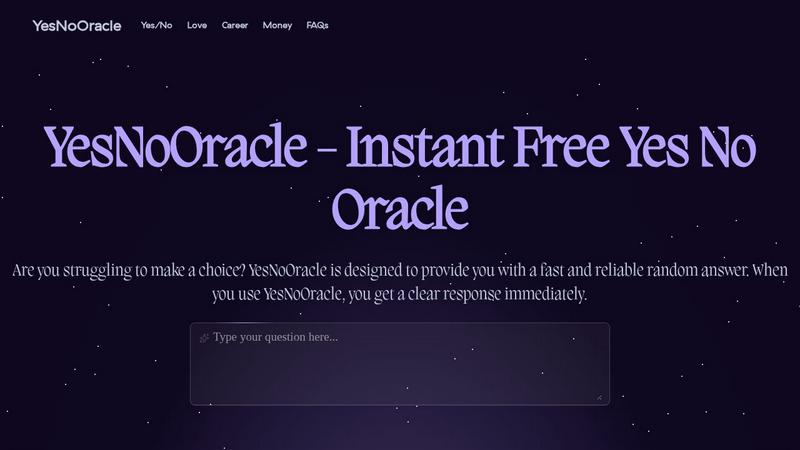
About Yes No Oracle
Yes No Oracle is a free, tarot-inspired decision-making tool designed to help individuals break through daily dilemmas and reduce the mental burden of overthinking. The product provides instant, unbiased "Yes," "No," or "Maybe" answers to clear, specific questions, serving as a reflective prompt rather than a definitive prediction of the future. It is built for anyone facing low-stakes or emotionally charged choices where the primary value lies in pausing, naming the question, and observing one's instinctive reaction. The tool is not a substitute for professional advice in medical, legal, financial, or safety-related decisions, but rather a cognitive aid for clarifying personal next steps. Users can access the oracle without creating an account, making it an accessible resource for love, career, and everyday decisions. The platform also includes a blog with practical guides on how to ask clearer questions and interpret tarot-inspired signals, along with popular question categories such as "Does he miss me?" and "Should I change careers?" The main value proposition is saving time and mental energy by providing an immediate, neutral signal that encourages users to compare the answer with real-world evidence and context before acting. This approach aligns with research on decision fatigue and the benefits of structured reflection in reducing cognitive load (Vohs et al., 2008, "Decision Fatigue Exhausts Self-Regulatory Resources").
Features of Yes No Oracle
Instant Yes, No, or Maybe Response
The core feature delivers an immediate, unbiased answer to any clear question the user submits. The response is generated by a tarot-inspired algorithm that randomly selects from three possible outcomes: Yes, No, or Maybe. This instant feedback is designed to interrupt the cycle of overthinking and provide a neutral starting point for reflection. The tool processes the query in real-time, requiring no account creation or payment. This feature is particularly valuable for users who feel stuck in analysis paralysis, as it forces a cognitive pause and allows the user to notice their emotional reaction to the answer, which can reveal underlying preferences or fears. Research on the "decoy effect" and choice architecture suggests that even random prompts can help individuals clarify their own priorities when used as reflective tools (Ariely, 2008, "Predictably Irrational").
Guided Question Input and Examples
The platform provides structured guidance on how to phrase questions effectively for optimal results. Users are encouraged to ask one clear, specific, and time-bound question focused on a single outcome. The website offers curated examples across popular categories like love, career, and self-reflection, such as "Does he miss me?" or "Should I accept this job offer?" This feature reduces ambiguity and increases the likelihood that the oracle's response will be actionable. By modeling effective question formats, the tool helps users develop a more disciplined approach to decision-making, which is a key component of reducing cognitive load and improving clarity (Kahneman, 2011, "Thinking, Fast and Slow").
Reflective Decision Framework
Beyond the simple answer, Yes No Oracle integrates a three-step reflective framework: ask, draw, and check. After receiving the signal, users are prompted to compare the answer with real-world evidence and context before taking action. This feature transforms the oracle from a mere fortune-telling gimmick into a structured decision aid. The framework encourages journaling, pausing, and questioning one's initial reaction, which aligns with evidence-based practices for improving decision quality and reducing regret. The platform explicitly states that the answer is a "prompt, not a command," reinforcing the user's responsibility to apply critical thinking. This approach is consistent with the concept of "slow thinking" advocated by behavioral economists to counteract impulsive decisions.
Curated Question Libraries and Blog Resources
The product includes organized libraries of popular questions for love, career, and daily life, making it easy for new users to get started. Additionally, the blog section contains practical articles on topics like "How to Ask a Clear Yes No Oracle Question" and "Yes No Tarot Meaning." These resources provide deeper context on interpreting answers, understanding the "Maybe" result, and using the oracle for specific life domains. The educational content enhances the tool's value by teaching users how to integrate the oracle into a broader reflective practice, rather than relying on it as a sole decision-maker. This feature supports long-term user engagement and skill development in self-reflection.
Use Cases of Yes No Oracle
Navigating Love and Relationship Dilemmas
This use case is the most popular on the platform, with questions like "Does he miss me?" and "Should I text him?" being frequently asked. Users employ the oracle to explore emotional readiness, communication choices, and boundaries in romantic relationships. The tool helps individuals pause before acting on impulse, such as sending a potentially regrettable text, or it can clarify whether to wait for more information. The oracle is not used to predict another person's behavior but to help the user notice their own feelings about the relationship. For example, a "No" response to "Should I text him?" might reveal relief, indicating that the user already knows silence is the better choice. This reflective use aligns with research on emotional regulation and the benefits of structured delay in interpersonal decisions.
Making Career and Financial Decisions
Professionals and job seekers use Yes No Oracle for quick reflection on questions like "Should I quit my job?" or "Will I get the job?" The tool is positioned as a starting point for career contemplation, not a final verdict. Users are encouraged to compare the oracle's answer with tangible evidence, such as job market conditions or personal financial stability. For instance, a "Yes" to "Should I ask for a raise?" might prompt the user to prepare a case and gather performance data before approaching their manager. This use case reduces the stress of high-stakes career choices by breaking them into smaller, reflective steps. The platform's blog provides additional guidance on using the oracle for career planning.
Overcoming Everyday Decision Fatigue
For low-risk daily choices like "Should I save or spend?" or "Is today my lucky day?", the oracle serves as a playful yet functional tool to break indecision. Users facing trivial but paralyzing questions (e.g., what to eat, whether to buy an item) can offload the decision to the oracle, saving mental energy for more important tasks. The "Maybe" result is particularly useful here, as it signals that more information is needed or that the question itself is not well-formed. This use case directly addresses the problem of decision fatigue, where making too many small choices depletes cognitive resources (Vohs et al., 2008). By automating trivial decisions, the oracle helps users preserve willpower for significant life choices.
Personal Reflection and Journaling Practice
The platform encourages using the oracle as a tool for self-discovery and journaling. Users can ask questions like "Am I on the right path?" or "Should I trust my gut?" and then write about their emotional reaction to the answer. This practice helps individuals uncover subconscious beliefs and values that influence their decisions. The reflective framework (ask, draw, check) is designed to be integrated into a daily or weekly journaling habit. Over time, users can track patterns in their questions and reactions, gaining deeper insight into their recurring dilemmas. This use case transforms the oracle from a simple answer machine into a personal development tool, supporting mindfulness and intentional living.
Frequently Asked Questions
How accurate is YesNoOracle?
YesNoOracle is not 100% accurate and does not claim to predict the future. The tool provides a tarot-inspired signal (Yes, No, or Maybe) intended for reflection and clarification, not as a guaranteed outcome. Accuracy depends on how the user applies the answer: the value comes from pausing, noticing one's reaction, and comparing the signal with real-world evidence. For stronger results, users should ask one focused question, read the short interpretation, and then evaluate the facts surrounding their specific situation. The platform explicitly states it is not a substitute for professional advice in medical, legal, financial, or safety-related decisions.
How should I phrase my question for the Oracle?
To get the best results, ask one clear, specific, and time-bound question focused on a single outcome. Avoid vague or compound questions like "Will I be happy and successful?" Instead, use formats such as "Should I text him today?" or "Will I get the job I applied for on Monday?" The platform recommends keeping the question about yourself and your actions, rather than trying to predict another person's feelings or behaviors. A well-phrased question makes the "Yes," "No," or "Maybe" answer more actionable and easier to compare with your real-world context.
Can I ask the same question twice if I don't like the answer?
Yes, you can ask the same question multiple times, but the platform advises against it as a strategy to get a desired outcome. Repeating the question often indicates that the user is seeking confirmation rather than reflection. The oracle is designed to be used once per dilemma to encourage a single moment of pause and clarity. If you feel compelled to ask again, it may be a sign that the question needs to be refined or that you are avoiding an uncomfortable truth. The blog provides guidance on how to interpret your reaction to an answer you dislike.
What does a "Maybe" result mean?
A "Maybe" result is a prompt to gather more information before making a decision. It suggests that the question may be too broad, that timing is uncertain, or that external factors need further evaluation. The "Maybe" is not a refusal to answer but an invitation to slow down and check the evidence around you. For example, if you ask "Should I change careers?" and receive "Maybe," it indicates that you should research the job market, assess your skills, and consider your financial situation before acting. The platform encourages users to treat "Maybe" as a signal for deeper reflection and due diligence.
Explore more in this category:
Similar to Yes No Oracle

Snapkin is a calorie tracker you use by photographing your plate.

Adopt a virtual baby who grows, learns, and remembers you.

Anonymous Instagram viewer. Browse profiles, stories, and posts without an account or leaving a trace.

GeoRank combines satellite-calibrated climate data with tax, visa, and cost metrics to rank every place on earth for relocation research.

Caesura is a macOS menu-bar app that reminds you to drink water, stretch, rest your eyes, and breathe on research-backed intervals.

PrettyScale offers nine free AI facial analysis tools that run entirely in your browser for private, instant results with no account required.

Burge Coffee provides authoritative field guides and private browser-based tools for home roasters to master the craft and track every batch.

On Music AI turns your words into complete songs with vocals, beats, and instrumentals in minutes.