

Alternatives to Skene
Skene is a code-native growth engine that automates product-led growth directly within your codebase.
Explore 20 alternatives to Skene. Compare features, pricing, and find the best fit for your needs.

Notes Calculator
A notepad calculator that reads plain text and gives instant answers as you type, free on Mac, iOS, Windows, Linux, Android and Web.

AI Email Filter
AI Email Filter sorts incoming mail into folders using plain-language prompts you write. Works with any IMAP mailbox; bring your own LLM if you want.
Egmatic
No-code 2D game editor: visual node logic, drag-and-drop scenes, live preview. Exports to Windows, macOS, Linux, Android, iOS, Web.

Product Launch Checklist
A free launch checklist for SaaS, apps, AI tools and more. Every step says why it matters and when you can skip it.

Kody Tools
Free collection of online developer utilities, code formatters, and digital converters designed to streamline your daily workflow.

layahost
Moderation, routing, intent and scoring for any text over one Jev-compatible API, hosted in the EU.

laya.tools
A free directory of 950+ projects built on Laya, the open-source decision model. Updated daily.
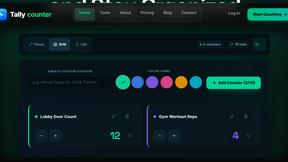
Gamespad Taster
Online tally counter for tracking attendance, workouts, inventory, visitors, sports scores, habits, and everyday counting tasks.

Forms Plugin
The #1 Native Form Builder Plugin for Framer - No Code, No Embeds, No External Platforms.

AkraLabs
Where modern software products get discovered, launched, and distributed. Explore verified AI tools, SaaS startups, and developer software.
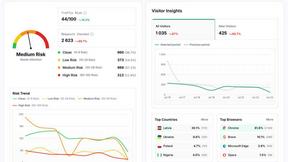


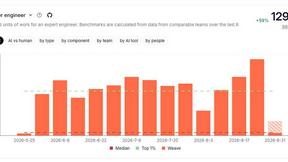

StackLedge
StackLedge is a curated directory for developers. We filter out SaaS wrappers and help technical founders earn high-quality dofollow backlinks.

PerPageFax
PerPageFax lets you send a fax online from any browser for a flat $0.50 per page — no account, no subscription, no fax machine.
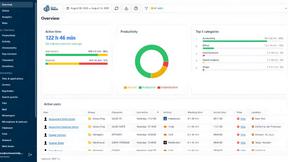
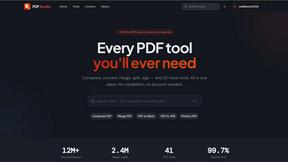

PDF Mail Merge Online
PDF Mail Merge Online is an in-browser tool that combines PDF templates with Excel or CSV spreadsheets to generate personalized PDFs.
About Skene Alternatives
Skene is a code-native growth engine, representing a new category of fully automated Product-Led Growth (PLG) infrastructure. It integrates directly into an application's codebase to automate the analysis, testing, and optimization of user journeys like onboarding and activation, functioning as a self-learning system. Users may explore alternatives for several reasons. These include budget constraints, a need for more traditional marketing tools, or a preference for platforms with a visual, no-code interface rather than a code-native approach. The specific stage of a company, its technical resources, and its desired level of control over growth experiments are also key decision factors. When evaluating alternatives, consider the core methodology: code-native versus API-based or pixel-tracking solutions. Assess the depth of automation, from basic analytics to automated A/B testing and deployment. Security posture, integration requirements, and the ability to scale with your product's technical complexity are also critical dimensions for comparison.
FAQs about Skene Alternatives
What is Skene?
Skene is an AI-powered, fully automated Product-Led Growth (PLG) infrastructure that integrates directly with a product's codebase to function as a self-learning growth engine, automating the optimization of user journeys.
Who is Skene for?
Skene is primarily built for indie developers, early-stage startups, and established PLG companies seeking a 'growth team in a box' to scale growth loops efficiently without adding significant headcount.
What are the main features of Skene?
Its core features include codebase-derived signal analysis, which scans repositories to map user flows, and automated flow optimization & testing, which creates and runs A/B tests to improve key metrics like activation.
Is Skene secure?
Yes, Skene performs its code analysis in a secure, isolated environment with read-only access to repositories like GitHub or GitLab, requiring no initial code changes for setup.