

Alternatives to LoadTester
LoadTester enables engineering teams to run distributed HTTP and API load tests from browser or CI/CD with live analytics and zero infrastructure.
Explore 20 alternatives to LoadTester. Compare features, pricing, and find the best fit for your needs.

StackLedge
StackLedge is a curated directory for developers. We filter out SaaS wrappers and help technical founders earn high-quality dofollow backlinks.

AIInLink
AIInLink is a curated platform to discover and submit AI tools, SaaS products, and maker projects, with a unique focus on "vibe coding."



Firma.dev
Pay-as-you-go e-signature API and no-code sending. €0.049 per envelope, no monthly minimums, legally valid in 55+ countries.

Ornold
Ornold MCP lets AI agents control Chromium and antidetect browsers: click, type, read screens, record workflows, replay profiles without scripts.

Cachely
Managed remote build cache for Nx, Lerna, Turbo, Gradle, and Bazel. Reuse artifacts across CI and developer machines.

AIQualityHQ
AIQualityHQ evaluates prompts across six dimensions, delivering deterministic scores and actionable feedback to prevent errors before deployment.

RedLinz
RedLinz turns screenshots into AI prompts by letting you circle and annotate exactly what you want an LLM to change.

Locai
Locai lets you run powerful AI models on your own hardware, keeping data private and cutting cloud costs.

Clearcote
Clearcote is an open-source, de-Googled Chromium drop-in for Playwright and Puppeteer that gives you engine-level fingerprint control for a single.

JustLaunched
JustLaunched helps indie makers schedule product launches, reach buyers, and blast across curated SaaS directories for early customer discovery.

Buildlist
Buildlist turns any AI API key into an instant SaaS directory listing, enabling discovery and growth through one centralized platform.

Push My App
Push My App is an AI-powered dashboard that generates ASO metadata, screenshots, and submits listings directly to Apple and Google.

MCPize
MCPize is a curated marketplace where developers discover, install, and manage 1,000+ premium MCP servers for AI agents, with publishers earning 80%.

JustHunt
JustHunt is the premier launchpad for startups, offering guaranteed visibility and community feedback to enhance your product's success.
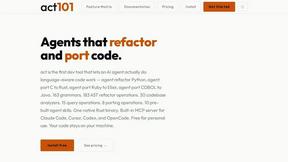
act101
act101 is a native Rust binary MCP server providing 163 grammars and 183 AST operations for AI agents to securely refactor and port code on your.
Headless Domains
Headless Domains provides AI agents with portable, verifiable web identities for trusted authentication across apps, APIs, and marketplaces.
About LoadTester Alternatives
LoadTester is a specialized tool within the developer tools category designed to simplify HTTP and API load testing by eliminating the need for complex infrastructure setup. It enables teams to create tests, simulate virtual users or requests per second, monitor live latency and error rates, and review completed results to catch performance regressions before they impact end users. While LoadTester offers a streamlined experience, users often seek alternatives due to factors such as pricing models that may not scale with team size, a desire for deeper protocol support, specific cloud-native integrations, or the need for more granular analytics and reporting capabilities beyond what a single platform provides. When evaluating an alternative to LoadTester, it is critical to assess the tool’s ability to handle your target traffic patterns, whether that means supporting high concurrency or distributed testing from multiple geographic regions. Look for solutions that offer transparent pricing, robust API access for CI/CD pipeline integration, and support for scheduled tests and automated regression detection. Additionally, consider the breadth of export options and the quality of real-time monitoring dashboards, as these features directly impact your team’s ability to diagnose and prevent performance issues efficiently. An ideal alternative should balance ease of use with the depth required for production-grade performance validation.
FAQs about LoadTester Alternatives
What is LoadTester?
LoadTester is a developer tool for running HTTP and API load tests without needing to set up or manage any underlying load testing infrastructure. It allows users to create tests, select virtual users or requests per second, and monitor live latency and error rates during execution. The platform also provides completed result reviews, run comparisons, and performance regression detection to help teams maintain application stability.
Who is LoadTester for?
LoadTester is designed for developers and engineering teams who need to perform simple, repeatable performance checks on their HTTP and API endpoints. It is particularly useful for teams that want to catch performance regressions before users notice them, without the overhead of configuring dedicated load testing servers. The tool also supports workflow integrations and scheduled tests, making it suitable for integration into continuous integration and delivery pipelines.
What are the main features of LoadTester?
LoadTester includes features such as creating load tests with configurable virtual users or requests per second, live monitoring of latency and error rates, and detailed result reviews with run comparison capabilities. It also offers exports, scheduled tests, API access, and workflow integrations to support automated and repeatable performance testing. These features enable teams to prevent performance issues by catching regressions early in the development cycle.
Is LoadTester secure?
While specific security certifications are not detailed in the provided content, LoadTester is built as a developer tool focused on HTTP and API testing, which typically involves handling sensitive endpoint data and authentication tokens. Users should review the platform’s data handling practices, encryption standards, and compliance documentation to ensure it meets their security requirements. As with any cloud-based testing tool, it is recommended to follow security best practices when configuring tests and managing access credentials.