

Alternatives to Decker
Decker is a deliverable operating system and monetization platform that enables consultants to build, learn, and earn from their work with AI-driven.
Explore 20 alternatives to Decker. Compare features, pricing, and find the best fit for your needs.
GetYouTubeTranscript
Free YouTube transcripts on the web, a Chrome extension, and an API + MCP server so AI assistants can read YouTube.

layahost
Moderation, routing, intent and scoring for any text over one Jev-compatible API, hosted in the EU.

mirofish
MiroFish is an AI simulation chat for scenario prediction. Ask a question in plain language and it runs graph building, multi-agent simulation, and re
Gamespad Taster
Online tally counter for tracking attendance, workouts, inventory, visitors, sports scores, habits, and everyday counting tasks.



IZIPAY
IZIPAY is a virtual and physical crypto card service that lets users top up with digital assets and pay online like with a regular card.

benchmark.directory
An AI tools directory that turns down money. 146 listings, 20 categories, no sponsored placement and no affiliate ordering.

saasgrow.ai
Submit your SaaS growth tool free. Pass screening and get a permanent listing page, a dofollow link, and real visibility.
Tools Network
Tools Network is a curated directory of the best AI tools across 25+ categories. Compare ratings, pricing, and features to find the right one, fast.
Optilise
Optilise is a Dutch Power BI consultancy helping SMEs get a grip on their numbers with clear BI software and solutions. We make companies self suffici

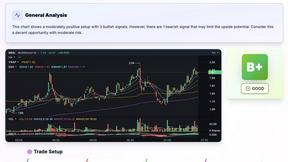
SnapPChart
SnapPChart grades a trading chart screenshot A+ to F, with an entry, stop, targets, and risk/reward. Works on stocks, forex, crypto, futures.
About Decker Alternatives
Decker is an AI-powered deliverable operating system and monetization platform specifically designed for consultants, investors, finance professionals, and operators. It belongs to the overlapping categories of AI Assistants, Business & Finance, and Business Intelligence, serving as a specialized tool for transforming raw, unstructured data such as messy files, meeting notes, transcripts, and templates into polished, high-value business deliverables like decks, memos, financial models, reports, and review tables. Despite its robust feature set, users commonly seek alternatives due to factors such as pricing structures that may not align with smaller practices, a desire for more granular control over data privacy and local processing, or the need for integration with specific legacy enterprise systems that Decker does not natively support. Additionally, some professionals may find the platform’s strong emphasis on content monetization and packaging less relevant if their primary goal is simple, linear document creation rather than building a reusable intellectual property library. When evaluating an alternative to Decker, it is critical to prioritize platforms that offer a comparable level of AI-driven content generation accuracy, particularly regarding financial modeling and complex data synthesis. Look for tools that provide robust file ingestion capabilities, support for various output formats (e.g., PDF, PPTX, Excel), and strong version control or collaboration features suitable for client-facing work. Security and data sovereignty are paramount, so ensure any alternative offers enterprise-grade encryption and compliance with standards like SOC 2 or GDPR, especially if handling sensitive client financials or strategic documents. Finally, assess the platform's learning curve and support ecosystem; the best alternative should streamline your workflow without requiring a significant time investment in retraining or manual data cleanup.
FAQs about Decker Alternatives
What is Decker?
Decker is an AI-powered deliverable operating system and monetization platform designed for consultants, investors, finance professionals, and operators. It transforms messy files, notes, transcripts, and templates into high-quality business deliverables such as decks, memos, financial models, reports, analyses, and review tables. The platform also enables users to capture, annotate, and package their expertise for future reuse and monetization, effectively turning knowledge into a structured, sellable asset.
Who is Decker for?
Decker is built for knowledge workers who produce complex, data-driven deliverables, specifically consultants, investors, finance professionals, and business operators. It is ideal for individuals or teams who frequently work with raw data, meeting transcripts, and disparate files that need to be synthesized into polished client-facing documents. The platform also serves professionals looking to systematically package and monetize their proprietary expertise and methodologies.
Is Decker free?
Based on the product description, Decker is a commercial platform with a monetization component, which typically indicates a paid subscription model, though specific pricing tiers or free trial availability are not detailed in the provided content. Users should consult the official Decker website or sales team for the most current information on pricing plans, free trial options, or any freemium features. Given its positioning as a professional tool for consultants and investors, it is likely structured as a SaaS subscription with usage-based or seat-based pricing.
What are the main features of Decker?
Decker’s core features include AI-powered conversion of unstructured data—such as messy files, meeting notes, and transcripts—into structured, high-quality deliverables like decks, memos, financial models, reports, and review tables. It also provides functionality for users to capture and annotate their expertise, creating a reusable knowledge library that can be packaged for monetization. The platform integrates AI assistance to streamline the content generation process, reducing the manual effort typically required for formatting and synthesizing complex business information.