

Alternatives to act101
act101 is a native Rust binary MCP server providing 163 grammars and 183 AST operations for AI agents to securely refactor and port code on your.
Explore 20 alternatives to act101. Compare features, pricing, and find the best fit for your needs.
Egmatic
No-code 2D game editor: visual node logic, drag-and-drop scenes, live preview. Exports to Windows, macOS, Linux, Android, iOS, Web.

Product Launch Checklist
A free launch checklist for SaaS, apps, AI tools and more. Every step says why it matters and when you can skip it.

layahost
Moderation, routing, intent and scoring for any text over one Jev-compatible API, hosted in the EU.

laya.tools
A free directory of 950+ projects built on Laya, the open-source decision model. Updated daily.
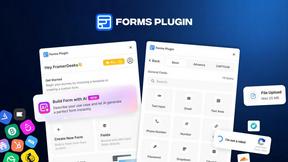
Forms Plugin
The #1 Native Form Builder Plugin for Framer - No Code, No Embeds, No External Platforms.

AkraLabs
Where modern software products get discovered, launched, and distributed. Explore verified AI tools, SaaS startups, and developer software.
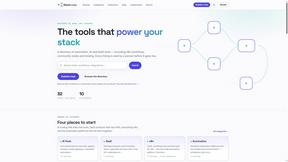
StackLedge
StackLedge is a curated directory for developers. We filter out SaaS wrappers and help technical founders earn high-quality dofollow backlinks.
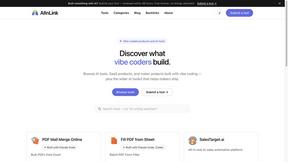
AIInLink
AIInLink is a curated platform to discover and submit AI tools, SaaS products, and maker projects, with a unique focus on "vibe coding."

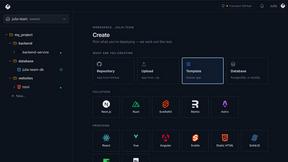

Firma.dev
Pay-as-you-go e-signature API and no-code sending. €0.049 per envelope, no monthly minimums, legally valid in 55+ countries.

Ornold
Ornold MCP lets AI agents control Chromium and antidetect browsers: click, type, read screens, record workflows, replay profiles without scripts.
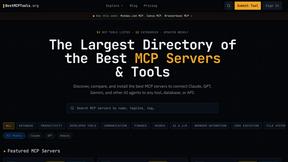
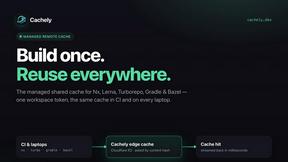
Cachely
Managed remote build cache for Nx, Lerna, Turbo, Gradle, and Bazel. Reuse artifacts across CI and developer machines.

AIQualityHQ
AIQualityHQ evaluates prompts across six dimensions, delivering deterministic scores and actionable feedback to prevent errors before deployment.
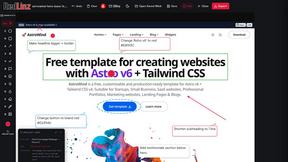
RedLinz
RedLinz turns screenshots into AI prompts by letting you circle and annotate exactly what you want an LLM to change.
About act101 Alternatives
act101 is a specialized developer tool that enables AI coding agents to perform complex code refactoring and porting across an extensive range of 163 programming languages. It operates within the Dev Tools category, functioning as a bridge between large language models like Claude Code, Cursor, and Codex, and the underlying abstract syntax trees (ASTs) of codebases. Users commonly seek alternatives due to considerations such as the tool's pricing model for commercial use, the specific set of language grammars supported, or the need for integration with different agent architectures not currently listed. Others may require a more lightweight solution focused solely on a single language or a different set of refactoring operations. When evaluating alternatives, developers should prioritize tools that offer robust, production-grade AST manipulation capabilities rather than simple text-based find-and-replace. Key criteria include the breadth of supported programming languages and refactoring operations, the reliability of the underlying grammar parsers, and the security model for handling proprietary codebases. Additionally, consider the extensibility of the tool—whether it supports custom grammars or operations—and its compatibility with your existing CI/CD pipeline and preferred AI agent platform. A research-backed evaluation should also examine the tool's performance benchmarks for accuracy in code transformation to ensure it minimizes the risk of introducing errors during automated refactoring.
FAQs about act101 Alternatives
What is act101?
act101 is a developer tool that provides 163 grammar-based tools for AI coding agents, enabling them to perform automated code refactoring and porting across 163 programming languages. It exposes 183 AST refactor operations, 30 codebase analyzers, and 8 porting operations through a built-in MCP server, making these capabilities accessible to agents like Claude Code, Cursor, Codex, and OpenCode.
Who is act101 for?
act101 is designed for software developers and engineering teams who use AI coding agents and need reliable, language-aware code transformation capabilities. It is particularly valuable for developers working on large-scale codebases who need to refactor across multiple languages or port entire codebases from one language to another, such as converting C to Rust or Ruby to Elixir.
Is act101 free?
act101 is free for personal use, allowing individual developers to leverage its 163 grammars and extensive refactoring operations without cost. However, commercial users or organizations may need to review the specific licensing terms, as the free tier is explicitly stated to cover personal use cases only.
What are the main features of act101?
act101's main features include support for 163 programming language grammars, 183 AST-based refactor operations, 30 codebase analyzers, and 8 porting operations. These capabilities are exposed through a built-in MCP server that integrates with major AI coding agents, enabling agent-driven refactoring of Python code, porting of C to Rust, and porting of Ruby to Elixir, among other transformations.