LLMWise vs SVG to 3D
Side-by-side comparison to help you choose the right product.

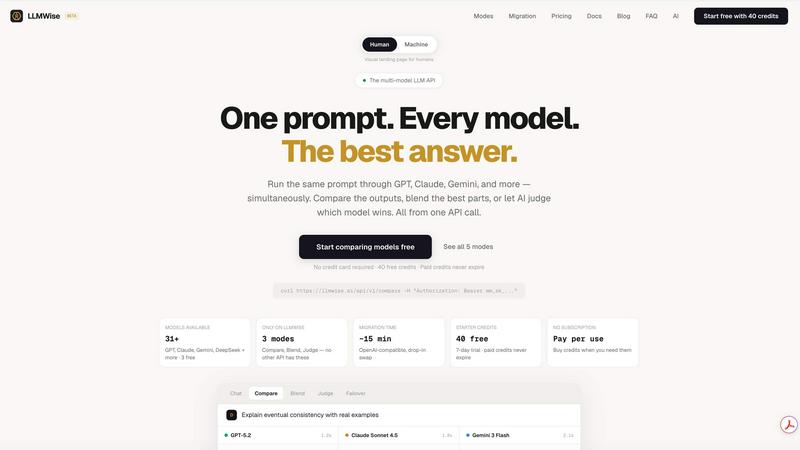
Access 62+ AI models seamlessly with LLMWise's smart auto-routing and pay only for what you use, with no subscriptions.
Last updated: February 27, 2026
SVG to 3D
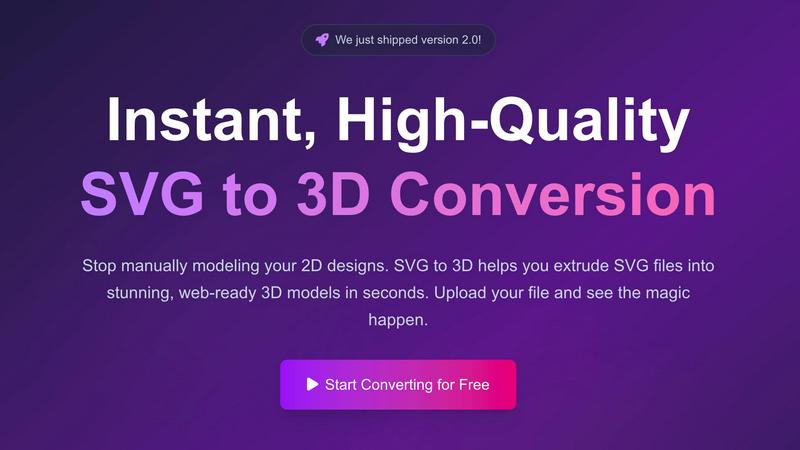
Effortlessly transform your SVG designs into high-quality 3D models with advanced controls and fast processing.
Last updated: February 27, 2026
Visual Comparison
LLMWise
SVG to 3D
Feature Comparison
LLMWise
Smart Routing
LLMWise employs intelligent routing to ensure that every prompt is sent to the most appropriate model based on the task at hand. For instance, coding-related queries are directed to GPT, while creative writing prompts are routed to Claude. This feature enhances the accuracy and relevance of AI responses, optimizing overall performance for developers.
Compare & Blend
This feature allows users to run prompts across multiple models simultaneously, providing side-by-side comparisons of their outputs. The blending functionality synthesizes the best parts of each response into a single, cohesive answer. This capability is instrumental for users seeking to leverage the strengths of different models for improved results.
Always Resilient
LLMWise includes a circuit-breaker failover system that automatically reroutes requests to backup models if a primary provider experiences downtime. This ensures that applications remain operational and responsive, preventing disruptions and maintaining a seamless user experience.
Test & Optimize
Developers can utilize benchmarking suites and batch tests to evaluate model performance based on speed, cost, and reliability. Additionally, LLMWise offers automated regression checks, allowing users to continuously optimize their AI integrations and ensure consistent quality in output.
SVG to 3D
One-Click to GLB for the Web
This feature allows users to export 3D models as GLB files with just a single click, making it incredibly efficient for web developers. The GLB format is optimized for integration into web projects, allowing for seamless incorporation into platforms like Three.js and React Three Fiber, thus enriching websites with interactive 3D elements.
3D-Print Ready
SVG to 3D supports clean STL exports, making it an excellent choice for 3D printing applications. Users can directly use the exported STL files with slicer software, ensuring that their designs are ready for fabrication. This feature simplifies the workflow for creators looking to turn digital designs into physical objects.
Advanced Material System
Users can apply realistic Physically Based Rendering (PBR) materials and custom textures to their models. This feature enhances the visual quality of the 3D creations, allowing for professional lighting effects that make models truly stand out. With PBR materials, the 3D output appears more lifelike and polished.
Lightning-Fast Processing
The optimized algorithms of SVG to 3D enable rapid conversion of SVG files into 3D models, often in just a few seconds. This speed is crucial for professionals who require quick turnaround times without sacrificing quality, making it one of the fastest online SVG to 3D conversion tools available.
Use Cases
LLMWise
Software Development
Developers can leverage LLMWise to access the best models for coding tasks, utilizing smart routing to direct programming prompts to GPT. This significantly reduces debugging time and enhances code quality by providing tailored recommendations.
Content Creation
Writers and marketers can utilize the compare and blend feature to generate high-quality content. By running creative prompts through models like Claude and Gemini, users can create compelling narratives that combine the best elements from each model's output.
Language Translation
LLMWise supports translation tasks by routing queries to the most efficient model for linguistic conversion. This ensures accurate and contextually relevant translations, making it ideal for businesses operating in multilingual environments.
Research and Analysis
Researchers can benefit from LLMWise by comparing outputs from different models when analyzing data or generating insights. The ability to test multiple models concurrently allows for comprehensive evaluations, leading to more informed conclusions.
SVG to 3D
Create Interactive 3D Logos and Icons for Web
Web developers can easily convert SVG icons into 3D models, ready for use in interactive web applications. This use case enhances user engagement and provides a modern aesthetic to websites, allowing businesses to stand out in their digital presence.
From Digital Design to Physical Object: SVG to STL for 3D Printing
Artists and engineers can take advantage of the SVG to STL export feature for creating tangible products. This use case is particularly beneficial for prototyping and custom part fabrication, allowing users to bring their designs to life without the need for complicated CAD software.
Add Depth to Your UI/UX Designs
Designers can leverage the tool to create 3D elements for user interfaces, enhancing the overall user experience. By incorporating depth and realistic lighting, designers can impress clients and stakeholders, making presentations more captivating and effective.
Rapid Prototyping for Product Development
Product designers can utilize SVG to 3D for quick prototyping, enabling them to visualize and iterate on concepts swiftly. The ability to export models in various formats facilitates collaboration with developers and manufacturers, streamlining the product development process.
Overview
About LLMWise
LLMWise is an advanced API solution designed to streamline access to multiple large language models (LLMs) from renowned providers like OpenAI, Anthropic, Google, Meta, xAI, and DeepSeek. It eliminates the hassle of managing various AI subscriptions by offering a single API interface that intelligently routes requests to the most suitable model for each task. Whether it is coding, creative writing, or translation, LLMWise optimizes performance by intelligently matching prompts to the best-suited AI model. This platform is particularly beneficial for developers seeking a flexible, efficient solution without the complications of managing multiple APIs or incurring high subscription costs. By harnessing the power of diverse LLMs, LLMWise enhances productivity, reduces operational complexity, and delivers superior results in AI-driven projects.
About SVG to 3D
SVG to 3D is an innovative online tool designed to revolutionize how designers and developers convert 2D SVG vector graphics into compelling 3D models. This tool addresses a common pain point in the creative industry: the lengthy and complex process of using heavyweight software such as Blender or Cinema 4D for simple tasks like extruding logos or icons. With SVG to 3D, users can quickly upload their SVG files and transform them into high-quality 3D models in mere seconds, significantly enhancing productivity. Ideal for web developers, graphic designers, and 3D printing enthusiasts, this tool not only streamlines the conversion process but also offers advanced features for fine-tuning model details. The primary value proposition lies in its ability to provide a fast, user-friendly interface that delivers professional-grade results without the need for extensive software knowledge.
Frequently Asked Questions
LLMWise FAQ
What types of models can I access with LLMWise?
LLMWise provides access to over 62 models from 20 different providers, including well-known names like OpenAI, Google, and Meta. This diverse range allows users to select the best tool for their specific needs.
How does the pricing work for LLMWise?
LLMWise operates on a pay-per-use model, allowing users to pay only for the credits they consume. There are no subscriptions required, and users can also bring their own API keys for additional flexibility.
Is there a way to test LLMWise before committing?
Yes, LLMWise offers a free trial with 20 credits that never expire. Users can start testing the platform without needing to provide credit card information, making it easy to explore its capabilities risk-free.
What happens if a model I am using goes down?
LLMWise features a circuit-breaker failover mechanism that automatically reroutes requests to backup models if a primary model fails. This ensures that your applications remain functional and efficient, even during outages.
SVG to 3D FAQ
What file formats can I export my 3D models in?
SVG to 3D allows users to export their 3D models in multiple formats, including GLB, GLTF, OBJ, and STL. This versatility ensures compatibility with a wide range of applications and 3D frameworks.
Is my data secure when using SVG to 3D?
Yes, SVG to 3D prioritizes user privacy and security. Files are processed locally in your browser whenever possible, meaning that your designs are not uploaded to external servers, keeping your data secure.
Do I need to install any software to use SVG to 3D?
No, SVG to 3D is a browser-based tool, which means there is no software installation required. Users can access the tool directly through their web browser, making it convenient and easy to use.
How long does it take to convert an SVG file to a 3D model?
The conversion process is lightning-fast, typically taking only a few seconds to transform your SVG file into a high-quality 3D model. This efficiency allows users to focus on their creative process without unnecessary delays.
Alternatives
LLMWise Alternatives
LLMWise is an innovative platform that provides a single API for accessing a range of large language models (LLMs), including those from prominent providers like OpenAI, Anthropic, and Google. It simplifies the process for developers by offering intelligent routing to ensure that each prompt is handled by the most suitable model, thereby enhancing the quality and efficiency of AI interactions. As AI technology evolves, users often seek alternatives to address various needs such as cost-effectiveness, feature sets, or compatibility with specific platforms and applications. When exploring alternatives to LLMWise, it is crucial to consider criteria such as pricing structures, available features, and ease of integration. Users should look for solutions that not only meet their current requirements but also offer scalability and adaptability for future needs. This ensures that they can leverage the best AI technology without unnecessary complexity or limitations.
SVG to 3D Alternatives
SVG to 3D is a specialized tool designed to transform 2D SVG vector graphics into high-quality 3D models, belonging to the category of AI Assistants. Users often seek alternatives to this tool due to various factors such as pricing, specific feature sets, or compatibility with different platforms. For example, some may desire additional functionalities that cater to niche requirements, while others may prefer software that integrates seamlessly with their existing workflows. When choosing an alternative, it is essential to consider the usability of the interface, the range of features offered, and the compatibility with various file formats. Additionally, performance factors such as export quality and speed can significantly influence the decision-making process, ensuring that users find a solution that meets their design and production needs efficiently.