CloudBurn vs OC Maker
Side-by-side comparison to help you choose the right product.

CloudBurn
CloudBurn prevents costly AWS surprises by showing infrastructure cost estimates directly in pull requests.
Last updated: February 28, 2026

OC Maker is an AI platform that creates and customizes unique characters for stories and games without requiring.
Last updated: March 1, 2026
Visual Comparison
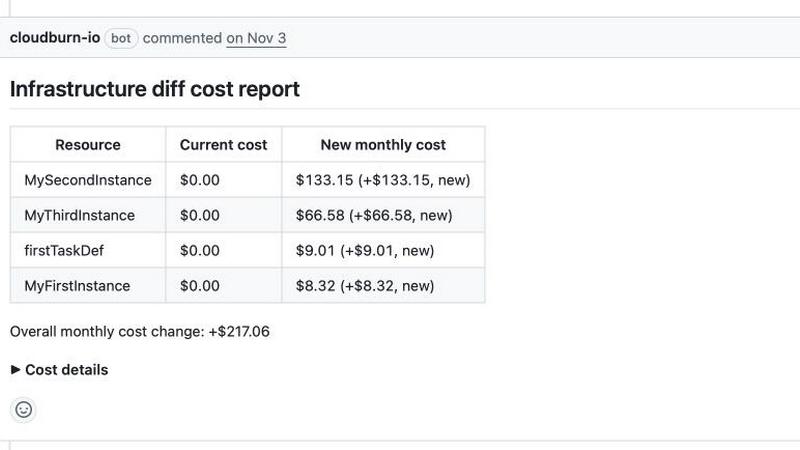
CloudBurn
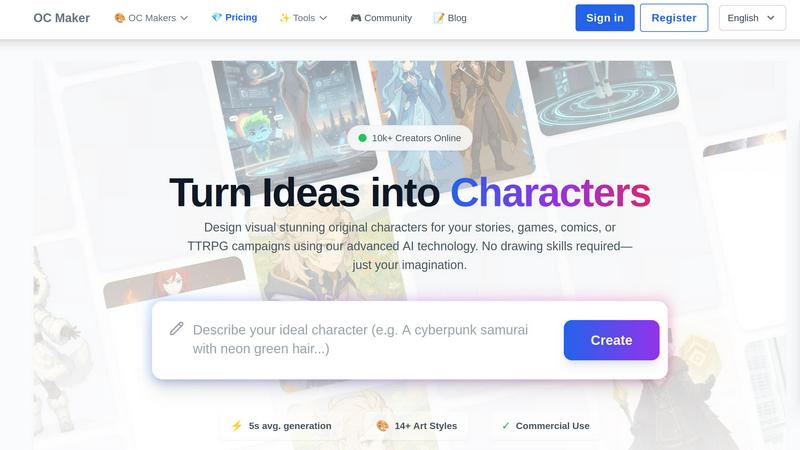
OC Maker
Feature Comparison
CloudBurn
Real-Time Pre-Deployment Cost Estimation
CloudBurn provides immediate, accurate AWS cost projections by analyzing infrastructure changes directly within pull requests. It leverages real-time AWS Pricing APIs to calculate the monthly financial impact of new, modified, or deleted resources, presenting a clear breakdown in dollars. This feature eliminates the guesswork and manual spreadsheet modeling, giving teams precise cost visibility at the most actionable point in the development cycle.
Automated Pull Request Cost Reporting
The platform seamlessly integrates with GitHub workflows to automatically post detailed cost analysis as a comment on every relevant pull request. This report includes a summary of the overall monthly cost change and a line-item breakdown for each resource, showing current versus new costs. This automation embeds FinOps directly into the existing CI/CD pipeline, making cost review a mandatory and effortless part of the standard code review process.
Infrastructure-as-Code (IaC) Native Integration
CloudBurn is built specifically for modern IaC practices, offering dedicated support for popular tools like Terraform and AWS CDK. It works by analyzing the output of terraform plan or cdk diff commands, ensuring it understands the exact infrastructure delta. This native approach guarantees that cost estimations are based on the actual declarative code changes, not speculative manual inputs.
Secure GitHub-Centric Deployment
Setup and operation are handled entirely through GitHub, requiring no separate billing setup or sensitive credential management on a third-party platform. Permissions and installation are managed via GitHub Marketplace, making it secure and incredibly easy to adopt. This model minimizes security overhead and accelerates time-to-value, as teams can start receiving cost insights within minutes of installation.
OC Maker
Diverse Art Style Library
OC Maker provides access to a curated library of over 14 specialized art styles, allowing for precise aesthetic alignment with a user's vision. This includes mainstream styles like Anime and Photorealistic, as well as fandom-specific models trained on universes such as Sonic the Hedgehog, Genshin Impact, Cuphead, and Jujutsu Kaisen. This feature ensures that generated characters can seamlessly fit into existing narratives, game worlds, or artistic projects, offering a level of stylistic authenticity that generic AI image generators often lack.
Full-Body Character Generation from Prompts
Unlike simple avatar assemblers, OC Maker's AI engines generate complete, original characters from scratch based on detailed user-written prompts. Users can describe physical appearance, clothing, fantasy elements, color schemes, and personality traits. The system interprets these text inputs to create coherent, full-body character visuals, providing a powerful tool for visualizing complex character concepts without any manual asset placement or drawing.
Integrated Creative Power Tools Suite
The platform extends its functionality with a suite of professional-grade AI tools for post-processing and enhancement. This includes an AI Video generator for creating cinematic clips from text and images, an AI Headshot generator for professional portraits, a Face Swap tool for photos and videos, and an Image to Prompt tool that reverse-engineers images into detailed prompts for other AI platforms like Midjourney. This integrated ecosystem supports end-to-end character development and content creation.
Character Consistency and Themed Universes
OC Maker addresses a key challenge in AI character creation—maintaining consistency. The platform offers tools and specialized models that help in generating multiple images of the same character across different poses or scenarios while preserving core features. Furthermore, its "Themed Universes" section provides generators fine-tuned for specific fandoms, ensuring outputs perfectly understand and replicate niche art styles, from "Murder Drones" to "Ever After High."
Use Cases
CloudBurn
Preventing Costly Configuration Errors
Engineering teams can use CloudBurn to catch severe and expensive misconfigurations before they deploy. For instance, accidentally specifying a cluster of xlarge instances instead of micro instances would be immediately flagged with a potential cost overrun of thousands of dollars in the PR review, allowing for correction before the code ever reaches production and impacts the AWS bill.
Enabling Developer-Led Cost Optimization
CloudBurn empowers individual developers and code reviewers to own cost efficiency. By providing immediate feedback, it allows teams to discuss and iterate on infrastructure design for optimal performance and cost. Developers can experiment with different instance types, storage options, or service configurations in their feature branch and immediately see the financial trade-offs, fostering a "cost-aware" engineering culture.
Streamlining FinOps and Engineering Collaboration
The platform serves as a single source of truth for infrastructure cost discussions, bridging the gap between FinOps/Finance teams and Engineering. Instead of monthly bill shock and retrospective blame games, CloudBurn provides a forward-looking, collaborative framework. Engineering can justify infrastructure choices with data, and FinOps can provide guidance based on actual planned changes, not historical spend.
Accelerating Safe Deployment Velocity
For organizations practicing continuous deployment, CloudBurn adds a vital safety check without slowing down development. It automates a previously manual or overlooked cost review step, allowing teams to maintain high deployment frequency with confidence. This ensures that speed does not come at the expense of uncontrolled cloud spend, supporting both agility and fiscal responsibility.
OC Maker
Narrative and Worldbuilding for Writers
Authors and storytellers can use OC Maker to visualize characters for novels, scripts, or comic books. By generating accurate representations of protagonists, antagonists, and supporting casts, writers can enhance their descriptive consistency, create reference material for illustrators, and share visual concepts with collaborators or their audience, thereby enriching the storytelling and worldbuilding process.
Character Design for Game Development
Independent game developers and designers can rapidly prototype character concepts for video games or TTRPG campaigns. The ability to generate characters in specific styles (e.g., anime for a JRPG, photorealistic for a simulation) allows for efficient iteration during pre-production. These assets can serve as concept art, inspiration for 3D modelers, or even placeholder visuals during early development stages.
Content Creation for Digital Artists and Social Media
Digital artists and social media content creators can leverage OC Maker to produce unique character art for projects, commissions, or personal brand content. The AI Headshot and Face Swap tools are particularly useful for creating engaging profile pictures, promotional material, or entertaining video content, streamlining the production of high-quality visual media without a full studio setup.
Fandom-Specific Art and Role-Playing
Fans and role-players within specific communities (e.g., Sonic, My Little Pony, Demon Slayer) can use the dedicated themed generators to create original characters that exist authentically within those universes. This is ideal for fan fiction, role-playing games, forum signatures, or creating personalized avatars that resonate with the established visual language of the chosen fandom.
Overview
About CloudBurn
CloudBurn is a specialized FinOps platform engineered to proactively manage and optimize cloud expenditure by integrating cost intelligence directly into the software development lifecycle (SDLC). It specifically targets engineering and platform teams that utilize Infrastructure-as-Code (IaC) frameworks such as Terraform and AWS Cloud Development Kit (CDK). The platform's core innovation lies in its ability to provide real-time, granular AWS cost estimates during the code review phase, effectively "shifting left" the traditionally reactive practice of cloud cost management. This directly addresses a critical industry inefficiency highlighted by Gartner, which notes that through 2024, 60% of public cloud cost optimization efforts will be wasted due to a lack of actionable insight and timely processes (Gartner, "Innovation Insight for Cloud Cost Optimization Tools"). By automatically analyzing IaC diffs against live AWS pricing APIs and posting detailed cost reports as comments on pull requests (PRs), CloudBurn transforms cloud cost from a post-deployment surprise on a monthly bill into a first-class, pre-deployment design parameter. This empowers developers to make informed, cost-conscious architectural decisions before code merges to production, preventing costly misconfigurations and fostering a culture of financial accountability within engineering teams.
About OC Maker
OC Maker is an advanced, AI-powered creative platform specifically engineered for the generation of unique Original Characters (OCs). It serves as a comprehensive digital tool that bridges the gap between conceptual imagination and visual representation, eliminating the traditional barrier of requiring advanced artistic or drawing skills. The platform is designed for a diverse demographic, including writers, artists, game developers, tabletop role-playing game (TTRPG) enthusiasts, and content creators across various media. According to its operational model, OC Maker leverages sophisticated generative AI to produce characters from textual descriptions, supporting over 14 distinct and popular art styles such as Anime, Photorealistic, Sonic, Genshin Impact, and many more. Its core value proposition lies in its speed, accessibility, and stylistic versatility, enabling users to transform a detailed prompt into a fully realized character visual in an average of five seconds. The platform further extends its utility beyond static character generation by offering a suite of ancillary AI tools for editing, animating, and refining creations, positioning itself not just as a character generator but as a holistic creative studio for digital character design.
Frequently Asked Questions
CloudBurn FAQ
How does CloudBurn calculate the cost estimates?
CloudBurn calculates estimates by parsing the infrastructure change plan (from terraform plan or cdk diff) and querying the official AWS Pricing APIs in real-time. It uses the resource specifications, region, and intended usage patterns defined in your IaC code to fetch the most current On-Demand pricing. The tool then computes the projected monthly cost based on 730 hours of usage (24/7 operation) to provide a standardized, comparable figure for review.
Is my code or cloud credentials exposed to CloudBurn?
No, CloudBurn follows a secure, GitHub-centric model. Your IaC code never leaves your GitHub repository. The analysis is triggered by a GitHub Action within your own workflow, which sends only the textual output of the diff/plan command (which contains resource types and configurations, not secrets) to CloudBurn's analysis engine. Your AWS credentials remain entirely within your GitHub environment and are never shared with CloudBurn.
What IaC tools and cloud providers does CloudBurn support?
Currently, CloudBurn provides native and dedicated support for the two most prevalent Infrastructure-as-Code tools: HashiCorp Terraform and AWS Cloud Development Kit (CDK). The platform is designed for AWS cloud infrastructure, as it leverages AWS's own pricing APIs. Support for additional cloud providers like Microsoft Azure or Google Cloud Platform would depend on future development and customer demand.
Can CloudBurn show cost savings from deleting or modifying resources?
Yes, absolutely. CloudBurn's analysis is based on the diff between the current and proposed infrastructure state. If a pull request modifies a resource to a cheaper alternative or deletes a resource entirely, the cost report will clearly show a negative cost change, highlighting the projected monthly savings. This makes it valuable for optimization and cleanup initiatives, not just for reviewing new deployments.
OC Maker FAQ
What is OC Maker and who is it for?
OC Maker is an AI-powered platform designed to generate unique Original Characters from text prompts. It is built for a wide range of users including writers, artists, game developers, tabletop RPG players, and content creators who need to visualize character concepts quickly and without requiring traditional drawing skills. Its tools cater to both professional project development and personal creative exploration.
Do I own the characters I create with OC Maker?
According to the platform's provided information, characters generated come with commercial use rights (indicated by a checkmark next to "Commercial Use"). This typically means users can utilize the created character images for commercial projects, such as in games, books, or merchandise. However, users should always review the specific Terms of Service for the most current and detailed licensing information.
How does the OC Maker prompt system work?
The prompt system requires users to provide a detailed textual description of their desired character. Effective prompts include details on appearance (hair, eyes, build), clothing, accessories, artistic style, color palette, and even implied personality or mood. The more descriptive the prompt, the more accurate and tailored the AI-generated result will be. The platform also offers an "Image to Prompt" tool to help users learn effective prompting by analyzing existing images.
Can I create consistent versions of the same character?
Yes, OC Maker offers features aimed at character consistency. By using detailed prompts and potentially leveraging specific style generators, users can generate multiple images of the same core character. The platform's specialized models and tools are designed to help maintain key features across different generations, which is essential for creating character sheets or visualizing a single character in various scenes or outfits.
Alternatives
CloudBurn Alternatives
CloudBurn is a specialized FinOps platform in the development tooling category, designed to provide proactive AWS cost estimation directly within Infrastructure-as-Code (IaC) pull requests. Its core mission is to shift cost management left, preventing the reactive discovery of budget overruns on monthly cloud bills. Users may explore alternatives for various reasons, including specific budget constraints, the need for support across multiple cloud providers beyond AWS, or a preference for different integration methods or user interfaces within their existing DevOps toolchain. The search often stems from a need to align tool capabilities with unique organizational workflows and financial governance models. When evaluating alternatives, key considerations should include the accuracy and granularity of cost forecasting, the depth of integration with your specific IaC frameworks and version control systems, and the tool's ability to provide actionable, timely insights that developers can act upon during the review cycle, as emphasized by industry analysts on the importance of timely processes in cloud cost optimization.
OC Maker Alternatives
OC Maker is an AI-powered creative platform in the image generation category, specifically designed for creating and customizing unique characters. It enables writers, artists, and game developers to visualize original characters (OCs) without needing artistic skills, supporting over 14 distinct art styles from Anime to Photorealistic. Users often seek alternatives to OC Maker for various reasons. Common factors include budget constraints, as pricing models can be a primary consideration. Others may require different feature sets, such as specific export formats, integration with other creative software, or a platform that operates on a different device or operating system. The need for a particular artistic style not covered or a different user interface approach also drives exploration. When evaluating an alternative, key criteria should align with your project's needs. Prioritize the range and quality of supported art styles, the clarity of the licensing and commercial use policy, and the overall speed and reliability of the AI generation. The tool's ability to fit into your specific creative workflow, whether for storytelling, game design, or commercial art, is ultimately the most critical factor for selection.