
CloudBurn
CloudBurn prevents costly AWS surprises by showing infrastructure cost estimates directly in pull requests.
Visit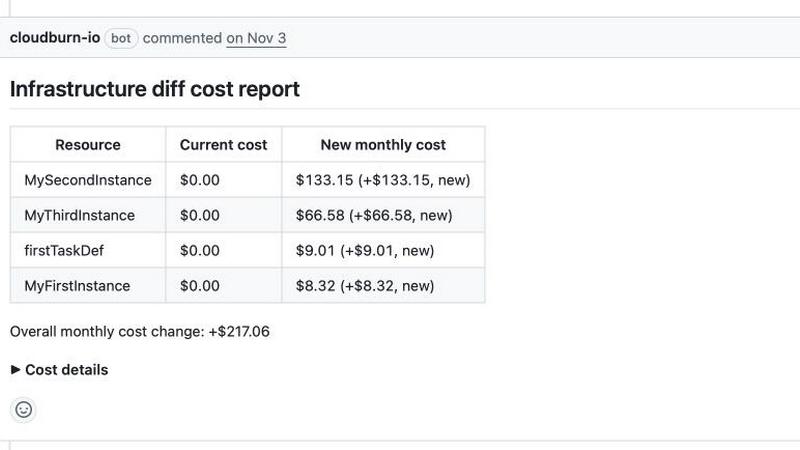
About CloudBurn
CloudBurn is a specialized FinOps platform engineered to proactively manage and optimize cloud expenditure by integrating cost intelligence directly into the software development lifecycle (SDLC). It specifically targets engineering and platform teams that utilize Infrastructure-as-Code (IaC) frameworks such as Terraform and AWS Cloud Development Kit (CDK). The platform's core innovation lies in its ability to provide real-time, granular AWS cost estimates during the code review phase, effectively "shifting left" the traditionally reactive practice of cloud cost management. This directly addresses a critical industry inefficiency highlighted by Gartner, which notes that through 2024, 60% of public cloud cost optimization efforts will be wasted due to a lack of actionable insight and timely processes (Gartner, "Innovation Insight for Cloud Cost Optimization Tools"). By automatically analyzing IaC diffs against live AWS pricing APIs and posting detailed cost reports as comments on pull requests (PRs), CloudBurn transforms cloud cost from a post-deployment surprise on a monthly bill into a first-class, pre-deployment design parameter. This empowers developers to make informed, cost-conscious architectural decisions before code merges to production, preventing costly misconfigurations and fostering a culture of financial accountability within engineering teams.
Features of CloudBurn
Real-Time Pre-Deployment Cost Estimation
CloudBurn provides immediate, accurate AWS cost projections by analyzing infrastructure changes directly within pull requests. It leverages real-time AWS Pricing APIs to calculate the monthly financial impact of new, modified, or deleted resources, presenting a clear breakdown in dollars. This feature eliminates the guesswork and manual spreadsheet modeling, giving teams precise cost visibility at the most actionable point in the development cycle.
Automated Pull Request Cost Reporting
The platform seamlessly integrates with GitHub workflows to automatically post detailed cost analysis as a comment on every relevant pull request. This report includes a summary of the overall monthly cost change and a line-item breakdown for each resource, showing current versus new costs. This automation embeds FinOps directly into the existing CI/CD pipeline, making cost review a mandatory and effortless part of the standard code review process.
Infrastructure-as-Code (IaC) Native Integration
CloudBurn is built specifically for modern IaC practices, offering dedicated support for popular tools like Terraform and AWS CDK. It works by analyzing the output of terraform plan or cdk diff commands, ensuring it understands the exact infrastructure delta. This native approach guarantees that cost estimations are based on the actual declarative code changes, not speculative manual inputs.
Secure GitHub-Centric Deployment
Setup and operation are handled entirely through GitHub, requiring no separate billing setup or sensitive credential management on a third-party platform. Permissions and installation are managed via GitHub Marketplace, making it secure and incredibly easy to adopt. This model minimizes security overhead and accelerates time-to-value, as teams can start receiving cost insights within minutes of installation.
Use Cases of CloudBurn
Preventing Costly Configuration Errors
Engineering teams can use CloudBurn to catch severe and expensive misconfigurations before they deploy. For instance, accidentally specifying a cluster of xlarge instances instead of micro instances would be immediately flagged with a potential cost overrun of thousands of dollars in the PR review, allowing for correction before the code ever reaches production and impacts the AWS bill.
Enabling Developer-Led Cost Optimization
CloudBurn empowers individual developers and code reviewers to own cost efficiency. By providing immediate feedback, it allows teams to discuss and iterate on infrastructure design for optimal performance and cost. Developers can experiment with different instance types, storage options, or service configurations in their feature branch and immediately see the financial trade-offs, fostering a "cost-aware" engineering culture.
Streamlining FinOps and Engineering Collaboration
The platform serves as a single source of truth for infrastructure cost discussions, bridging the gap between FinOps/Finance teams and Engineering. Instead of monthly bill shock and retrospective blame games, CloudBurn provides a forward-looking, collaborative framework. Engineering can justify infrastructure choices with data, and FinOps can provide guidance based on actual planned changes, not historical spend.
Accelerating Safe Deployment Velocity
For organizations practicing continuous deployment, CloudBurn adds a vital safety check without slowing down development. It automates a previously manual or overlooked cost review step, allowing teams to maintain high deployment frequency with confidence. This ensures that speed does not come at the expense of uncontrolled cloud spend, supporting both agility and fiscal responsibility.
Frequently Asked Questions
How does CloudBurn calculate the cost estimates?
CloudBurn calculates estimates by parsing the infrastructure change plan (from terraform plan or cdk diff) and querying the official AWS Pricing APIs in real-time. It uses the resource specifications, region, and intended usage patterns defined in your IaC code to fetch the most current On-Demand pricing. The tool then computes the projected monthly cost based on 730 hours of usage (24/7 operation) to provide a standardized, comparable figure for review.
Is my code or cloud credentials exposed to CloudBurn?
No, CloudBurn follows a secure, GitHub-centric model. Your IaC code never leaves your GitHub repository. The analysis is triggered by a GitHub Action within your own workflow, which sends only the textual output of the diff/plan command (which contains resource types and configurations, not secrets) to CloudBurn's analysis engine. Your AWS credentials remain entirely within your GitHub environment and are never shared with CloudBurn.
What IaC tools and cloud providers does CloudBurn support?
Currently, CloudBurn provides native and dedicated support for the two most prevalent Infrastructure-as-Code tools: HashiCorp Terraform and AWS Cloud Development Kit (CDK). The platform is designed for AWS cloud infrastructure, as it leverages AWS's own pricing APIs. Support for additional cloud providers like Microsoft Azure or Google Cloud Platform would depend on future development and customer demand.
Can CloudBurn show cost savings from deleting or modifying resources?
Yes, absolutely. CloudBurn's analysis is based on the diff between the current and proposed infrastructure state. If a pull request modifies a resource to a cheaper alternative or deletes a resource entirely, the cost report will clearly show a negative cost change, highlighting the projected monthly savings. This makes it valuable for optimization and cleanup initiatives, not just for reviewing new deployments.
Explore more in this category:
Similar to CloudBurn

No-code 2D game editor: visual node logic, drag-and-drop scenes, live preview. Exports to Windows, macOS, Linux, Android, iOS, Web.

A free launch checklist for SaaS, apps, AI tools and more. Every step says why it matters and when you can skip it.

Free collection of online developer utilities, code formatters, and digital converters designed to streamline your daily workflow.

Moderation, routing, intent and scoring for any text over one Jev-compatible API, hosted in the EU.

A free directory of 950+ projects built on Laya, the open-source decision model. Updated daily.

Online tally counter for tracking attendance, workouts, inventory, visitors, sports scores, habits, and everyday counting tasks.

The #1 Native Form Builder Plugin for Framer - No Code, No Embeds, No External Platforms.
