FindExams vs Interactive Circle of Fifths
Side-by-side comparison to help you choose the right product.

FindExams
Research shows FindExams' realistic simulations build 90% confidence for PMP, ITIL 4, and other key certification exams.
Last updated: March 18, 2026

Interactive Circle of Fifths
Master music theory with an interactive Circle of Fifths for scales, chords, and harmonization.
Last updated: March 1, 2026
Visual Comparison
FindExams
Interactive Circle of Fifths
Feature Comparison
FindExams
Realistic Exam Simulation Engine
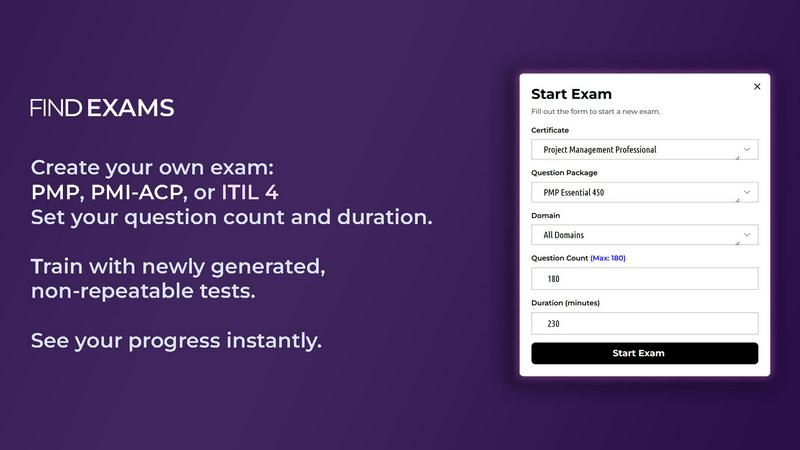
FindExams generates practice tests that meticulously replicate the conditions of official certification exams. This includes configurable timers, a domain-aligned question distribution as per the respective Exam Content Outline (ECO), and a user interface designed to minimize surprises on test day. The platform's question bank is curated to match the difficulty and scenario-based format prevalent in exams like PMP and ITIL 4, ensuring practice is both challenging and relevant.
Dynamic Question Randomization & Customization
To prevent pattern recognition and promote true understanding, every practice session features shuffled questions and regenerated answer variants. Users have granular control, allowing them to set the total question count, adjust the timer, and filter questions by specific domains or topics. This flexibility supports targeted study sessions for weak areas or full-length, timed mock exams for comprehensive readiness assessment.
Performance Analytics and Progress Tracking
The platform provides detailed post-exam analytics, breaking down performance by knowledge domain, average time spent per question, and overall accuracy. This data-driven insight, a hallmark of effective learning platforms, allows candidates to move from subjective feeling to objective measurement of their readiness. Tracking progress over time highlights improvement trends and pinpoints persistent knowledge gaps that require focused review.
Domain-Balanced Question Packages with Explanations
Each certification track offers extensive question packages (e.g., 600+ for PMP, 900+ for PMI-ACP) that are structured according to the official exam domains. Every question is accompanied by a detailed explanation for both correct and incorrect answers, transforming each practice item into a micro-learning opportunity. This aligns with best practices in instructional design, fostering deeper comprehension rather than simple answer recall.
Interactive Circle of Fifths
Dynamic Circle Visualization
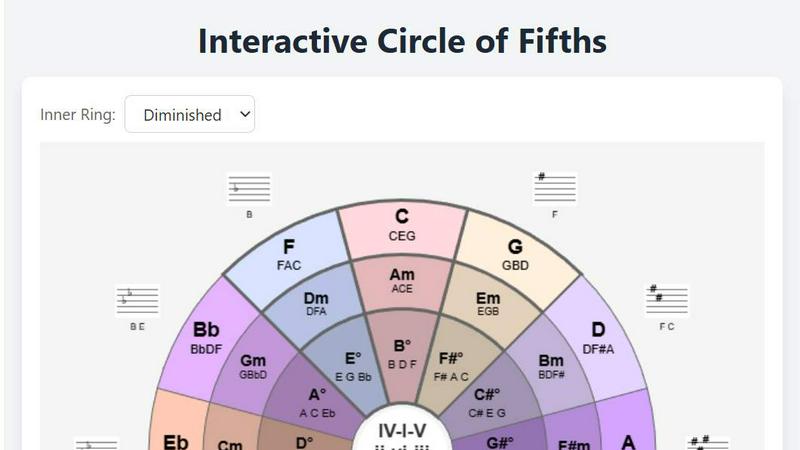
The core of the tool is a fully interactive Circle of Fifths that responds to user input. Selecting any key instantly updates the entire interface to display its related chords and scales. This dynamic visualization helps users intuitively grasp the geometric relationships between keys, understanding concepts like relative minors, key signatures, and the proximity of closely related keys, which is fundamental for modulation and composition as outlined in standard music theory pedagogy.
Integrated Instrument Visualizers (Piano & Guitar)
This feature provides immediate, practical application by displaying chord shapes and scale patterns on virtual piano and guitar fretboard interfaces. When a chord or scale is selected, the visualizer highlights the correct notes and recommended fingerings. This direct translation from theory to instrument is crucial for muscle memory and technical skill development, allowing learners to see and hear the theoretical concepts in the context of their primary instrument.
Comprehensive Scale & Chord Library
The tool offers an extensive library of musical constructs accessible through its inner ring and panel. Users can explore not only standard major and minor scales but also pentatonic, blues, diatonic, and diminished scales. Each scale can be harmonized, revealing its related chord family. This allows for deep analytical study, such as understanding why certain chords (like the V or vii°) create tension that resolves to the tonic, a cornerstone of Western harmonic function.
Chord Sequencer & Functional Analysis Panel
The dedicated panel displays the harmonized scale (e.g., C, Dm, Em, F, G, Am, B° for the key of C Major) alongside their Roman numeral analysis (I, ii, iii, etc.). This "Chord Sequencer" enables users to build and audition chord progressions while the "Function" information (Scale Degree, Resolves To) provides insight into the role each chord plays, teaching the principles of cadence and harmonic movement that define countless musical genres.
Use Cases
FindExams
Final-Stage Readiness Assessment for PMP Candidates
A project manager who has completed their formal training uses FindExams to take full-length, 180-question simulated exams under strict time constraints. The realistic scenario-based questions and performance analytics help them gauge if they have achieved the consistent >90% pass-rate benchmark recommended by the platform, ensuring they schedule their official exam only when truly prepared.
Targeted Agile Practice for PMI-ACP Aspirants
An agile practitioner struggling with specific domains like "Agile Principles and Mindset" or "Stakeholder Engagement" utilizes the domain-filtering feature to create custom quizzes. By focusing exclusively on these areas and reviewing the detailed explanations, they can efficiently strengthen their understanding of agile frameworks and real-world application scenarios before attempting a comprehensive test.
Building Exam Stamina and Time Management
A business analyst preparing for the PMI-PBA certification uses the timer customization to practice under increasingly stringent conditions. They start with untimed sessions to master content, then progress to timed domain quizzes, and finally undertake full-length simulations. This systematic approach builds the mental endurance and pacing skills critical for succeeding in a 4-hour exam.
Exploratory Learning with Free Demo Exams
A professional considering a new certification, such as IIBA-AAC, can utilize the free demo exam to experience the platform's interface and question style without financial commitment. This low-risk trial helps them assess the product's value and the nature of the exam content, aiding in their decision-making process before purchasing a full question package.
Interactive Circle of Fifths
Music Theory Education for Students
Ideal for classroom or self-directed learning, students can interact with the circle to understand key signatures, chord construction, and scale degrees in a hands-on manner. The visual and auditory feedback reinforces lessons on relative majors/minors and the cycle of fifths itself, transforming passive memorization into an active discovery process that enhances retention and comprehension of foundational concepts.
Songwriting and Composition Aid
Composers and songwriters can use the tool to break out of creative ruts. By experimenting with the chord sequencer in different keys, they can discover novel progressions and understand the functional relationships between chords. The ability to quickly switch keys and hear how a progression transforms is invaluable for arranging and developing musical ideas with coherent harmonic structure.
Instrumental Skill Development
Guitarists and pianists can use the instrument visualizers to learn new chord voicings, scale patterns, and their positions across the neck or keyboard. A guitarist, for example, can select the "Blues Scale" in A and see all applicable box patterns on the fretboard, facilitating targeted practice that directly improves improvisation and technical fluency on the instrument.
Music Analysis and Practice Planning
Advanced musicians and teachers can analyze songs by inputting their chord progressions into the tool to determine the key and understand the functional harmony at play. This analysis can then inform targeted practice sessions, such as focusing on the V-I cadence in various positions or practicing the diatonic arpeggios of a less familiar key, making practice time more efficient and effective.
Overview
About FindExams
FindExams is a sophisticated online certification exam simulator engineered for professionals seeking to validate their expertise through globally recognized credentials. The platform specifically targets individuals preparing for high-stakes exams including the Project Management Professional (PMP), PMI Agile Certified Practitioner (PMI-ACP), ITIL 4 Foundation, PMI Professional in Business Analysis (PMI-PBA), and the IIBA Agile Analysis Certification (IIBA-AAC). Its core value proposition is moving candidates beyond rote memorization by providing a realistic, high-fidelity testing environment that mirrors the structure, timing, pressure, and cognitive demand of the actual certification exams. Research in educational psychology, such as studies on test-enhanced learning (Roediger & Karpicke, 2006), consistently shows that practice testing is one of the most effective methods for knowledge retention and application. FindExams operationalizes this principle by offering domain-balanced, randomized question sets accompanied by detailed explanations. This approach enables users to not only assess their knowledge but also understand the underlying concepts, identify precise areas of weakness through performance analytics, and systematically build the confidence and stamina required to pass on their first attempt.
About Interactive Circle of Fifths
The Interactive Circle of Fifths is a sophisticated digital music theory tool designed to demystify the complex relationships between keys, chords, and scales. Moving far beyond a static diagram, it provides a dynamic, multi-sensory learning environment where users can visually explore and audibly experience core musical concepts. Its primary value proposition lies in translating abstract theory into practical, instrument-specific knowledge, making it an indispensable resource for a wide range of users. From beginners taking their first steps in understanding key signatures to advanced composers analyzing chord function and scale harmonization, the tool adapts to various skill levels. By integrating real-time piano and guitar visualizers, it bridges the gap between theoretical knowledge and physical application, showing exact finger positions and chord voicings. The tool's comprehensive coverage of musical constructs—including major and minor keys, diminished chords, and essential scales like pentatonic, blues, and diatonic—ensures a holistic approach to music education. Ultimately, it serves as a centralized platform for deepening harmonic understanding, crafting compelling progressions, and accelerating instrumental proficiency, solidifying its role as a foundational pillar for modern musical study and practice.
Frequently Asked Questions
FindExams FAQ
What certifications does FindExams support?
FindExams currently provides specialized exam simulation and question banks for five major professional certifications: Project Management Professional (PMP), PMI Agile Certified Practitioner (PMI-ACP), ITIL 4 Foundation, PMI Professional in Business Analysis (PMI-PBA), and the IIBA Agile Analysis Certification (IIBA-AAC). Each track is tailored to the specific Exam Content Outline and question format of its respective certification body.
How does the exam simulator mimic the real test?
The simulator replicates the real exam through multiple mechanisms: it uses a domain-balanced selection of questions aligned with the official exam blueprint, enforces a configurable timer to practice under time pressure, presents scenario-based questions of comparable difficulty, and randomizes both question order and answer choices for each attempt to ensure a unique and realistic experience every time.
Can I try FindExams before purchasing?
Yes. FindExams offers a free demo exam for each certification track. This allows prospective users to experience the platform's interface, question style, and core functionality firsthand. The demo provides a practical way to evaluate the tool's effectiveness before selecting and investing in a full question package or premium plan.
What kind of feedback will I get after a practice test?
Upon completing a practice exam, you receive a detailed score report and analytics. This includes your overall score, a breakdown of your performance by knowledge domain (e.g., Process, People, Business Environment for PMP), the average time taken per question, and a review of all questions with comprehensive explanations for each answer option to clarify the underlying concepts.
Interactive Circle of Fifths FAQ
What is the Circle of Fifths and why is it important?
The Circle of Fifths is a visual representation of the relationships between the 12 tones of the chromatic scale, their corresponding key signatures, and their associated major and minor keys. It is a fundamental music theory tool because it organizes keys by the number of sharps or flats they contain, reveals closely related keys for modulation, and illustrates the foundational harmonic relationships (like the dominant-tonic connection) that underpin most Western music. This interactive tool brings that static diagram to life.
Can I use this tool if I'm a complete beginner?
Absolutely. The Interactive Circle of Fifths is designed with a gentle learning curve. Beginners can start by simply clicking on a key like C Major and hearing its scale or primary chords. The clear visual layout and instant auditory feedback help demystify basic concepts. It's recommended to start with the "Major" scale and the "Harmonized Scale" panel to first understand how basic triads are built within a key before exploring more advanced features.
How do the piano and guitar visualizers help me learn?
The visualizers translate abstract musical notes into concrete finger positions on your instrument. When you select a chord, you don't just see the note names (e.g., C, E, G); you see where to place your fingers on a piano keyboard or guitar fretboard to play that chord in a standard voicing. This bridges the gap between knowing a chord theoretically and being able to play it physically, which is essential for practical skill development and improvisation.
What is the "Function" information (Scale Degree, Resolves To) used for?
This information teaches you about harmonic function—the role a chord plays in a progression. "Scale Degree" (like I, IV, V) identifies the chord's position in the key. "Resolves To" indicates the chord's natural tendency (e.g., the V chord strongly resolves to the I chord). Understanding this is key to writing progressions that sound purposeful and emotionally directed, and for analyzing why the chords in your favorite songs work so well together.
Alternatives
FindExams Alternatives
FindExams is a specialized exam simulator platform within the education and learning technology category, focusing on professional certifications like PMP, PMI-ACP, and ITIL 4. It provides a realistic testing environment with detailed analytics to help candidates identify knowledge gaps and improve readiness. Users may seek alternatives to FindExams for various reasons, including budget constraints, a need for different learning modalities like video instruction or flashcards, or a desire for a platform that supports a broader or different set of certifications. The specific feature set, user interface, and depth of question bank explanations are also common decision factors. When evaluating alternatives, prioritize platforms that offer high-quality, domain-balanced question banks with detailed rationales for answers. Credible performance analytics and a testing interface that closely mimics the actual exam's timing and structure are critical for effective preparation. Ultimately, the best choice aligns with your preferred learning style and provides the most authentic practice experience.
Interactive Circle of Fifths Alternatives
The Interactive Circle of Fifths is a sophisticated digital music theory tool within the education and learning software category. It is designed to provide an interactive, multi-instrumental approach to understanding key relationships, chord progressions, and scale patterns through dynamic visual and auditory feedback. Users may seek alternatives for various practical reasons. These can include budget constraints, a need for platform-specific applications (like mobile-first tools), or a desire for features tailored to a different learning style or specific instrument focus beyond piano and guitar. Some may also look for software that integrates directly with digital audio workstations for composition. When evaluating alternatives, key considerations should be the depth of music theory covered, the quality of instrument-specific visualizers, the range of scales and modes included, and the overall user experience. The goal is to find a tool that effectively bridges theoretical knowledge with practical application, supporting the user's specific musical journey and instrumental goals.