
Deeploy vs Fusedash
Side-by-side comparison to help you choose the right product.

Deeploy provides the essential governance infrastructure to manage AI risk and ensure compliance at scale.
Last updated: March 1, 2026

Fusedash is an AI-powered platform that transforms raw data into actionable dashboards and charts for instant team.
Last updated: March 4, 2026
Visual Comparison
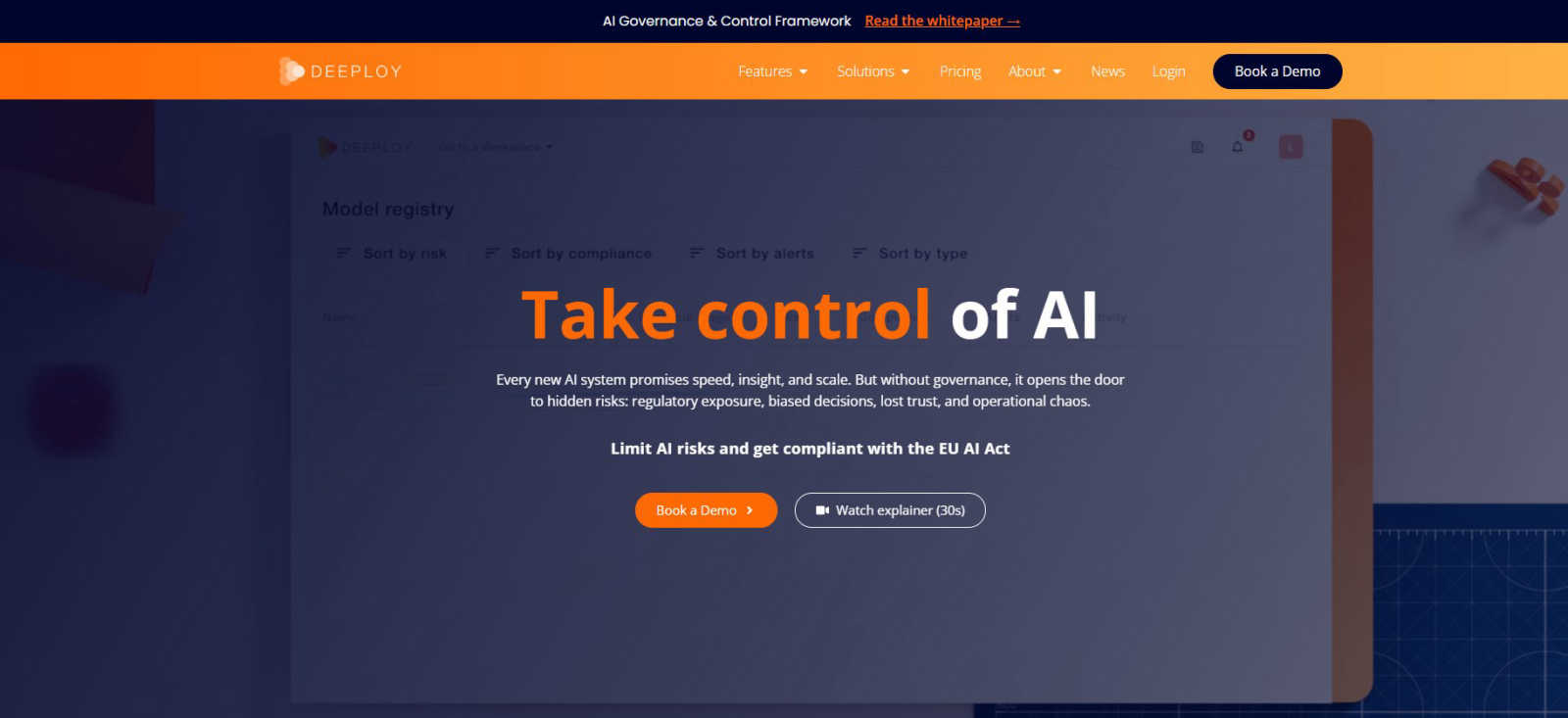
Deeploy
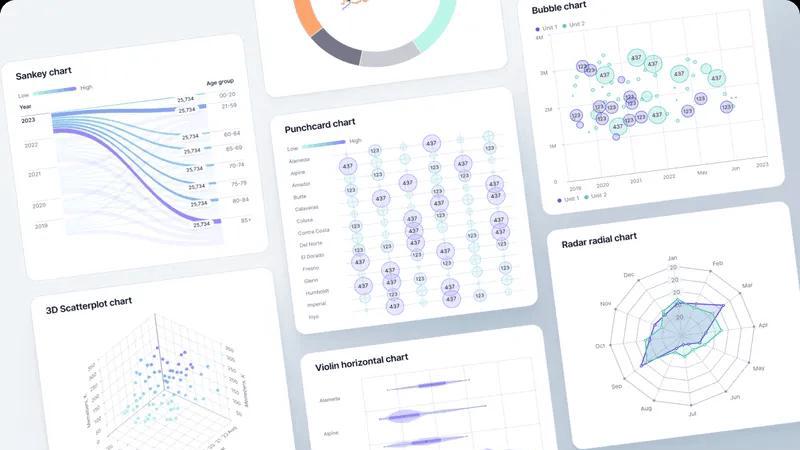
Fusedash
Feature Comparison
Deeploy
AI Discovery and Onboarding
Deeploy provides complete visibility across an organization's AI landscape. It allows teams to discover, onboard, and manage every AI system—whether built on MLOps platforms, GenAI tools, or embedded systems—from a centralized dashboard. This eliminates blind spots and creates a single source of truth for all AI assets without requiring costly migration from existing platforms. The flexible onboarding process ensures that even disparate AI implementations can be brought under unified governance, establishing the foundational inventory required for effective oversight and compliance documentation.
Control Frameworks and Compliance
The platform simplifies navigating complex AI regulations through guided workflows and pre-built control frameworks. Organizations can adopt default frameworks aligned with major standards like ISO 42001 and the NIST AI Risk Management Framework (RMF) or build custom ones tailored to internal policies. Deeploy enables rapid AI system risk classification and establishes clear accountability with structured approval processes. This feature demystifies compliance, turning what is often a manual, legal-heavy burden into a streamlined, manageable operational procedure, directly addressing mandates like the EU AI Act.
Control Implementation and Automation
Deeploy translates high-level governance policies into enforceable, engineer-friendly controls. It automatically assigns the correct requirements to each AI system based on its risk profile, giving technical teams clear and actionable tasks. The platform accelerates compliance by up to 90% through the use of templates and automated evidence collection, reducing manual documentation work. Furthermore, it employs AI-powered assessments to handle repetitive compliance checks, ensuring governance is consistently applied and actually followed by engineering teams rather than being a bureaucratic hurdle.
Real-Time Monitoring and Explainability
This feature provides proactive oversight of AI systems in production. Deeploy monitors model performance, data drift, and output anomalies in real-time, sending instant alerts to prevent incidents before they impact users or create compliance breaches. It adds crucial tracing and guardrails to protect Large Language Model (LLM) outputs. Integrated explainability tools, such as feature contribution analysis, make AI decisions interpretable for both technical and non-technical stakeholders, building transparency and enabling effective human feedback loops to ensure safe and responsible AI operation.
About Fusedash
Unified AI-Powered Workspace
Fusedash consolidates the entire data visualization workflow into a single platform, eliminating the need to juggle multiple tools. Users can create decision-ready dashboards, interactive charts, detailed geospatial maps, and narrative reports all from the same connected dataset. This integrated approach, which combines visualization, storytelling, and real-time monitoring, significantly reduces the time spent on rebuilding and reconciling reports across different systems, allowing teams to focus on deriving and acting on insights.
AI Chart Generator
This feature accelerates the initial stages of data analysis by enabling users to generate clear, appropriate charts from CSV files or connected APIs in minutes. The AI assists in selecting the optimal chart type, applying relevant comparisons, and refining labels to ensure the visual accurately tells the data's story. These AI-generated charts can be used as standalone visuals for quick reports or seamlessly dropped into comprehensive dashboards, promoting reusability and consistency.
Consistent Metric Definitions & Governance
A foundational feature of Fusedash is the ability to define core metrics, dimensions, and KPIs in a centralized manner. Once established, these definitions are automatically applied and reused across every view, dashboard, and report built on the platform. This enforced consistency is critical for data integrity, ensuring all stakeholders across departments are analyzing and making decisions based on the same trusted numbers, thereby eliminating conflicting data stories.
Smart AI Chat for Data Exploration
Fusedash incorporates a natural language interface that allows users to interact with their data conversationally. Users can ask questions in plain language, request specific breakdowns by segment or region, and receive AI-suggested metrics and chart types. This feature lowers the barrier to entry for data exploration and can instantly turn conversational insights into shareable, persistent dashboard views, streamlining the path from question to actionable visual.
Use Cases
Deeploy
Regulatory Compliance for Financial Services
Financial institutions use Deeploy to achieve and demonstrate compliance with stringent regulations like the EU AI Act and internal risk mandates. The platform's centralized registry and automated evidence collection provide auditors with a clear, documented trail of all AI systems, their risk classifications, and the controls in place. This is critical for high-stakes use cases like credit scoring or fraud detection, where explainability and auditability are non-negotiable for both regulators and customer trust.
Scalable AI Governance in Healthcare
Healthcare providers and digital health platforms leverage Deeploy to govern AI used in patient diagnostics, treatment recommendations, and mental health support. The platform's real-time monitoring and built-in explainability are crucial for clinical oversight, allowing medical professionals to understand AI-driven insights. The human feedback loop feature enables continuous improvement and validation of models, ensuring AI tools are safe, effective, and ethically deployed within sensitive care environments.
Centralized AI Oversight for Enterprise IT
Large enterprises with AI scattered across multiple business units and vendor platforms use Deeploy to regain control. The AI discovery capability maps all active systems, while the unified dashboard gives CIOs and heads of AI complete visibility into performance, costs, and risks. This central oversight prevents shadow IT, optimizes resource allocation, and ensures all AI initiatives align with corporate governance standards, enabling scalable and secure AI adoption across the organization.
Accelerating Model Deployment and MLOps
Data science and MLOps teams utilize Deeploy to streamline the path from development to production. The platform simplifies model deployment, reducing the process from weeks to hours. Once deployed, it provides continuous observability with performance dashboards and explainability reports. This not only accelerates innovation cycles but also bridges the gap between technical teams and business stakeholders by making model behavior transparent and actionable for continuous improvement.
Fusedash
Executive & Leadership Reporting
Leadership teams require a high-level, consistent view of organizational health. Fusedash enables the creation of executive dashboards that combine real-time KPI monitoring with narrative "storytelling" sections. This provides context on what changed, why it matters, and what the next steps are, ensuring all leaders are aligned on performance and strategy without sifting through conflicting reports from different departments.
Marketing Performance Analysis
Marketing teams can use Fusedash to unify data from various channels (social media APIs, ad platforms, CRM systems) into a single dashboard. They can track campaign KPIs, use the AI chart generator for rapid analysis of A/B test results, and employ geospatial maps to visualize regional performance. The consistent definitions ensure that metrics like CAC (Customer Acquisition Cost) or ROAS (Return on Ad Spend) are calculated uniformly across all reports.
Operational & Real-Time Monitoring
Operations and support teams need live visibility into key processes. Fusedash's real-time interface allows for the creation of monitoring dashboards that track live metrics, such as website uptime, customer support ticket volume, or production line output. Teams can set alerts and drill down into specific time periods or segments to diagnose issues as they occur, moving from passive observation to proactive management.
Cross-Departmental Data Democratization
Organizations seeking to foster a data-driven culture can deploy Fusedash as a shared platform. Different teams—sales, finance, product—can build their own tailored views (dashboards, charts, reports) from the same governed dataset. The AI chat feature empowers non-analyst employees to ask their own data questions, reducing the bottleneck on data specialists and enabling faster, more widespread insight discovery.
Overview
About Deeploy
Deeploy is an advanced AI governance and risk management platform designed to provide organizations with centralized oversight, compliance, and monitoring for their entire artificial intelligence portfolio. As AI systems proliferate across models, vendors, and embedded applications, they create a fragmented landscape fraught with operational blind spots and regulatory risks. Deeploy addresses this critical gap by serving as the essential governance infrastructure for the modern AI stack. It enables enterprises to discover, document, and manage every AI system from a single interface, transforming a chaotic "jungle of AI systems" into a controlled, auditable, and compliant environment. The platform is particularly vital for sectors like finance and healthcare, where stringent regulations such as the EU AI Act demand rigorous accountability and transparency. By integrating flexible onboarding, real-time monitoring, explainability, and automated compliance workflows, Deeploy empowers organizations to scale their AI initiatives with confidence, ensuring innovation is balanced with responsibility and trust.
About Fusedash
Fusedash is an AI-powered data visualization and business intelligence platform engineered to eliminate data silos and reporting inconsistencies within modern organizations. It functions as a unified workspace where teams can transform raw, connected data from disparate sources into clear, interactive, and actionable insights. The platform is specifically designed for teams burdened by manual reporting cycles, conflicting data narratives, and the inefficiency of rebuilding the same analytical logic across multiple, disconnected tools like spreadsheets, standalone BI software, and presentation decks. Its core value proposition, as supported by industry research on data-driven decision-making, is the establishment of a single source of truth. By allowing users to define key metrics and KPIs once, Fusedash ensures these consistent definitions are reused across every dashboard, chart, map, and narrative report. This governance model not only accelerates report creation but also guarantees alignment across the organization—from executive leadership to marketing and operations teams. Furthermore, Fusedash integrates advanced AI capabilities, including natural language data chat and smart visualization assistance, to democratize data exploration and make sophisticated analysis accessible to non-technical users. Ultimately, it empowers organizations to move beyond passive monitoring to active understanding, enabling users to drill down into the "why" behind performance shifts and drive unified action based on trusted data.
Frequently Asked Questions
Deeploy FAQ
How does Deeploy help with the EU AI Act?
Deeploy is specifically engineered to address the core requirements of the EU AI Act. It provides tools for mandatory AI system inventory creation, risk classification based on the Act's categories, and implementation of corresponding conformity measures. The platform's automated evidence collection and audit trails generate the necessary documentation for compliance assessments. Its real-time monitoring and explainability features directly support the Act's mandates for transparency and human oversight, particularly for high-risk AI systems.
Can Deeploy integrate with our existing MLOps and AI vendor platforms?
Yes, a core strength of Deeploy is its flexible integration capability. It is designed to connect with any major MLOps platform (e.g., MLflow, Sagemaker) and GenAI vendor APIs without requiring you to migrate your existing workflows. This "connect-first" approach allows you to maintain your current tech stack while adding a centralized governance layer on top, eliminating blind spots and bringing all AI activities under a single pane of glass for management and oversight.
What is meant by "explainability" in Deeploy?
Explainability in Deeploy refers to the platform's ability to make AI model decisions interpretable to humans. For traditional machine learning models, it provides techniques like feature importance scores to show which input factors most influenced a specific prediction. For Large Language Models (LLMs), it offers tracing and output analysis. This transparency is crucial for debugging models, building trust with end-users, fulfilling regulatory "right to explanation" clauses, and enabling subject matter experts to provide meaningful feedback to improve system performance.
Who are the primary users of Deeploy within an organization?
Deeploy serves a cross-functional audience. AI Governance & Risk Officers use it to set policies and ensure compliance. Data Science & MLOps Engineers use it to deploy models and implement controls. Business Leaders & Product Managers rely on its dashboards for visibility into AI performance and risk. Legal & Compliance Teams utilize its automated documentation for audits. This multi-user design ensures governance is a collaborative, integrated process rather than a standalone compliance checkpoint.
Fusedash FAQ
What types of data sources can I connect to Fusedash?
Fusedash offers flexible data integration capabilities. You can start by uploading static CSV files for one-time analysis or connect directly to live data sources via API integrations. The platform is designed to combine multiple datasets—including enriching your views with public data for geographic or market context—into a single, coherent workspace for analysis and reporting.
How does Fusedash ensure data consistency across my organization?
Fusedash employs a centralized metric definition system. When you define a key performance indicator (KPI), such as "Monthly Recurring Revenue," you establish its calculation formula, data source, and filters once. This definition is then locked and reused automatically in every dashboard, chart, and report that references that KPI, ensuring absolute consistency and eliminating version control issues common in spreadsheet-based reporting.
Is the AI Chat feature suitable for users without technical or SQL knowledge?
Absolutely. The Smart AI Chat feature is specifically designed to democratize data access. Users can ask questions using natural, plain language (e.g., "What were sales in the Northwest region last quarter?" or "Show me a trend of website traffic by source"). The AI interprets the query, fetches the relevant data, and can suggest appropriate visualizations, making advanced data exploration accessible to business users without coding skills.
Can I share the dashboards and reports created in Fusedash with external stakeholders?
Yes, Fusedash includes robust sharing and collaboration functionalities. You can share interactive dashboards or snapshot reports with both internal team members and external stakeholders, such as clients or investors. Access can be controlled, and views can be customized with specific filters to ensure each audience sees the most relevant information without exposing underlying sensitive data.
Alternatives
Deeploy Alternatives
Deeploy is an AI governance platform within the business intelligence and compliance software category. It provides organizations with a centralized system for managing oversight, compliance, and risk across their AI initiatives, which is increasingly critical under regulations like the EU AI Act. Organizations may seek alternatives to Deeploy for various reasons. Common considerations include budget constraints and specific pricing models, the need for different feature sets or deeper integrations with existing MLOps tools, and platform requirements such as deployment options (SaaS vs. on-premise) or scalability needs for very large or complex AI portfolios. When evaluating an alternative AI governance solution, key factors to assess include the platform's ability to provide comprehensive visibility and automated discovery of AI models, its support for relevant regulatory frameworks and customizable controls, and the depth of its monitoring, explainability, and audit trail capabilities. The ideal solution should reduce manual compliance overhead while integrating smoothly into your existing technology stack.
Fusedash Alternatives
Fusedash is an AI-powered business intelligence and data visualization platform. It is designed to help teams consolidate data from various sources into a unified workspace, creating consistent dashboards, charts, and reports that serve as a single source of truth for organizational decision-making. Users may explore alternatives to Fusedash for several common reasons. These include budget constraints and specific pricing model needs, the requirement for specialized features or deeper integrations with an existing tech stack, and differing preferences for user interface complexity or scalability for larger enterprise deployments. The search often stems from a need to find the optimal balance of power, accessibility, and cost for a team's unique data maturity and workflow. When evaluating alternatives, key considerations should include the platform's core data modeling capabilities, ensuring metric definitions remain consistent across reports. Assess the ease of use for both analysts building views and business users consuming insights, and verify robust data security and governance features. Finally, consider the total cost of ownership, including implementation effort and the platform's ability to scale with your data volume and team growth.