Alertr: Inventory Management vs Finsi OS
Side-by-side comparison to help you choose the right product.

Alertr: Inventory Management
Know what's low. Reorder at the right time.

Finsi OS
Finsi OS is an AI operating system that boosts e-commerce retention and profitability through automated insights.
Last updated: February 27, 2026
Visual Comparison
Alertr: Inventory Management
Finsi OS
Overview
About Alertr: Inventory Management
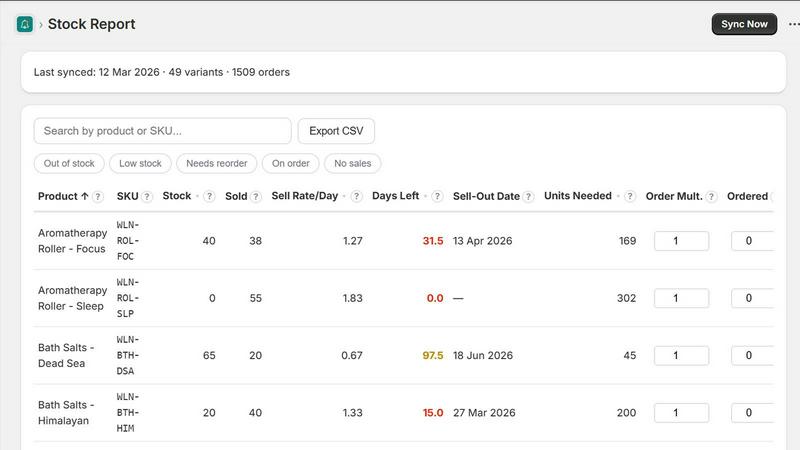
The simplest Shopify inventory app on the market. 1-click setup. Tracks what's about to run out, tells you when to reorder.
Manual stock checks miss things. By the time you notice, you've already lost sales. Spreadsheets go stale. Shopify's built-in tools don't alert you proactively. The apps that do cost $40-$250/mo.
Syncs your inventory daily, calculates sell rates, and alerts you when stock drops below your thresholds. Configue your own assumptions and export your data to CSV.
About Finsi OS
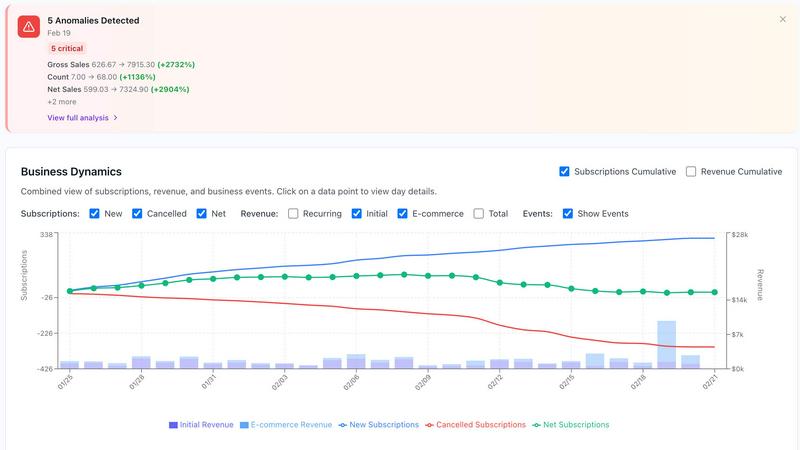
Finsi OS is an AI Revenue Intelligence platform that functions as a comprehensive operating system for direct-to-consumer (DTC) e-commerce and subscription brands. It is engineered to solve the pervasive problem of data chaos, where operators spend excessive time reconciling information from disparate sources like Shopify, Recharge, Klaviyo, and ad platforms instead of acting on strategic insights. The platform's core value proposition is moving brands from passive observation to proactive, automated execution. It unifies a brand's entire tech stack, applies predictive AI to analyze customer behavior and profitability, and delivers ranked, actionable recommendations. Crucially, Finsi OS doesn't just surface insights; its integrated modules enable automatic execution of retention campaigns, ad management, and personalized marketing, directly impacting key metrics. Built by the team that scaled Scentbird, it encapsulates over a decade of retention expertise. Proven outcomes for users include a 20% average increase in Customer Lifetime Value (LTV), a 50% reduction in customer acquisition costs (CAC), and saving teams an average of four hours weekly on manual reporting, according to pilot customer data.