
IPCONFIG
IPCONFIG.COM provides global IP lookup and professional ping tests to enhance network performance and insights.
Visit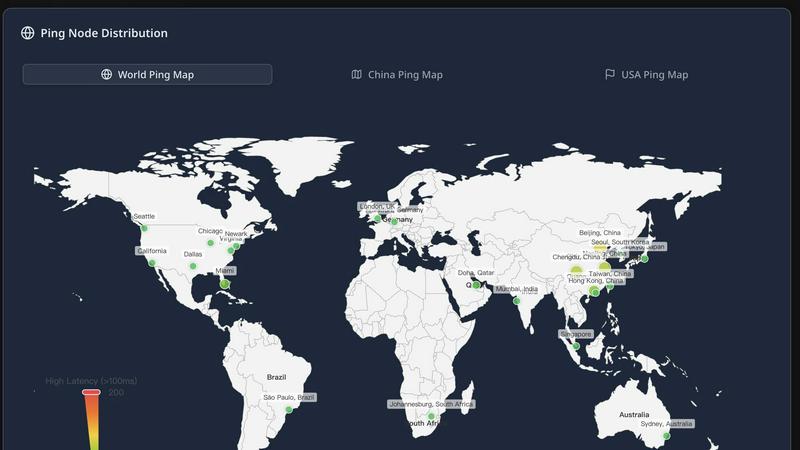
About IPCONFIG
IPCONFIG is a comprehensive, web-based networking utility platform designed to democratize network diagnostics and IP address management. It serves as an essential, no-installation-required toolkit for a wide range of users, from IT professionals and developers to everyday internet users seeking to understand their network environment. The platform's core value proposition lies in its ability to provide instant, actionable insights into network performance and configuration directly from a web browser, eliminating the need for complex command-line tools or specialized software. By offering a suite of integrated tools—including IP geolocation lookup, global ping testing, speed assessment, and bandwidth analysis—IPCONFIG transforms intricate network data into an accessible, user-friendly format. This approach aligns with modern DevOps and SRE (Site Reliability Engineering) practices that prioritize quick diagnostics and monitoring. The platform's architecture, supporting direct access via Web, cURL, Python, and Next.js, underscores its commitment to versatility and integration into automated workflows, making it a credible resource for both ad-hoc troubleshooting and systematic network analysis.
Features of IPCONFIG
IP Address & Geolocation Lookup
This feature provides immediate, detailed intelligence on any public IP address or domain. It returns comprehensive data including geographic location (city, region, country), Internet Service Provider (ISP), Autonomous System Number (ASN), network type, and timezone. The tool supports both IPv4 and IPv6 addresses, offering crucial information for security audits, content localization, and network troubleshooting. The accuracy of this geolocation data is vital for applications ranging from fraud detection to compliance with regional data regulations.
Global Ping Test & Latency Analysis
IPCONFIG operates a distributed network of over 20 test nodes across 7 continents, enabling users to perform ping tests to global destinations. This measures round-trip time (latency) and packet loss to specific targets, which are key metrics for assessing network path quality and server responsiveness. For developers and administrators, this data is critical for optimizing application performance, diagnosing connectivity issues, and selecting optimal server or CDN locations based on empirical latency metrics from various global points.
Integrated Speed & Bandwidth Test
The platform includes tools to evaluate internet connection performance by measuring download and upload speeds, as well as overall bandwidth capacity. This provides users with a clear understanding of their actual versus advertised connection performance, which is essential for diagnosing slow internet issues, verifying service level agreements (SLAs) with ISPs, and ensuring adequate bandwidth for video conferencing, large file transfers, or real-time applications.
API-First Access & Developer Tools
Beyond the web interface, IPCONFIG is built with developers in mind, offering programmatic access via cURL commands, Python scripts, and Next.js integrations. This API-first approach allows for the automation of network diagnostics, embedding IP lookup functionality into applications, and continuous monitoring systems. The structured JSON responses facilitate easy data parsing and integration into larger IT infrastructure management and security platforms.
Use Cases of IPCONFIG
Proactive Network Troubleshooting for SysAdmins
System administrators can use IPCONFIG's ping and speed tests to preemptively identify network degradation or outages. By testing latency to critical external services and internal nodes from a browser, they can quickly isolate whether an issue is local, within their ISP's network, or at a remote server, significantly reducing mean time to resolution (MTTR) without needing direct server access.
Geolocation Verification for Security Teams
Security analysts utilize the IP lookup tool to investigate suspicious login attempts or potential fraud. By querying the geographic origin and ISP details of an IP address, they can cross-reference this information with user profiles to flag impossible travel scenarios or connections from high-risk regions, enhancing threat detection and access control policies.
Developer Debugging and Service Localization
Developers building web applications can use the tool to simulate user experiences from different global locations via the ping test nodes. This helps in debugging location-specific API failures and optimizing content delivery. Furthermore, the geolocation API can be integrated to customize website content, pricing, or language based on a user's inferred location from their IP address.
Educational Tool for Networking Students
Students and individuals learning about computer networking can use IPCONFIG's intuitive interface to visually explore concepts like public vs. private IPs, DNS resolution, latency, and bandwidth. The instant feedback from tools like "What is my IP address?" provides a practical, hands-on complement to theoretical study of TCP/IP and network infrastructure.
Frequently Asked Questions
What is the difference between my public and private IP address?
Your private IP address (e.g., 192.168.x.x) is assigned by your local router to identify devices on your home or office network and is not routable on the public internet. Your public IP address, which IPCONFIG displays, is assigned by your Internet Service Provider (ISP) and serves as the unique, global identifier for your entire network to the outside world. All devices behind your router share this single public IP for outgoing communications.
How accurate is the IP geolocation data provided?
The geolocation data is derived from commercial and proprietary IP address databases that map IP ranges to geographic regions. While highly accurate at the country and often city level, it is not precise enough to pinpoint an exact physical address. Accuracy can be affected by factors such as mobile carrier networks, VPNs, and proxy servers, which may report the location of their exit node rather than the end user's true location.
Why does my public IP address change?
Dynamic IP addressing is standard practice for most residential ISPs. Your public IP can change due to router reboots, prolonged offline periods, or as part of the ISP's normal address pool management to conserve IPv4 addresses. Business accounts often have static (unchanging) IPs. IPCONFIG is useful for quickly checking your current public IP whenever needed.
Can I use IPCONFIG tools programmatically for automation?
Yes, IPCONFIG is designed for automation. The platform provides clear examples for using its core features via cURL commands and Python scripts, allowing you to integrate IP lookup and network testing into your own monitoring dashboards, CI/CD pipelines, or security automation workflows. Always review the rate limits associated with your chosen plan when designing automated systems.
Pricing of IPCONFIG
IPCONFIG offers a tiered pricing model to cater to different user needs, from casual personal use to high-demand professional applications. All plans operate on a credit system, where actions like an IP geolocation query or a ping test to a single node consume one credit.
- Free Plan ($0/month): Designed for basic, intermittent use, offering 1,000 refilled credits monthly. It includes standard rate limits (10 queries/minute) and is suitable for learning or occasional personal diagnostics without technical support.
- Pro Plan ($4.9/month, billed annually): This popular plan targets professionals and developers, providing 50,000 monthly credits and significantly higher rate limits (10 queries/second). It includes access to Discord community support for troubleshooting and guidance.
- Lifetime Plan ($499 one-time payment): Aimed at businesses or power users requiring high-volume, sustained access, this plan includes a one-time payment for permanent access with 1,000,000 credits refilled monthly and the highest rate limits (100 queries/second), accompanied by priority chat support. All payments are securely processed by Stripe, ensuring bank-level security and PCI compliance.