Miget vs Vidori
Side-by-side comparison to help you choose the right product.

Miget
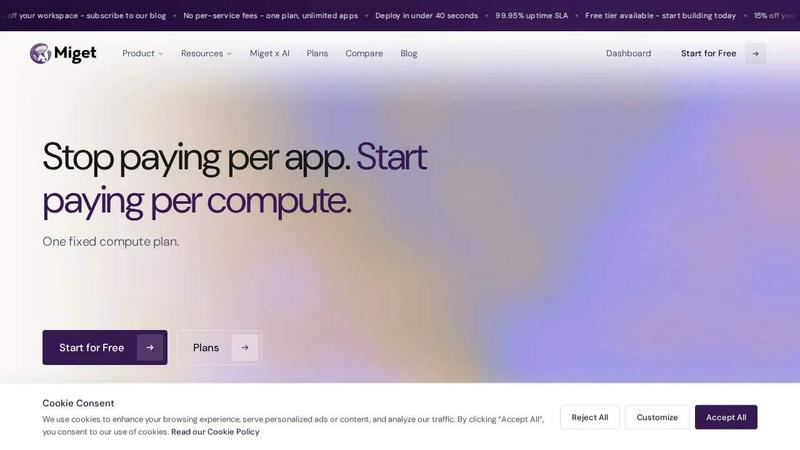
Miget offers unlimited app deployments on one flat-rate compute plan, eliminating per-service fees and enabling rapid scaling.
Last updated: April 13, 2026

Vidori
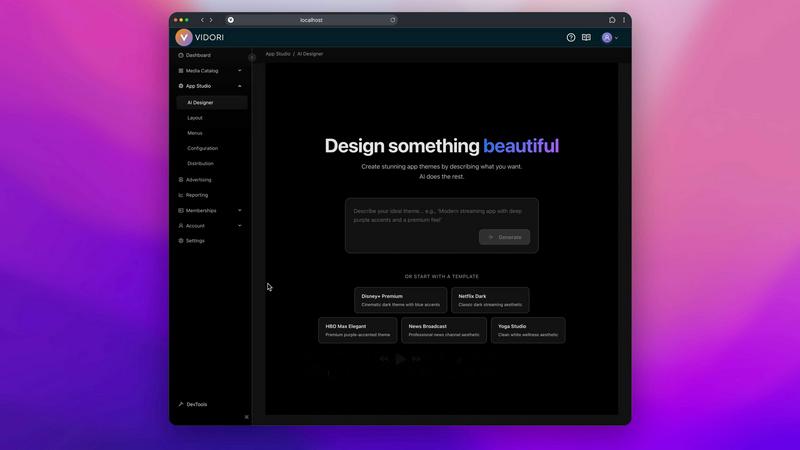
Vidori enables creators to effortlessly launch branded streaming apps across all platforms without coding or revenue.
Last updated: February 27, 2026
Visual Comparison
Miget
Vidori
Feature Comparison
Miget
Predictable, Capacity-Based Pricing
Miget's primary feature is its revolutionary billing model. Instead of charging for each individual app, database, or worker, you purchase a block of compute resources. Within that fixed-cost plan, you can deploy an unlimited number of services. This model, as highlighted by industry analysis, directly counters the "bill shock" common in traditional PaaS offerings, providing financial predictability and removing barriers to deploying new features, microservices, or preview environments.
Zero-Config Git and GitHub Deployments
The platform offers seamless integration with Git and GitHub, enabling true push-to-deploy workflows. Upon connecting a repository, Miget automatically handles building, caching, and shipping code with no manual CI/CD configuration required. Every push to the main branch triggers a production deploy, and every pull request generates an isolated, full-stack preview environment with a unique URL, streamlining development and review cycles significantly.
Managed Data Services Within Compute Budget
Miget includes managed databases like PostgreSQL and in-memory stores like Valkey (a Redis-compatible solution) as integral components of its platform, not as add-on services with separate fees. These data services run within your purchased compute allocation, ensuring you get a complete application stack—compute, database, and cache—without the per-component billing typical of other platforms, which research shows can constitute over 50% of a standard PaaS invoice.
Full-Stack Preview Environments
For every pull request, Miget automatically spins up a complete, isolated clone of your application stack, including the application code, database schema, and data. This allows developers and stakeholders to test features against real conditions without affecting production. This capability, often a costly premium feature elsewhere, is included standard, enhancing software quality and team collaboration without impacting the monthly bill.
Vidori
White-Label Video Streaming Apps
Vidori allows users to launch branded streaming applications across multiple platforms, including iOS, Android, Roku, and Fire TV. Users can fully customize their app's branding, including logos, colors, and domains, ensuring a unique presence without any unwanted "Powered by" labels unless desired.
Monetization Flexibility
With built-in features for subscriptions, pay-per-view options, and promotional codes, Vidori offers creators a range of monetization strategies. This flexibility enables users to cater to different audience preferences, maximizing revenue potential through customizable payment models.
Comprehensive Analytics Dashboard
Vidori provides an advanced analytics dashboard that delivers insights into viewer behavior, watch time, and revenue metrics. This data empowers creators to understand their audience better, optimize content offerings, and make informed decisions to enhance viewer engagement and retention.
AI-Driven Optimization Agents
Vidori stands out with its autonomous AI agents that enhance content and viewer interactions. These agents optimize titles, descriptions, and thumbnails, personalize viewer experiences with tailored recommendations, and run pricing experiments to improve revenue, making it a unique offering in the streaming space.
Use Cases
Miget
Indie Hackers and Solo Developers
For solo builders and indie hackers, Miget provides a fast, affordable launchpad. They can deploy a full application with a backend, database, and background workers on a single, predictable plan. The fixed monthly cost eliminates budgeting uncertainty, while the GitHub-native deployment and preview apps per PR enable rapid iteration and professional-grade development practices typically associated with larger teams, all from day one.
Growing Startups and Product Teams
Startups experiencing growth can scale their application architecture—adding new microservices, internal tools, or staging environments—without constantly re-evaluating infrastructure costs. Miget allows them to stay within a known cost envelope while benefiting from horizontal autoscaling within their allocation. Features like team roles, audit logs, and SSO support the transition from a small team to a more structured organization.
Enterprise Development and Internal Platforms
Enterprises can leverage Miget to standardize developer experience and control cloud spend across departments. The platform supports bringing your own cloud (BYOC) or bare metal, and offers tools like Helm charts and Terraform for custom orchestration. This provides the governance, security, and compliance required by large organizations while giving development teams a simple, Heroku-like interface for productivity.
AI and Prototype Development
Developers working with AI-generated code or rapid prototypes benefit immensely from Miget's instant deployment capabilities. The ability to deploy from a prompt or a simple push, coupled with one-click infrastructure setup via skills.md files, allows for immediate validation of ideas. Preview URLs can be shared instantly with collaborators or stakeholders, making it an ideal platform for hackathons and experimental projects.
Vidori
Independent Creators
Independent creators can leverage Vidori to launch their own streaming services without the need for coding or technical skills. They can easily monetize their video content while maintaining full control over their brand and audience relationships.
Media Companies
Media brands can utilize Vidori to expand their digital footprint by launching branded streaming apps that cater to specific audiences. This allows them to create a more personalized viewing experience while retaining all revenue generated through subscriptions and advertising.
Event Organizers
Event organizers can use Vidori to offer pay-per-view access to live events, such as concerts, conferences, or webinars. This capability enables them to generate additional revenue streams while engaging with audiences in real-time.
Educational Institutions
Educational institutions can create branded streaming platforms to deliver online courses and educational content. With customizable subscription models and comprehensive analytics, they can track student engagement and optimize their offerings for better learning outcomes.
Overview
About Miget
Miget is a modern Platform-as-a-Service (PaaS) that fundamentally rethinks cloud pricing and deployment for developers and engineering teams. It addresses a critical pain point in traditional PaaS models, where costs scale linearly with each new application, database, or background worker, creating financial friction for experimentation and growth. Miget's core innovation is its capacity-based billing model: users select a fixed compute plan and can then deploy an unlimited number of services—including web apps, managed databases (PostgreSQL, Redis/Valkey), and workers—within that reserved allocation. This approach eliminates per-service fees and surprise billing, offering predictable monthly costs. Built on Kubernetes with robust tenant isolation, Miget provides a production-ready platform featuring GitHub-native deployments with zero-config builds, automatic TLS for custom domains, and full-stack preview environments for every pull request. It is designed for a broad spectrum of users, from indie hackers and solo developers launching side projects to growing startups and enterprises requiring scalable, cost-controlled infrastructure without operational overhead. By decoupling cost from the number of deployed components, Miget empowers teams to build and scale more freely.
About Vidori
Vidori is an innovative no-code platform designed specifically for creators and media brands to develop their own branded video streaming applications. By providing an all-in-one solution, Vidori enables users to import content, customize their apps, set up subscription models, and launch on a variety of platforms, including iOS, Android, Roku, Fire TV, and Apple TV, among others. This empowers creators to maintain complete control over their audience and revenue without the need for technical expertise or costly development resources. The primary value proposition of Vidori lies in its ability to eliminate revenue share fees, allowing creators to retain 100% of their earnings. With a user-friendly dashboard, Vidori streamlines the process of building a streaming brand, making it accessible for anyone looking to monetize their content effectively and efficiently.
Frequently Asked Questions
Miget FAQ
How does Miget's pricing differ from traditional PaaS?
Traditional PaaS platforms like Heroku employ a component-based pricing model, where you are billed separately for each "dyno" (web/worker), database, cache, and add-on. Academic and industry analyses, including studies on cloud cost management, show this leads to complex, unpredictable invoices. Miget uses a capacity-based model: you pay for a block of compute (e.g., vCPU and RAM) and can run an unlimited number of apps, databases, and workers within that resource pool, resulting in one predictable, fixed monthly bill.
What is included in the "unlimited services" within a plan?
"Unlimited services" means you can deploy as many distinct applications, containerized services, managed PostgreSQL/MySQL databases, Valkey (Redis) instances, and background worker processes as your purchased compute resources can support. There are no per-service licensing or platform fees. The only limit is the total CPU and memory capacity of your selected plan, which you allocate dynamically across your deployments via the Miget dashboard.
How does isolation and security work on a shared platform?
Miget is built on Kubernetes and enforces strict multi-tenant isolation. Each customer's workspace and services run in fully isolated namespaces with dedicated network policies. According to Kubernetes security best practices documented by the Cloud Native Computing Foundation (CNCF), this architecture provides strong boundaries between tenants. Furthermore, data services like PostgreSQL are managed instances dedicated to your workspace, not shared databases.
Does Miget support custom domains and SSL/TLS?
Yes, Miget fully supports custom domains. You can point your domain's DNS records to Miget, and the platform automatically provisions and renews TLS/SSL certificates for you using the ACME protocol, the same standard used by Let's Encrypt. This provides secure HTTPS connections by default without any manual certificate management, a critical feature for production applications as emphasized by web security guidelines.
Vidori FAQ
What platforms does Vidori support?
Vidori supports a wide range of platforms, including iOS, Android, Roku, Fire TV, Apple TV, and web browsers like Chrome and Safari. This broad compatibility ensures creators can reach their audience on multiple devices seamlessly.
How does Vidori handle monetization?
Vidori offers various monetization options, including subscription models, pay-per-view for events, and promotional codes. Creators can choose the payment methods that best suit their audience's preferences, allowing for flexibility in revenue generation.
Is there a revenue share with Vidori?
No, Vidori does not take any revenue share from creators. Users keep 100% of their earnings, allowing them to maximize their revenue potential without incurring platform fees or per-subscriber charges.
How quickly can I launch my app using Vidori?
Vidori's no-code platform enables creators to launch their streaming apps in days, not months. This rapid deployment allows users to go from concept to live streaming service quickly, making it ideal for those looking to enter the market efficiently.
Alternatives
Miget Alternatives
Miget is a modern Platform-as-a-Service (PaaS) solution that simplifies cloud deployment by offering a flat-rate, compute-based pricing model. It falls within the broader low-code and no-code ecosystem by abstracting away infrastructure complexity, allowing developers to focus on building and shipping applications. This approach represents a significant shift from traditional per-service billing. Users often explore alternatives to any platform to find a better fit for their specific requirements. Common drivers include budget constraints, where a platform's pricing tier may not align with current needs, or a desire for specific features not offered, such as support for particular programming languages or integrated services. Some may also seek platforms with different architectural philosophies or deeper levels of infrastructure control. When evaluating alternatives, key considerations should include the total cost of ownership, especially as your application portfolio grows. Assess the platform's ease of use, deployment workflow, and the breadth of managed services it provides. Security posture, compliance certifications, and the quality of documentation and developer support are also critical factors that impact long-term success and operational efficiency.
Vidori Alternatives
Vidori is a no-code platform designed for creators and media brands, enabling them to launch their own branded streaming apps across various platforms, including web, mobile, and TV. This innovative solution allows users to import their content, customize their apps, and set up subscription services without needing technical expertise or developer assistance. Vidori empowers users to retain full ownership of their audience and revenue, making it a compelling option in the video streaming category. Users often seek alternatives to Vidori for various reasons, including pricing structures, specific features, or compatibility with different platforms. When exploring alternatives, it is essential to consider the overall cost, ease of use, customization options, and the ability to integrate with multiple devices and operating systems. Additionally, evaluating the level of customer support and community resources can be crucial in determining the best fit for individual needs.