Patrivox vs Video Database
Side-by-side comparison to help you choose the right product.

Patrivox
Patrivox uses AI to digitize and make complex archives fully searchable in minutes.
Last updated: March 4, 2026

Video Database
Monitors and organizes high-value creator videos.
Visual Comparison
Patrivox
Video Database

Overview
About Patrivox
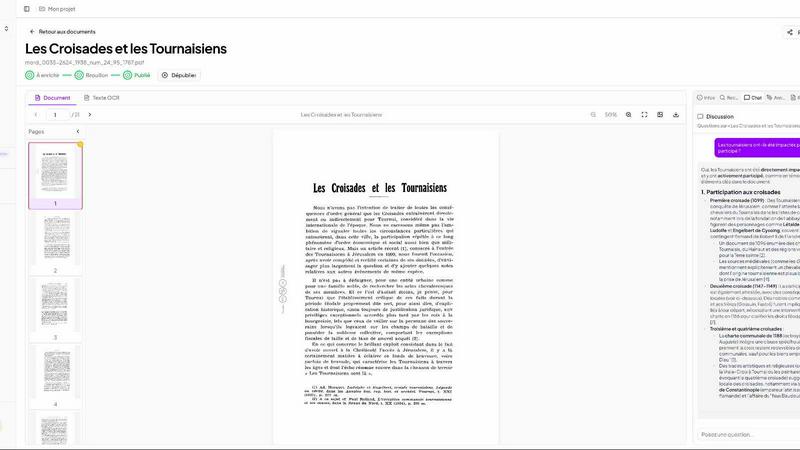
Patrivox is a sovereign European SaaS platform that revolutionizes how organizations manage and access historical and archival documents. It is specifically engineered for heritage institutions, municipal archives, historical societies, parishes, and enterprises burdened with large collections of scanned PDFs. The platform's core function is to transform static, unsearchable document archives into a dynamic, intelligent knowledge base. By leveraging advanced AI, including Mistral AI's next-generation Optical Character Recognition (OCR) and Named Entity Recognition (NER), Patrivox automatically extracts text, identifies key entities (people, places, organizations, dates), and maps their relationships into an interactive knowledge graph. This process, which takes mere minutes, solves the critical problem of "dark archives"—collections that are digitized but remain functionally inaccessible. The main value proposition is profound: it democratizes access to historical knowledge, enabling instant, full-text search with typo tolerance, natural language questioning, and the discovery of hidden contextual links, thereby saving countless hours of manual labor and unlocking new avenues for research and public engagement.
About Video Database
The Video Database began as an internal solution to a common frustration: as creators and content strategists we need to "study the best," but this typically means endless scrolling through social platforms riding the algo waves - good or bad. Nobody needs more of that.
Cut30, our short-form video bootcamp, maintains hundreds of hand-curated reference videos throughout its curriculum—valuable examples embedded within tutorials, exercises, and lessons. However, these references were scattered across the platform without centralized organization or analysis. What started as simply organizing and categorizing those videos, was a slippery slope.