Patrivox vs TinyHunt
Side-by-side comparison to help you choose the right product.

Patrivox
Patrivox uses AI to digitize and make complex archives fully searchable in minutes.
Last updated: March 4, 2026

TinyHunt
TinyHunt provides indie products a weekly spotlight and valuable backlinks for growth.
Last updated: March 1, 2026
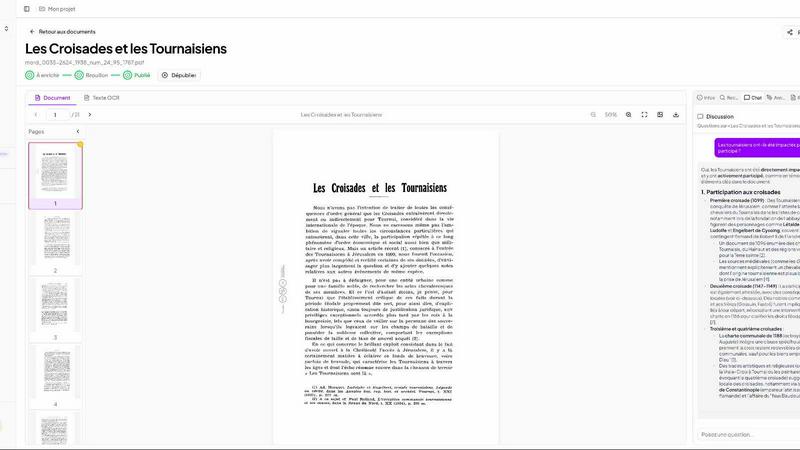
Visual Comparison
Patrivox
TinyHunt

Feature Comparison
Patrivox
Next-Generation AI Processing
Patrivox utilizes Mistral AI to provide superior document intelligence. Upon upload, the system performs advanced OCR to accurately extract text from even challenging historical documents. It then automatically applies Named Entity Recognition (NER) to identify and tag key entities such as individuals, locations, and organizations. This dual-layer AI processing forms the foundation for all search and discovery features, transforming raw scans into structured, analyzable data without any manual configuration or data entry required from the user.
Intelligent Search & AI Chat
The platform offers a multi-faceted search experience. Users can perform instant full-text searches across the entire collection with built-in typo tolerance. For more complex inquiries, the integrated AI chat allows users to ask questions in plain language (e.g., "What was discussed about the cathedral renovations in 1830?"). The AI synthesizes information from across the documents and provides concise answers, each meticulously cited with direct links to the source pages, ensuring verifiability and trust in the results.
Interactive Knowledge Graph (Constellation)
This feature visually maps the connections between entities extracted from the documents. Every person, place, and organization becomes a node in an interactive graph, showing how they are interlinked through the archival material. Users can navigate this "constellation" to discover non-obvious relationships and contextual connections that would be nearly impossible to find through manual review, offering unprecedented insight into the social and historical networks within the archives.
Sovereign European Hosting & Security
Patrivox is built with data sovereignty as a core principle. All data is 100% hosted on servers within the European Union, ensuring compliance with strict GDPR regulations by design. The platform includes robust security features such as detailed audit logs and provides flexible, secure sharing options, including unlimited read-only access for researchers or the public, managed by a configurable number of administrators.
TinyHunt
Weekly Curated Launches
TinyHunt operates on a unique, time-bound model where a fresh selection of innovative products is released each week. Every featured product remains prominently visible on the platform's homepage for exactly seven days. This curated approach ensures quality over quantity and provides each launch with a dedicated window for maximum exposure and community engagement, preventing promising tools from being lost in an endless feed.
High-Value Backlink & Featured Badge
Upon being accepted and featured, product creators receive a permanent, dofollow backlink from TinyHunt's domain, which boasts a Domain Rating (DR) of 32+. This is a significant SEO asset that can improve a product's own search engine ranking. Additionally, creators earn a "Featured on TinyHunt" badge, a mark of validation that can be displayed on their own website to build trust and credibility with potential users.
Dedicated Project Collections
Beyond the weekly launches, TinyHunt organizes featured products into thematic "Collections." This allows users to browse and discover tools based on specific categories, use cases, or interests. For creators, being included in a relevant collection extends the lifespan of their feature, driving ongoing, targeted traffic long after their initial seven-day spotlight has ended.
Dual Audience Platform Architecture
TinyHunt is strategically built to serve two core groups simultaneously. It provides a streamlined submission and launch process for creators, complete with performance tracking via backlinks and referral traffic. Concurrently, it offers a clean, ad-free discovery experience for seekers, with clear information on "Launching Now" products and a countdown timer creating a sense of urgency and focus around each new tool.
Use Cases
Patrivox
Municipal and State Archives
Public archives can digitize and make searchable vast collections of city council deliberations, civil registers, property records, and official correspondence. This transforms public service by enabling citizens, historians, and civil servants to find specific information in seconds, improving transparency and preserving institutional memory for future generations.
Historical and Genealogical Societies
These organizations often manage bulletins, member journals, and specialized documentary collections. Patrivox allows them to index these materials fully, enabling members and the public to search for ancestors, local events, or specific topics across decades of publications, significantly enhancing their research services and community value.
Religious and Parish Archives
Dioceses and parishes can preserve and index fragile historical documents like parish registers, baptismal records, and ecclesiastical correspondence. The platform helps protect these documents from physical handling while making the invaluable genealogical and historical data they contain easily accessible to authorized researchers and community members.
Special Collections Libraries
University libraries and heritage libraries holding special collections of manuscripts, rare books, or personal papers can use Patrivox to create detailed, searchable catalogs. This opens these collections to a wider academic audience, facilitating new research by allowing scholars to perform deep textual and contextual analysis across entire corpora with ease.
TinyHunt
Launching a New SaaS Product
An indie developer has built a niche AI tool for freelancers. They use TinyHunt to submit their product for a featured launch. During their dedicated week, they receive a surge of targeted traffic from an audience actively seeking new tools, gain a valuable DR 32+ backlink for SEO, and collect early-user feedback through platform comments, all of which are crucial for validating and iterating on their MVP.
Sourcing Cutting-Edge Productivity Tools
A startup CTO needs to find a new project management or internal communication tool that is more agile and cost-effective than enterprise solutions. They browse TinyHunt's weekly launches and curated collections to discover recently launched products from indie developers, often finding innovative, niche tools that are not yet widely known but perfectly suit their specific operational needs.
Building SEO Authority for a New Website
A solo founder has just launched their product's website and is struggling with low domain authority. Getting featured on TinyHunt provides them with a permanent, high-DR backlink, which is a powerful signal to search engines. This helps improve their site's ranking potential, driving organic search traffic in addition to the direct referral traffic from the platform itself.
Discovering Investment Opportunities
An angel investor or venture capital scout specializing in early-stage technology looks to TinyHunt as a sourcing channel. The platform's curation acts as a filter, presenting them with vetted, innovative products that have already demonstrated initiative by launching. They can gauge market reaction and community validation directly on the feature page before making contact.
Overview
About Patrivox
Patrivox is a sovereign European SaaS platform that revolutionizes how organizations manage and access historical and archival documents. It is specifically engineered for heritage institutions, municipal archives, historical societies, parishes, and enterprises burdened with large collections of scanned PDFs. The platform's core function is to transform static, unsearchable document archives into a dynamic, intelligent knowledge base. By leveraging advanced AI, including Mistral AI's next-generation Optical Character Recognition (OCR) and Named Entity Recognition (NER), Patrivox automatically extracts text, identifies key entities (people, places, organizations, dates), and maps their relationships into an interactive knowledge graph. This process, which takes mere minutes, solves the critical problem of "dark archives"—collections that are digitized but remain functionally inaccessible. The main value proposition is profound: it democratizes access to historical knowledge, enabling instant, full-text search with typo tolerance, natural language questioning, and the discovery of hidden contextual links, thereby saving countless hours of manual labor and unlocking new avenues for research and public engagement.
About TinyHunt
TinyHunt is a meticulously curated, time-bound discovery platform designed to solve a critical problem in the tech ecosystem: the ephemeral visibility of new products from indie developers, solo founders, and tiny businesses. Unlike traditional launch platforms or aggregators where submissions are quickly buried under a constant stream of new entries, TinyHunt employs a structured weekly cadence. Each hand-picked product is featured prominently for exactly seven days, ensuring it receives sustained attention, meaningful community discussion, and targeted traffic. This model directly addresses the "launch and vanish" phenomenon noted by industry analysts, where even promising tools can fail to gain traction due to fleeting exposure on crowded platforms. TinyHunt serves a dual audience. For creators, it acts as a powerful launchpad offering not just visibility but also tangible benefits like a permanent backlink from a domain with a strong Domain Rating (DR 32+) and a featured badge, which are crucial for SEO and credibility. For users—including professionals, entrepreneurs, and tech enthusiasts—it is a trusted source for discovering innovative, niche, and high-quality tools that enhance productivity and drive growth, effectively filtering signal from noise in a saturated market.
Frequently Asked Questions
Patrivox FAQ
How does Patrivox handle data privacy and security?
Patrivox is a GDPR-native platform hosted exclusively on servers within the European Union. This ensures that all document data remains under EU jurisdiction and complies with the bloc's stringent data protection laws. The company implements comprehensive security measures, including encryption and access controls, and provides audit logs for administrators to monitor system activity.
What types of documents can I upload?
The primary supported format is PDF, including scanned images of text. The AI-powered OCR is designed to handle a variety of typefaces and historical prints. There are file size limits per plan (e.g., 250 MB per file on most plans), and the platform supports batch uploads of hundreds of files simultaneously for efficient processing of large collections.
What is an "AI query" in the pricing plans?
An AI query is counted each time a user interacts with the natural language chat feature to ask a question about the document corpus. Standard full-text searches, filtering, and navigating the knowledge graph do not consume AI query credits. This model allows for predictable budgeting while offering powerful AI capabilities.
Can I collaborate and share my archives with others?
Yes, a key feature of Patrivox is its collaborative sharing model. All pricing plans include unlimited "reader" accounts. You can invite researchers, team members, or the public to access your published archives with view-only permissions. The number of administrative accounts (with upload and management rights) varies by plan.
TinyHunt FAQ
How does the submission and selection process work?
Creators can submit their product for consideration via the "Submit Project" page on the TinyHunt website. The platform's team meticulously curates all submissions based on quality, innovation, and relevance to their audience of professionals and tech enthusiasts. There is no guarantee of being featured, as the focus is on maintaining a high standard for the weekly launches. If accepted, the creator is notified and their product is scheduled for a featured spot.
What are the benefits of being featured on TinyHunt?
The primary benefits are sustained visibility, targeted traffic, and SEO value. Features include a full week of prominent placement on the TinyHunt homepage, inclusion in relevant collections for long-term discovery, a permanent "Featured on TinyHunt" badge for your website, and a crucial dofollow backlink from a domain with a Domain Rating (DR) of 32+, which is a significant asset for improving search engine rankings.
Is there a cost to submit or be featured on TinyHunt?
Based on the available content, TinyHunt offers a standard submission process. The platform also lists "Featured Premium Plus" placements (as seen with products like Recal and OrgCanvas on the site), indicating there may be paid sponsorship or premium visibility options alongside the standard curated features. For specific details on pricing tiers for submissions or sponsorships, users should refer to the dedicated "Pricing" page on the TinyHunt website.
Who is the typical TinyHunt user or visitor?
The platform serves a dual audience. The primary user groups are: 1) Creators - solo founders, indie developers, and tiny businesses seeking launch exposure, validation, and backlinks. 2) Seekers - entrepreneurs, product managers, marketers, and tech enthusiasts actively looking for the next innovative tool to solve a problem or improve their workflow. This audience values curation and trusts TinyHunt to surface quality products.
Alternatives
Patrivox Alternatives
Patrivox is a specialized SaaS platform in the content creation and automation category, designed to convert static scanned documents into a dynamic, AI-powered knowledge base. It leverages advanced OCR and entity recognition to make archives fully searchable, catering primarily to heritage institutions, municipalities, and enterprises with large document collections. Users often seek alternatives to Patrivox for various reasons. Common drivers include budget constraints, as pricing models can vary significantly between platforms. Others may require specific integrations, different deployment options like on-premise solutions, or feature sets tailored to niche use cases beyond general document intelligence. When evaluating alternatives, key considerations should include the accuracy and language support of the OCR engine, the depth of AI analysis for entity extraction and linking, and the flexibility of the search interface. Security compliance, scalability for large volumes, and the ability to handle diverse document formats are also critical factors that determine long-term suitability for an organization's digital transformation goals.
TinyHunt Alternatives
TinyHunt is a curated product discovery and launch platform in the SEO and marketing technology space. It specializes in providing indie products and SaaS tools with a week-long featured spotlight, aiming to deliver sustained visibility and valuable backlinks that aid in search engine ranking efforts. Users often seek alternatives to TinyHunt for several practical reasons. These can include budget constraints, as paid promotion may not fit all launch strategies. Some may require a platform with a different audience size or demographic focus, or a submission model that isn't time-bound or curated. Others might prioritize different feature sets, such as integration capabilities, permanent directory listings, or community-driven voting systems over editorial selection. When evaluating an alternative, key factors to consider are the platform's core audience and traffic quality, the duration and type of visibility offered, and the tangible SEO value, such as the quality of backlinks provided. The submission and curation process, overall cost relative to expected return, and the platform's reputation for driving genuine user engagement and conversions are also critical metrics for a successful product launch.