qtrl.ai vs Seedance 2 AI Video Generator
Side-by-side comparison to help you choose the right product.
qtrl.ai
qtrl.ai empowers QA teams to scale testing with AI agents while maintaining full control and governance throughout.
Last updated: March 4, 2026
Seedance 2 AI Video Generator
Seedance 2.0 instantly creates cinematic videos from text, images, or clips with consistent quality and easy control.
Last updated: March 1, 2026
Visual Comparison
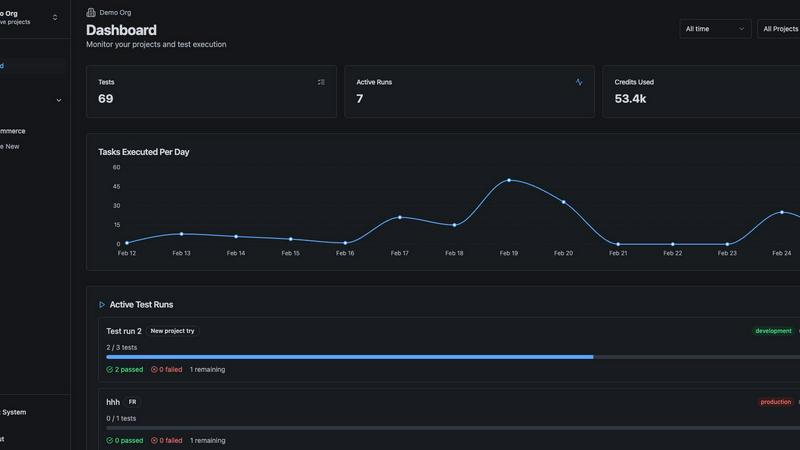
qtrl.ai
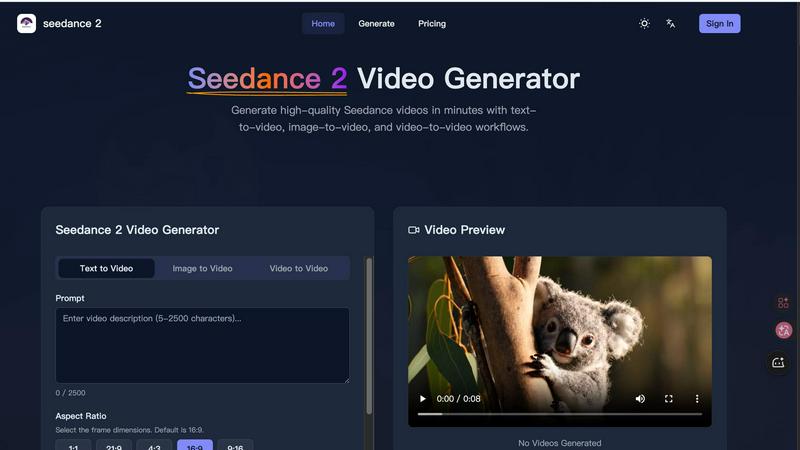
Seedance 2 AI Video Generator
Feature Comparison
qtrl.ai
Autonomous QA Agents
qtrl.ai features autonomous QA agents that can execute instructions on demand or continuously across multiple environments. These agents operate within predefined rules, ensuring compliance while performing real browser executions instead of simulations. This capability allows teams to efficiently scale their testing efforts without losing oversight.
Enterprise-Grade Test Management
With a centralized system for managing test cases, plans, and runs, qtrl.ai provides comprehensive traceability and audit trails. This feature supports both manual and automated workflows, making it particularly well-suited for enterprises that require stringent compliance and governance in their QA processes.
Progressive Automation
Starting with human-written instructions, qtrl.ai allows teams to gradually incorporate AI-generated tests. As teams connect requirements, qtrl.ai automatically generates and executes tests, all of which remain fully reviewable. This progressive approach enables teams to scale their automation intelligently and securely.
Adaptive Memory
qtrl.ai employs adaptive memory to build a living knowledge base of the application, learning from exploration, test execution, and reported issues. This feature powers smarter, context-aware test generation that becomes increasingly effective with each interaction, thereby enhancing the overall quality assurance process.
Seedance 2 AI Video Generator
Multimodal Input Flexibility
Seedance 2.0 supports three distinct generation modes: Text-to-Video, Image-to-Video, and Video-to-Video. This flexibility allows users to choose the optimal starting point for any project, whether conceptualizing from a written idea, extending a specific visual style from a reference image, or restyling and enhancing existing source footage. This multimodal approach, as highlighted in platform comparisons, provides maximum creative control and workflow adaptability that many competing models lack (AI Video Generator Comparison, 2024).
Reference-First Generation Workflow
A defining feature of Seedance 2.0 is its emphasis on using visual references to guide the AI. Instead of relying solely on the nuances of prompt wording, users can upload an image or video clip to anchor character design, artistic style, color palette, and cinematic feel. This results in significantly higher output consistency and reduces the iterative trial-and-error often required in AI video generation, making it a more predictable and efficient tool for professional workflows.
Integrated Audio-Video Synthesis
Unlike many competitors that generate silent video, Seedance 2.0 Pro model includes joint audio generation in a single pass. This synchronized synthesis can produce sound effects (SFX), background music, and even voiceovers with lip-sync accuracy across 10+ languages, including English, Chinese, Japanese, and Korean. This all-in-one capability streamlines production, creating a more cohesive and finished video asset without requiring separate audio editing software.
Advanced Motion and Consistency Control
The platform is engineered for "steadier motion and more coherent scenes," addressing common AI video pitfalls like temporal flickering or unstable subjects. Technical specifications note a cinema-standard frame rate of up to 24fps, and showcases demonstrate its strength in maintaining character consistency and realistic physics across frames. This makes it particularly suitable for narratives, product demonstrations, and any use case where smooth, believable motion is critical.
Use Cases
qtrl.ai
Product-Led Engineering Teams
Product-led engineering teams can utilize qtrl.ai to manage their testing processes efficiently. By leveraging both manual and automated testing capabilities, these teams can ensure rapid product development cycles without sacrificing quality.
QA Teams Scaling Beyond Manual Testing
For QA teams transitioning from manual testing to automation, qtrl.ai offers a seamless path forward. Teams can start with basic automation and gradually adopt more advanced features, ensuring a controlled and manageable scaling process.
Companies Modernizing Legacy QA Workflows
Organizations looking to modernize outdated QA workflows can benefit greatly from qtrl.ai. The platform integrates easily with existing tools and supports CI/CD pipelines, making it an ideal choice for companies aiming to enhance efficiency while maintaining quality standards.
Enterprises Requiring Governance and Traceability
Enterprises that need to adhere to strict governance and audit requirements can rely on qtrl.ai's comprehensive traceability and audit trails. This ensures that all test activities are documented, providing the necessary transparency and accountability for compliance purposes.
Seedance 2 AI Video Generator
Social Media and Marketing Content Creation
Marketing teams and social media managers can leverage Seedance 2.0 to rapidly produce a high volume of platform-optimized video ads, promotional clips, and engaging social posts. The fast iteration cycle and support for aspect ratios like 9:16 (for Stories/Reels) and 1:1 allow for quick adaptation of core creative concepts across multiple channels, significantly accelerating campaign rollout.
Concept Visualization and Storyboarding
Filmmakers, agencies, and creative directors can use the Text-to-Video and Image-to-Video modes to quickly visualize concepts, create dynamic mood boards, or generate preliminary storyboard sequences. This enables faster client presentations, internal alignment on creative direction, and early testing of narrative ideas before committing to full-scale production.
Product Demonstration and Explainer Videos
Businesses can create polished product demo videos or animated explainer content by using image references of their product or interface. The Video-to-Video mode can also be used to add stylistic flair or illustrative animations to existing screen recordings, creating more engaging and professional tutorials or sales materials without complex animation software.
Content Restyling and Localization
Content creators and media companies can repurpose existing video footage by using the Video-to-Video mode for controllable restyling—applying new artistic filters, adjusting settings, or changing environments. The integrated multilingual lip-sync feature also opens efficient pathways for localizing explainer or spokesperson videos for different international markets.
Overview
About qtrl.ai
qtrl.ai is an innovative quality assurance (QA) platform meticulously crafted to aid software teams in scaling their QA efforts while maintaining control and governance. By integrating enterprise-grade test management with robust AI automation, qtrl.ai serves as a centralized hub where teams can efficiently organize test cases, plan test runs, and trace requirements to coverage. Its real-time dashboards provide critical visibility into test outcomes, highlighting what has been tested, what is passing, and identifying potential risks, which is essential for engineering leads and QA managers.
What distinguishes qtrl.ai is its progressive AI layer, which introduces intelligent automation in a phased manner. Teams can begin with manual test management and gradually transition to leveraging built-in autonomous agents. These agents can create UI tests from plain English descriptions, adapt to application changes, and execute tests across various browsers and environments at scale. This adaptability makes qtrl.ai ideal for product-led engineering teams, QA groups seeking to move beyond manual testing, organizations modernizing outdated workflows, and enterprises that prioritize compliance and audit trails. Ultimately, qtrl.ai aims to reconcile the slow nature of manual testing with the intricate complexities of traditional automation, providing a reliable pathway to accelerated and more intelligent quality assurance processes.
About Seedance 2 AI Video Generator
Seedance 2.0 is a state-of-the-art AI video generation platform engineered to transform text prompts, reference images, or existing source footage into polished, cinematic-quality video clips. It represents a significant advancement in controllable AI video synthesis, moving beyond simple text-to-video conversion to offer a robust, multimodal workflow. The platform is specifically designed for creators, marketers, and agencies who require high-quality video output at speed, eliminating the traditional bottlenecks and heavy editing overhead associated with conventional video production (Seedance 2.0, 2024). Its core value proposition lies in a unique "reference-first" methodology, which allows users to anchor the AI's output to specific visual styles, characters, or camera feels, resulting in greater consistency and less guesswork compared to prompt-only systems. With support for resolutions up to 1080p, synchronized audio generation, and multilingual lip-sync capabilities, Seedance 2.0 is positioned as a production-ready tool for creating content for advertising, social media, product demos, and more, facilitating rapid iteration without compromising on motion quality or visual coherence.
Frequently Asked Questions
qtrl.ai FAQ
What makes qtrl.ai different from traditional QA platforms?
qtrl.ai stands out by integrating AI automation with robust test management in a progressive manner. This allows teams to maintain control while gradually adopting automated testing, unlike traditional platforms that often require a complete shift to automation.
Can teams start with manual testing on qtrl.ai?
Yes, qtrl.ai is designed to accommodate teams at various stages of their testing journey. Teams can begin with manual test management and introduce automation as they become more comfortable, making the transition smooth and manageable.
How does qtrl.ai ensure compliance and traceability?
qtrl.ai provides comprehensive traceability and audit trails for all test management activities. This feature supports enterprises in maintaining compliance with regulatory standards by documenting every step of the QA process.
Is qtrl.ai suitable for small teams as well as large enterprises?
Absolutely. qtrl.ai is flexible and scalable, making it suitable for small teams looking to improve their QA processes as well as large enterprises that require stringent governance and automation capabilities.
Seedance 2 AI Video Generator FAQ
What input methods does Seedance 2.0 support?
Seedance 2.0 supports three primary input methods for video generation: Text (via a 2500-character prompt field), Image (uploading a reference image to guide style and composition), and Video (uploading source footage for restyling or extension). This multimodal flexibility allows users to choose the most effective starting point for their specific project needs.
What is the maximum video length and quality I can generate?
According to its technical specifications, Seedance 2.0 can generate video clips with a duration of 5 to 10 seconds per generation, with capabilities for extension. The maximum output resolution is 1080p (Full HD) at a cinematic frame rate of up to 24 frames per second, ensuring professional-grade visual quality suitable for various platforms.
How does the audio generation and lip-sync feature work?
The Seedance 2.0 Pro model includes a joint audio-video synthesis engine. It can generate synchronized sound effects, music, and voiceovers directly from your video generation parameters. The advanced lip-sync functionality automatically animates character mouth movements to match generated or provided voice audio across 10+ supported languages.
How does Seedance 2.0 ensure consistency in characters and scenes?
Seedance 2.0 employs a reference-first architecture and advanced temporal modeling. By using a provided image or video as a visual anchor, the AI maintains consistent character appearance, style, and color palette across frames. This approach, combined with its optimized motion synthesis, results in smoother animation and more coherent scene continuity compared to models relying solely on text prompts.
Alternatives
qtrl.ai Alternatives
qtrl.ai is a cutting-edge platform in the quality assurance (QA) category, designed to empower software teams by enhancing their testing capabilities through AI-driven automation while maintaining control and governance. It serves as a centralized hub for organizing test cases, planning test runs, and tracking quality metrics, ensuring teams have clear visibility into their testing processes. Users often seek alternatives to qtrl.ai for various reasons, including pricing structures, feature sets, and specific platform requirements. When evaluating other options, it is essential to consider factors such as ease of integration with existing workflows, the level of automation offered, and the ability to manage compliance and auditing effectively. Finding a solution that fits seamlessly with team dynamics while offering robust support and scalability is crucial for long-term success.
Seedance 2 AI Video Generator Alternatives
Seedance 2 AI Video Generator is a prominent tool in the AI video synthesis category, designed to transform text prompts, images, and existing clips into cinematic-quality videos. It emphasizes a fast, all-in-one workflow with features for maintaining visual consistency and providing easy prompt control, catering to creators seeking efficient video production. Users often explore alternatives to such platforms for various practical reasons. These can include budget constraints, as subscription costs may not align with all project scales. Others may seek different feature sets, such as more advanced editing controls, specific output formats, or integration with other software in their workflow. Platform compatibility, including operating system requirements or browser-based versus desktop application preferences, also drives the search for other options. When evaluating an alternative, key considerations should include the core AI capabilities for video generation and extension, the overall cost-effectiveness relative to your output volume, and the intuitiveness of the user interface. It is also prudent to assess the tool's performance in generating consistent characters and scenes, the flexibility of its input methods, and the quality of its customer support and learning resources, as noted in industry analyses of content creation software.