NanoBanana2pro vs Patrivox
Side-by-side comparison to help you choose the right product.

NanoBanana2pro
NanoBanana2pro is an AI image and video creation platform for generating and editing content across text, image, and video workflows.

Patrivox
Patrivox uses AI to digitize and make complex archives fully searchable in minutes.
Last updated: March 4, 2026
Visual Comparison
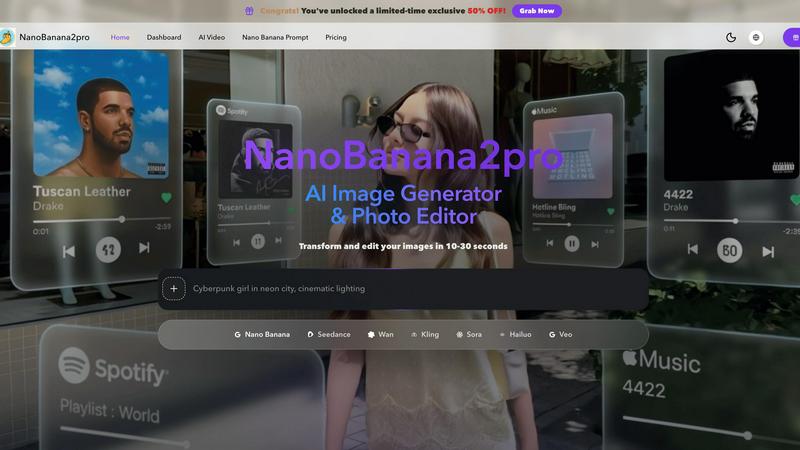
NanoBanana2pro
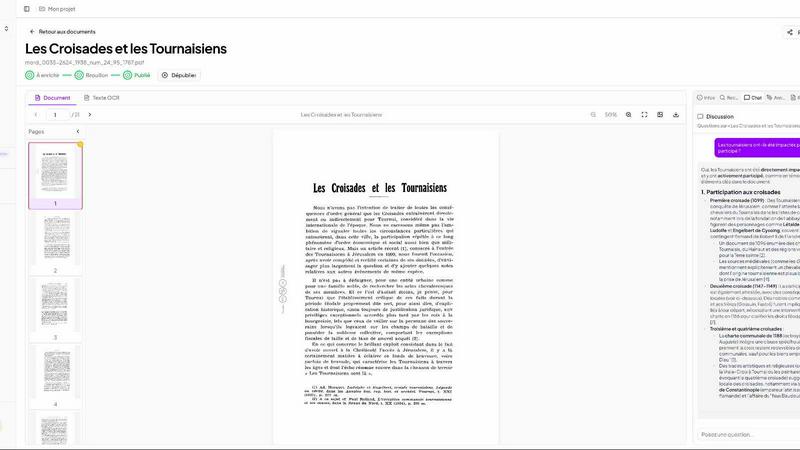
Patrivox
Overview
About NanoBanana2pro
NanoBanana2pro.site is an AI image generator and photo editor that converts prompts and reference images into high-resolution visuals for ads, ad creatives, e-commerce listings, and brand assets.The platform supports prompt-based generation with a single reference image, style transfer and presets, and iterative refinement to adjust lighting, texture, and composition.
Batch generation produces multiple variations from one input for A/B testing and visual exploration, while smart assets save prompts, presets, and past generations for reproducible workflows.Outputs include photorealistic and multi-scene images optimized for publishing, advertising, and product mockups, with export options suitable for digital and print.
About Patrivox
Patrivox is a sovereign European SaaS platform that revolutionizes how organizations manage and access historical and archival documents. It is specifically engineered for heritage institutions, municipal archives, historical societies, parishes, and enterprises burdened with large collections of scanned PDFs. The platform's core function is to transform static, unsearchable document archives into a dynamic, intelligent knowledge base. By leveraging advanced AI, including Mistral AI's next-generation Optical Character Recognition (OCR) and Named Entity Recognition (NER), Patrivox automatically extracts text, identifies key entities (people, places, organizations, dates), and maps their relationships into an interactive knowledge graph. This process, which takes mere minutes, solves the critical problem of "dark archives"—collections that are digitized but remain functionally inaccessible. The main value proposition is profound: it democratizes access to historical knowledge, enabling instant, full-text search with typo tolerance, natural language questioning, and the discovery of hidden contextual links, thereby saving countless hours of manual labor and unlocking new avenues for research and public engagement.