Nani vs Patrivox
Side-by-side comparison to help you choose the right product.

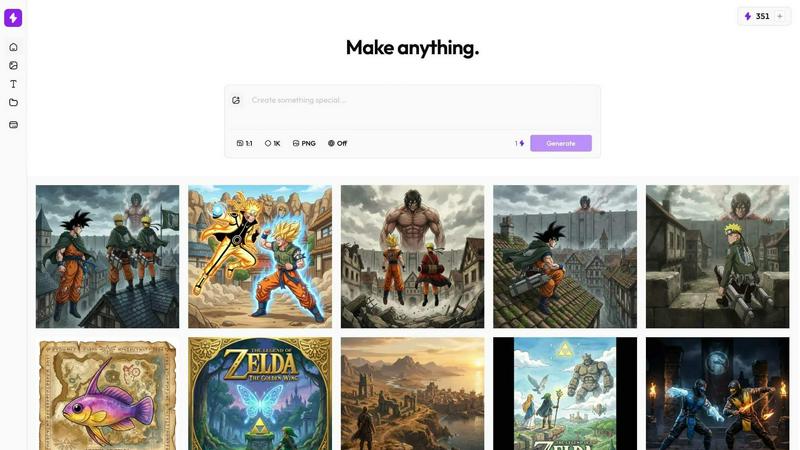
Nani streamlines AI image generation by organizing prompts and images into reusable sets for effortless creativity.
Last updated: February 27, 2026

Patrivox
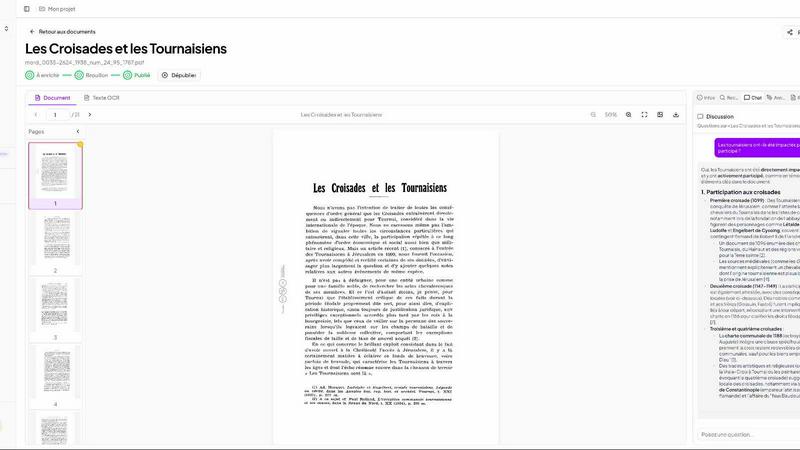
Patrivox uses AI to digitize and make complex archives fully searchable in minutes.
Last updated: March 4, 2026
Visual Comparison
Nani
Patrivox
Feature Comparison
Nani
User-Friendly Interface
Nani boasts a simple and intuitive interface that allows users to dive straight into their creative work. There is no steep learning curve; users can type a prompt and generate stunning images in mere seconds. The interface is designed to minimize distractions, ensuring that users can focus solely on their creative processes.
Reusable Prompt Sets
One of Nani's standout features is its ability to group images and save prompts as reusable sets. This functionality allows users to maintain consistent characters, styles, and workflows across various generations. By reusing prompts, creators can enhance their productivity and ensure that their artistic vision remains coherent throughout different projects.
Organized Folders
Nani provides robust organizational tools, enabling users to create folders and filter images by favorites. This feature is essential for maintaining a tidy library, especially as the number of generated images grows. Users can bulk-select images for easy management, ensuring their workflow scales effectively with their creative needs.
Credit-Based Billing
Nani operates on a straightforward credit-based billing system, where users only pay for what they generate. This model eliminates the burden of monthly subscriptions and commitments, offering flexibility in how users manage their costs. With credits never expiring and transparent pricing at approximately 30 cents per generation, users can budget their creative projects effectively.
Patrivox
Next-Generation AI Processing
Patrivox utilizes Mistral AI to provide superior document intelligence. Upon upload, the system performs advanced OCR to accurately extract text from even challenging historical documents. It then automatically applies Named Entity Recognition (NER) to identify and tag key entities such as individuals, locations, and organizations. This dual-layer AI processing forms the foundation for all search and discovery features, transforming raw scans into structured, analyzable data without any manual configuration or data entry required from the user.
Intelligent Search & AI Chat
The platform offers a multi-faceted search experience. Users can perform instant full-text searches across the entire collection with built-in typo tolerance. For more complex inquiries, the integrated AI chat allows users to ask questions in plain language (e.g., "What was discussed about the cathedral renovations in 1830?"). The AI synthesizes information from across the documents and provides concise answers, each meticulously cited with direct links to the source pages, ensuring verifiability and trust in the results.
Interactive Knowledge Graph (Constellation)
This feature visually maps the connections between entities extracted from the documents. Every person, place, and organization becomes a node in an interactive graph, showing how they are interlinked through the archival material. Users can navigate this "constellation" to discover non-obvious relationships and contextual connections that would be nearly impossible to find through manual review, offering unprecedented insight into the social and historical networks within the archives.
Sovereign European Hosting & Security
Patrivox is built with data sovereignty as a core principle. All data is 100% hosted on servers within the European Union, ensuring compliance with strict GDPR regulations by design. The platform includes robust security features such as detailed audit logs and provides flexible, secure sharing options, including unlimited read-only access for researchers or the public, managed by a configurable number of administrators.
Use Cases
Nani
Graphic Design Projects
Nani is an invaluable tool for graphic designers who require diverse images for marketing materials, social media posts, and branding strategies. The ability to generate images quickly while maintaining consistent styles makes it an essential asset for designers working under tight deadlines.
Content Creation for Blogs
Bloggers and content creators can leverage Nani to produce eye-catching visuals that enhance their written content. By utilizing reusable prompt sets, they can ensure that images align perfectly with their brand's aesthetic, enriching the overall reader experience.
E-Commerce Product Images
For e-commerce businesses, high-quality product images are crucial. Nani allows sellers to create professional-looking images in various resolutions and aspect ratios, making it easier to showcase products effectively across multiple platforms.
Educational Material Development
Educators and instructional designers can use Nani to create engaging visuals for presentations, course materials, and online learning resources. The organized folders and reusable prompts streamline the development process, making it easier to produce consistent and relevant educational content.
Patrivox
Municipal and State Archives
Public archives can digitize and make searchable vast collections of city council deliberations, civil registers, property records, and official correspondence. This transforms public service by enabling citizens, historians, and civil servants to find specific information in seconds, improving transparency and preserving institutional memory for future generations.
Historical and Genealogical Societies
These organizations often manage bulletins, member journals, and specialized documentary collections. Patrivox allows them to index these materials fully, enabling members and the public to search for ancestors, local events, or specific topics across decades of publications, significantly enhancing their research services and community value.
Religious and Parish Archives
Dioceses and parishes can preserve and index fragile historical documents like parish registers, baptismal records, and ecclesiastical correspondence. The platform helps protect these documents from physical handling while making the invaluable genealogical and historical data they contain easily accessible to authorized researchers and community members.
Special Collections Libraries
University libraries and heritage libraries holding special collections of manuscripts, rare books, or personal papers can use Patrivox to create detailed, searchable catalogs. This opens these collections to a wider academic audience, facilitating new research by allowing scholars to perform deep textual and contextual analysis across entire corpora with ease.
Overview
About Nani
Nani is a revolutionary workflow tool specifically engineered to enhance the experience of AI image generation. It is particularly valuable for artists, designers, and content creators who engage in regular and repetitive tasks. Unlike traditional AI image tools that are typically suited for one-off projects, Nani simplifies the entire process, allowing users to focus on their creativity rather than administrative burdens. Built on Google's advanced Nano Banana Pro (Gemini) technology, Nani offers a powerful solution that streamlines image generation. It features a user-friendly interface that minimizes the learning curve, enabling swift image creation. Unique aspects such as reusable prompt sets and organized folders ensure consistency and efficiency across projects. With Nani, users spend less time managing tasks and more time bringing their ideas to life, all while benefiting from a credit-based billing system that aligns with their usage.
About Patrivox
Patrivox is a sovereign European SaaS platform that revolutionizes how organizations manage and access historical and archival documents. It is specifically engineered for heritage institutions, municipal archives, historical societies, parishes, and enterprises burdened with large collections of scanned PDFs. The platform's core function is to transform static, unsearchable document archives into a dynamic, intelligent knowledge base. By leveraging advanced AI, including Mistral AI's next-generation Optical Character Recognition (OCR) and Named Entity Recognition (NER), Patrivox automatically extracts text, identifies key entities (people, places, organizations, dates), and maps their relationships into an interactive knowledge graph. This process, which takes mere minutes, solves the critical problem of "dark archives"—collections that are digitized but remain functionally inaccessible. The main value proposition is profound: it democratizes access to historical knowledge, enabling instant, full-text search with typo tolerance, natural language questioning, and the discovery of hidden contextual links, thereby saving countless hours of manual labor and unlocking new avenues for research and public engagement.
Frequently Asked Questions
Nani FAQ
What is the primary function of Nani?
Nani is designed to enhance the AI image generation experience by streamlining workflows, allowing users to create, organize, and manage images efficiently without the hassle of repetitive prompt writing.
How does the credit-based billing system work?
Nani's credit-based billing allows users to pay only for the images they generate. Each image generation costs approximately 30 cents, and credits never expire, providing a flexible and economical solution for users.
Can I organize my generated images?
Yes, Nani offers extensive organizational tools. Users can create folders, filter images by favorites, and bulk-select images to keep their libraries tidy and manageable as their creative output increases.
Is there a learning curve to using Nani?
No, Nani features a simple and intuitive interface designed to minimize distractions and complexities. Users can start generating images almost immediately without needing extensive training or experience.
Patrivox FAQ
How does Patrivox handle data privacy and security?
Patrivox is a GDPR-native platform hosted exclusively on servers within the European Union. This ensures that all document data remains under EU jurisdiction and complies with the bloc's stringent data protection laws. The company implements comprehensive security measures, including encryption and access controls, and provides audit logs for administrators to monitor system activity.
What types of documents can I upload?
The primary supported format is PDF, including scanned images of text. The AI-powered OCR is designed to handle a variety of typefaces and historical prints. There are file size limits per plan (e.g., 250 MB per file on most plans), and the platform supports batch uploads of hundreds of files simultaneously for efficient processing of large collections.
What is an "AI query" in the pricing plans?
An AI query is counted each time a user interacts with the natural language chat feature to ask a question about the document corpus. Standard full-text searches, filtering, and navigating the knowledge graph do not consume AI query credits. This model allows for predictable budgeting while offering powerful AI capabilities.
Can I collaborate and share my archives with others?
Yes, a key feature of Patrivox is its collaborative sharing model. All pricing plans include unlimited "reader" accounts. You can invite researchers, team members, or the public to access your published archives with view-only permissions. The number of administrative accounts (with upload and management rights) varies by plan.
Alternatives
Nani Alternatives
Nani is a cutting-edge workflow tool that simplifies AI image generation by organizing prompts and images into reusable sets, making it an invaluable resource for artists, designers, and content creators. It falls under the category of AI Assistants, specifically tailored for those who require efficient and repetitive image generation without the typical hassle associated with traditional tools. Users often seek alternatives to Nani for various reasons, including pricing concerns, specific feature requirements, or compatibility with different platforms. When choosing an alternative, it's essential to consider factors such as user interface, the ability to save and reuse prompts and images, and overall workflow efficiency. A suitable alternative should not only meet your creative needs but also align with your budget and technical requirements.
Patrivox Alternatives
Patrivox is a specialized SaaS platform in the content creation and automation category, designed to convert static scanned documents into a dynamic, AI-powered knowledge base. It leverages advanced OCR and entity recognition to make archives fully searchable, catering primarily to heritage institutions, municipalities, and enterprises with large document collections. Users often seek alternatives to Patrivox for various reasons. Common drivers include budget constraints, as pricing models can vary significantly between platforms. Others may require specific integrations, different deployment options like on-premise solutions, or feature sets tailored to niche use cases beyond general document intelligence. When evaluating alternatives, key considerations should include the accuracy and language support of the OCR engine, the depth of AI analysis for entity extraction and linking, and the flexibility of the search interface. Security compliance, scalability for large volumes, and the ability to handle diverse document formats are also critical factors that determine long-term suitability for an organization's digital transformation goals.