Mod vs Skene
Side-by-side comparison to help you choose the right product.

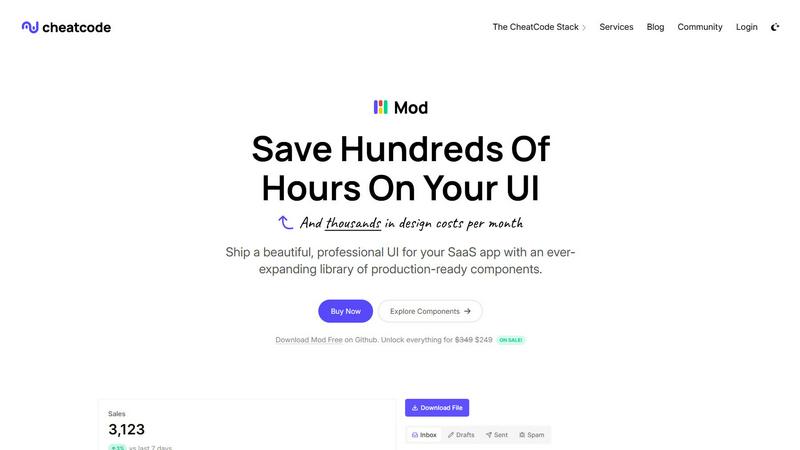
Mod is a CSS framework that accelerates SaaS app development with an extensive library of ready-to-use components.

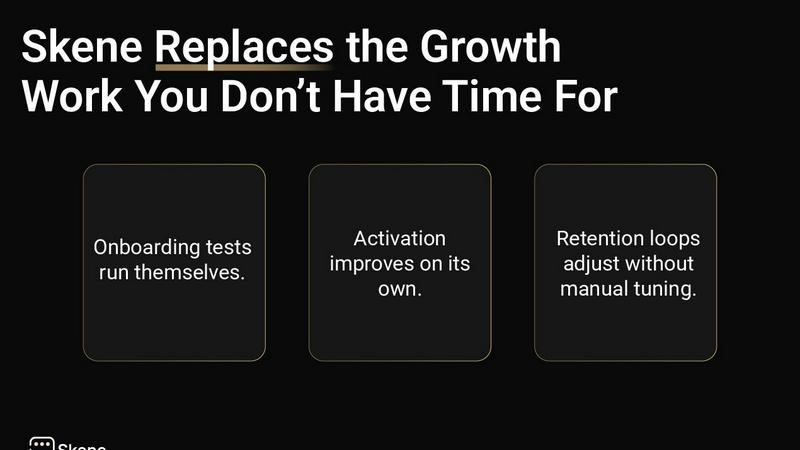
Skene is a code-native growth engine that automates product-led growth directly within your codebase.
Last updated: February 28, 2026
Visual Comparison
Mod
Skene
Feature Comparison
Mod
Extensive Component Library
Mod provides developers with access to over 88 components, allowing for rapid UI design and development. These components are versatile and customizable, enabling the creation of unique user interfaces that can cater to specific application needs.
Rich Style Options
With 168 styles available, Mod allows developers to fine-tune the visual appeal of their applications. This extensive library of styles ensures that users can implement consistent branding and aesthetic coherence across their SaaS products effortlessly.
Dark Mode Support
Recognizing the growing demand for dark mode interfaces, Mod incorporates this feature natively. Developers can easily implement dark mode in their applications, enhancing user experience, particularly for those who prefer this viewing option.
Framework-Agnostic Design
One of the most compelling features of Mod is its framework-agnostic design. This ensures compatibility with a wide array of technologies like Next.js, Nuxt, Vite, Svelte, Rails, and Django, making it a flexible choice for any development team, regardless of their preferred stack.
Skene
Codebase-Integrated Signal Detection
Skene derives growth signals directly from your application's source code, creating a context layer for AI-driven optimization. By analyzing the repository structure, it automatically identifies key user flows, components, and potential friction points without requiring manual tagging or external scripts. This deep integration ensures that growth instrumentation is version-controlled, performant, and never becomes a "black box" that breaks with deployments, providing a single source of truth for both your product and growth logic.
Autonomous Growth Loop Orchestration
The platform acts as a self-learning engine that autonomously observes user behavior, identifies bottlenecks in journeys like onboarding, and implements data-driven optimizations. Skene can automatically generate, A/B test, and deploy improved versions of user flows, creating a continuous feedback loop for metrics such as activation and retention. This removes the manual burden of hypothesis testing and implementation, allowing the system to systematically improve conversion paths without constant developer intervention.
Prompt-Driven Growth Implementation
Growth workflows are managed through natural language prompts within your existing development environment, such as Cursor or a terminal. Developers can instruct Skene to analyze code, generate growth manifests, or implement specific optimizations using simple commands like uvx skene-growth analyze .. This shifts growth work from managing disparate SaaS dashboards to a programmable, code-first workflow that integrates seamlessly with modern development practices.
Owned Infrastructure & Performance
Skene replaces legacy stacks of third-party snippets and widgets with owned code that you control, version, and deploy. By eliminating external JavaScript bloat and siloed data pipelines, it preserves your application's core performance and security posture. This architecture ensures that growth tooling enhances rather than hinders site speed and user experience, while keeping all data and logic within your ecosystem.
Use Cases
Mod
Rapid Prototyping
Developers can utilize Mod to quickly prototype new SaaS applications. The rich set of components and styles enables rapid iteration and testing, allowing teams to validate their ideas without extensive upfront investment in design.
Customizable Dashboards
Mod is ideal for building customizable dashboards that can cater to various user needs. With its extensive component library, developers can create tailored experiences that allow users to manipulate and visualize data effectively.
Responsive Web Applications
With its mobile-first design approach, Mod empowers developers to create responsive web applications that function seamlessly across devices. This is crucial for SaaS products that aim to reach a broad audience on different platforms.
Collaborative Team Projects
Mod serves as a common ground for development teams working on collaborative projects. Its framework-agnostic nature ensures that all team members, regardless of their preferred technologies, can contribute effectively to the UI design and implementation.
Skene
Automated Onboarding Flow Optimization
For product teams aiming to improve user activation, Skene automatically analyzes the onboarding journey within the code, identifies where users drop off, and deploys tailored improvements. It can test different guidance strategies, UI tweaks, or feature introductions to maximize the rate at which new users reach the "aha!" moment, all without engineering writing new code for each experiment.
Continuous Retention & Lifecycle Automation
Skene enables the creation of self-optimizing lifecycle campaigns based on actual user behavior derived from the product. It can detect signs of churn risk or feature underutilization and automatically trigger in-app messages, email sequences, or feature prompts to re-engage users, turning the product itself into the primary driver of customer retention and expansion.
Product-Led Customer Success
Customer success teams can leverage Skene's deep product integration to move beyond reactive support. The platform identifies users struggling with specific features or workflows and can proactively deliver contextual, in-app guidance or resources. This transforms the product into a scalable success tool, ensuring users derive value independently and reducing support ticket volume.
Data-Driven Feature Adoption Campaigns
For launching new features or increasing adoption of existing ones, Skene analyzes which user segments are not utilizing key functionality. It then automatically designs and targets in-product campaigns or tutorials to specific user cohorts, measuring impact on usage metrics and iterating on the messaging and placement to drive organic feature discovery and usage.
Overview
About Mod
Mod is a cutting-edge CSS framework designed specifically for building sophisticated Software as a Service (SaaS) user interfaces. It is a key component of the CheatCode developer stack, which also includes Joystick for full-stack JavaScript development and Push for deployment solutions. Mod stands out by offering an extensive library of over 88 pre-built components, 168 customizable styles, and a choice of two themes, all complemented by more than 1,500 icons. The framework is built with a mobile-first approach, ensuring that applications look great on any device. One of the major advantages of Mod is its framework-agnostic nature, allowing seamless integration with popular frameworks like Next.js, Nuxt, Vite, Svelte, Rails, and Django. This flexibility makes it an invaluable tool for both solo developers and teams who aim to accelerate their development process, minimize design expenses, and deliver polished and responsive SaaS applications efficiently.
About Skene
Skene is an AI-powered, fully automated Product-Led Growth (PLG) infrastructure that fundamentally reimagines growth tooling by integrating directly with a product's codebase. It functions as a self-learning growth engine, eliminating the need for external scripts, siloed dashboards, and manual optimization. The platform operates by first analyzing a user's code to understand the product's structure and user flows. It then automatically observes user behavior to detect friction points and drop-offs in critical journeys like onboarding and activation. Using this intelligence, Skene autonomously creates, A/B tests, and deploys improved versions of these flows, continuously optimizing for key metrics like activation and retention without human intervention. Its core value proposition is turning growth into a programmable, owned layer of infrastructure rather than a collection of brittle third-party services. Primarily built for indie developers, early-stage startups, and established PLG companies, Skene serves as a "growth team in a box." It enables technical teams to scale their product's growth loops efficiently without adding headcount or sacrificing the technical control, performance, and data ownership intrinsic to their core product.
Frequently Asked Questions
Mod FAQ
What is Mod?
Mod is a CSS framework designed for building user interfaces for SaaS applications, providing a library of components and styles that are framework-agnostic.
How can I integrate Mod into my existing project?
Mod can be easily integrated into any project, regardless of the framework being used, such as Next.js, Nuxt, Vite, Svelte, Rails, or Django, due to its flexible, framework-agnostic design.
Does Mod support dark mode?
Yes, Mod includes built-in support for dark mode, allowing developers to effortlessly implement this feature into their applications, enhancing user experience.
What kind of updates can I expect from Mod?
CheatCode offers yearly updates for Mod, ensuring that users benefit from the latest features, improvements, and optimizations, keeping their applications modern and efficient.
Skene FAQ
What is PLG software?
PLG (Product-Led Growth) software is designed to help users discover value in a product without manual intervention from sales or customer success teams. It automates the user journey, guiding users to activation, driving feature adoption, and strengthening retention through the product experience itself. According to industry frameworks, effective PLG turns the product into the primary acquisition, conversion, and expansion channel.
How is Skene different from traditional customer experience software?
Traditional tools like walkthrough builders require manual tour creation, constant maintenance, and rely on brittle UI selectors that break with every code deploy. Skene is fundamentally different; it reads your codebase to understand your product's structure and automatically generates and maintains onboarding, analytics, and automation. When you push new code, Skene's understanding and implementations update themselves, eliminating maintenance overhead and selector fragility.
How long does it take to set up Skene?
Setup is designed to take less than 60 seconds. You simply connect your GitHub or GitLab repository with read-only access. Skene then automatically analyzes your codebase to generate an initial set of PLG flows and signals. No initial code changes, API modifications, or snippet installations are required to begin receiving insights and automation.
Is my source code secure with Skene?
Absolutely. Security is a core tenet of Skene's architecture. The platform only requires read-only access to your repository. All code analysis occurs in a secure, isolated environment. Your code is not used for training models, and the infrastructure is designed to ensure that your proprietary logic and data remain within your controlled ecosystem, aligning with enterprise security standards.