Fusedash vs Karolium
Side-by-side comparison to help you choose the right product.

Fusedash is an AI-powered platform that transforms raw data into actionable dashboards and charts for instant team.
Last updated: March 4, 2026

Karolium is a Gartner-recognized zero-code platform that accelerates digital transformation by building custom.
Last updated: February 28, 2026
Visual Comparison
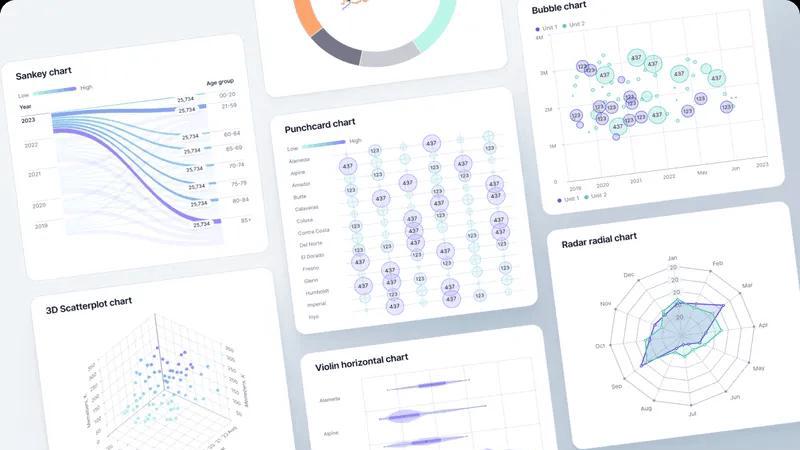
Fusedash
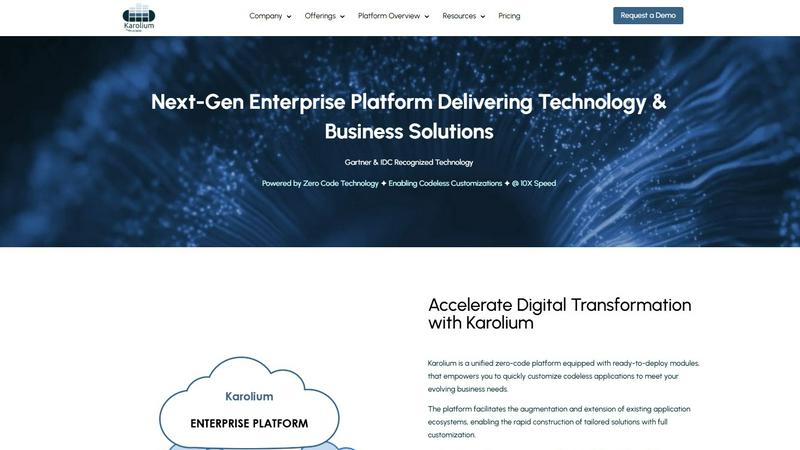
Karolium
Feature Comparison
Fusedash
Unified AI-Powered Workspace
Fusedash consolidates the entire data visualization workflow into a single platform, eliminating the need to juggle multiple tools. Users can create decision-ready dashboards, interactive charts, detailed geospatial maps, and narrative reports all from the same connected dataset. This integrated approach, which combines visualization, storytelling, and real-time monitoring, significantly reduces the time spent on rebuilding and reconciling reports across different systems, allowing teams to focus on deriving and acting on insights.
AI Chart Generator
This feature accelerates the initial stages of data analysis by enabling users to generate clear, appropriate charts from CSV files or connected APIs in minutes. The AI assists in selecting the optimal chart type, applying relevant comparisons, and refining labels to ensure the visual accurately tells the data's story. These AI-generated charts can be used as standalone visuals for quick reports or seamlessly dropped into comprehensive dashboards, promoting reusability and consistency.
Consistent Metric Definitions & Governance
A foundational feature of Fusedash is the ability to define core metrics, dimensions, and KPIs in a centralized manner. Once established, these definitions are automatically applied and reused across every view, dashboard, and report built on the platform. This enforced consistency is critical for data integrity, ensuring all stakeholders across departments are analyzing and making decisions based on the same trusted numbers, thereby eliminating conflicting data stories.
Smart AI Chat for Data Exploration
Fusedash incorporates a natural language interface that allows users to interact with their data conversationally. Users can ask questions in plain language, request specific breakdowns by segment or region, and receive AI-suggested metrics and chart types. This feature lowers the barrier to entry for data exploration and can instantly turn conversational insights into shareable, persistent dashboard views, streamlining the path from question to actionable visual.
Karolium
Unified Zero-Code Platform
Karolium integrates iPaaS, aPaaS, oPaaS, and AIPaaS into a single codeless environment. This eliminates dependency on specialized developers, allowing business analysts and process experts to visually design, customize, and deploy applications. Research by Forrester highlights that low-code/no-code platforms can reduce development time by 50-90%, a principle Karolium embodies by enabling rapid customization and extension of business solutions without writing a single line of code, thus accelerating time-to-value.
Pre-Composed Value Chain Modules
The platform offers a suite of enterprise-grade, ready-to-deploy modules targeting specific business functions, such as Supplier Collaboration, Unified Master Data Management, and AI-Infused Demand Forecasting. These are not rigid applications but composable building blocks. According to Gartner's principles of composability, this allows organizations to assemble and reconfigure business capabilities as needed, providing the flexibility to support unique workflows without costly point-to-point integrations or vendor lock-in.
Built-In Predictive & Prescriptive AI
Karolium is an enterprise intelligence platform with native AI capabilities. It goes beyond basic automation to offer built-in predictive analytics (e.g., for lead time or demand) and prescriptive solutions that recommend optimal actions. This embedded AI, accessible in a code-free environment, lowers the barrier to AI adoption, allowing companies to create intelligent applications that drive proactive decision-making, a capability IDC notes is critical for competitive advantage in modern supply chains.
Managed PaaS-Driven SaaS Delivery
Delivered as a managed Platform-as-a-Service-driven Software-as-a-Service, Karolium ensures organizations always have access to the latest platform capabilities and quarterly module enhancements without managing underlying infrastructure. This model, recognized for reducing IT overhead, provides boundless customization for both pre-packaged and user-composed modules and supports unlimited users, offering scalability and continuous innovation as a core service feature.
Use Cases
Fusedash
Executive & Leadership Reporting
Leadership teams require a high-level, consistent view of organizational health. Fusedash enables the creation of executive dashboards that combine real-time KPI monitoring with narrative "storytelling" sections. This provides context on what changed, why it matters, and what the next steps are, ensuring all leaders are aligned on performance and strategy without sifting through conflicting reports from different departments.
Marketing Performance Analysis
Marketing teams can use Fusedash to unify data from various channels (social media APIs, ad platforms, CRM systems) into a single dashboard. They can track campaign KPIs, use the AI chart generator for rapid analysis of A/B test results, and employ geospatial maps to visualize regional performance. The consistent definitions ensure that metrics like CAC (Customer Acquisition Cost) or ROAS (Return on Ad Spend) are calculated uniformly across all reports.
Operational & Real-Time Monitoring
Operations and support teams need live visibility into key processes. Fusedash's real-time interface allows for the creation of monitoring dashboards that track live metrics, such as website uptime, customer support ticket volume, or production line output. Teams can set alerts and drill down into specific time periods or segments to diagnose issues as they occur, moving from passive observation to proactive management.
Cross-Departmental Data Democratization
Organizations seeking to foster a data-driven culture can deploy Fusedash as a shared platform. Different teams—sales, finance, product—can build their own tailored views (dashboards, charts, reports) from the same governed dataset. The AI chat feature empowers non-analyst employees to ask their own data questions, reducing the bottleneck on data specialists and enabling faster, more widespread insight discovery.
Karolium
Augmenting Legacy ERP Systems
Enterprises often find their core ERP systems lack flexibility for specific departmental workflows. Karolium enables businesses to seamlessly integrate with and extend legacy ERP and other systems. For instance, a company can use Karolium's modules to build a tailored supplier portal or a custom contract manufacturing dashboard that pulls data from the ERP, enhancing functionality without a risky and expensive core system replacement.
Rapid Deployment of Supply Chain Solutions
Organizations facing volatile markets need agile supply chain tools. Karolium allows for the rapid composition and deployment of solutions like centralized procurement hubs or smart warehousing applications. By using pre-built modules for appointment scheduling, yard management, and real-time collaboration, companies can deploy a cohesive supply chain control tower in weeks, not years, improving responsiveness and coordination.
Building AI-Driven Operational Applications
A manufacturing firm seeking to predict machine failure can use Karolium's AIPaaS capabilities to create an AI-infused asset monitoring application. Without needing a data science team, users can leverage built-in AI models for predictive maintenance, integrate IoT data streams, and create a digital twin simulation—all within the same zero-code platform, turning data into actionable prescriptive insights for maintenance teams.
Creating Unified Customer-Centric Portals
Businesses aiming to improve customer or partner experience can use Karolium to unify disparate data sources into a single, branded portal. For example, a company can compose a portal that provides clients with real-time order status, inventory levels, and AI-driven delivery forecasts by connecting CRM, OMS, and logistics systems. This enhances transparency and collaboration without complex, custom-coded integration projects.
Overview
About Fusedash
Fusedash is an AI-powered data visualization and business intelligence platform engineered to eliminate data silos and reporting inconsistencies within modern organizations. It functions as a unified workspace where teams can transform raw, connected data from disparate sources into clear, interactive, and actionable insights. The platform is specifically designed for teams burdened by manual reporting cycles, conflicting data narratives, and the inefficiency of rebuilding the same analytical logic across multiple, disconnected tools like spreadsheets, standalone BI software, and presentation decks. Its core value proposition, as supported by industry research on data-driven decision-making, is the establishment of a single source of truth. By allowing users to define key metrics and KPIs once, Fusedash ensures these consistent definitions are reused across every dashboard, chart, map, and narrative report. This governance model not only accelerates report creation but also guarantees alignment across the organization—from executive leadership to marketing and operations teams. Furthermore, Fusedash integrates advanced AI capabilities, including natural language data chat and smart visualization assistance, to democratize data exploration and make sophisticated analysis accessible to non-technical users. Ultimately, it empowers organizations to move beyond passive monitoring to active understanding, enabling users to drill down into the "why" behind performance shifts and drive unified action based on trusted data.
About Karolium
Karolium is a Gartner and IDC-recognized, next-generation enterprise platform designed to accelerate digital transformation by unifying multiple "as-a-Service" capabilities into a single, zero-code environment. It functions as a holistic iPaaS (Integration Platform as a Service), aPaaS (Application Platform as a Service), oPaaS (Operations Platform as a Service), and AIPaaS (AI Platform as a Service). This unified approach empowers businesses, particularly those in complex supply chain and operational landscapes, to rapidly build, extend, and customize intelligent business solutions without traditional coding. The platform directly addresses critical enterprise challenges such as the high cost and slow pace of custom software development, the inflexibility of off-the-shelf applications, and the complexity of adopting AI. By leveraging Karolium's library of ready-to-use, pre-composed modules and its completely composable architecture, organizations can augment their existing application ecosystems, create tailored workflows, and deploy AI-driven applications at reported speeds up to 10 times faster than conventional methods. Its core value proposition lies in delivering agility, operational efficiency, and embedded intelligence—enabling predictive and prescriptive capabilities—through a managed PaaS-driven SaaS model that ensures continuous updates and unlimited user scalability.
Frequently Asked Questions
Fusedash FAQ
What types of data sources can I connect to Fusedash?
Fusedash offers flexible data integration capabilities. You can start by uploading static CSV files for one-time analysis or connect directly to live data sources via API integrations. The platform is designed to combine multiple datasets—including enriching your views with public data for geographic or market context—into a single, coherent workspace for analysis and reporting.
How does Fusedash ensure data consistency across my organization?
Fusedash employs a centralized metric definition system. When you define a key performance indicator (KPI), such as "Monthly Recurring Revenue," you establish its calculation formula, data source, and filters once. This definition is then locked and reused automatically in every dashboard, chart, and report that references that KPI, ensuring absolute consistency and eliminating version control issues common in spreadsheet-based reporting.
Is the AI Chat feature suitable for users without technical or SQL knowledge?
Absolutely. The Smart AI Chat feature is specifically designed to democratize data access. Users can ask questions using natural, plain language (e.g., "What were sales in the Northwest region last quarter?" or "Show me a trend of website traffic by source"). The AI interprets the query, fetches the relevant data, and can suggest appropriate visualizations, making advanced data exploration accessible to business users without coding skills.
Can I share the dashboards and reports created in Fusedash with external stakeholders?
Yes, Fusedash includes robust sharing and collaboration functionalities. You can share interactive dashboards or snapshot reports with both internal team members and external stakeholders, such as clients or investors. Access can be controlled, and views can be customized with specific filters to ensure each audience sees the most relevant information without exposing underlying sensitive data.
Karolium FAQ
What is a "unified zero-code platform"?
A unified zero-code platform combines multiple cloud platform services—like integration, application development, operations, and AI—into a single environment where users can build and modify software using visual tools and configuration instead of traditional programming. Karolium unifies iPaaS, aPaaS, oPaaS, and AIPaaS, meaning you can integrate systems, build apps, manage operations, and embed AI all through a drag-and-drop, codeless interface, significantly simplifying and accelerating digital project delivery.
How does Karolium address the limitations of off-the-shelf software?
Off-the-shelf software often forces businesses to adapt their processes to the software's limitations. Karolium's composable architecture, with its pre-built but flexible modules, allows organizations to tailor solutions to their exact workflows. You can extend, modify, and connect these modules to create a perfect fit for your operations, thereby overcoming the rigidity of standard packages while avoiding the high cost and long timelines of fully custom-coded alternatives.
Can Karolium integrate with our existing systems?
Yes, seamless integration is a core capability. As an Integration Platform as a Service (iPaaS), Karolium is designed to connect with a wide array of legacy systems, modern microservices applications, databases, and cloud services. This ensures you can augment your current application ecosystem without needing to replace it, creating a connected digital fabric that leverages existing investments while adding new, intelligent functionality.
What kind of AI capabilities does Karolium offer?
Karolium offers both predictive and prescriptive AI capabilities built directly into the platform. This includes pre-composed solutions like AI-infused demand forecasting, lead time prediction, and image recognition automation. Furthermore, its AIPaaS environment provides a flexible, code-free toolkit for creating custom AI-driven business applications, making advanced analytics and machine learning accessible to business users without deep technical expertise in data science.
Alternatives
Fusedash Alternatives
Fusedash is an AI-powered business intelligence and data visualization platform. It is designed to help teams consolidate data from various sources into a unified workspace, creating consistent dashboards, charts, and reports that serve as a single source of truth for organizational decision-making. Users may explore alternatives to Fusedash for several common reasons. These include budget constraints and specific pricing model needs, the requirement for specialized features or deeper integrations with an existing tech stack, and differing preferences for user interface complexity or scalability for larger enterprise deployments. The search often stems from a need to find the optimal balance of power, accessibility, and cost for a team's unique data maturity and workflow. When evaluating alternatives, key considerations should include the platform's core data modeling capabilities, ensuring metric definitions remain consistent across reports. Assess the ease of use for both analysts building views and business users consuming insights, and verify robust data security and governance features. Finally, consider the total cost of ownership, including implementation effort and the platform's ability to scale with your data volume and team growth.
Karolium Alternatives
Karolium is a unified zero-code platform in the application development category, designed to help businesses build custom applications and extend their digital ecosystems without traditional programming. It emphasizes rapid deployment, AI-driven analytics, and seamless integration with existing systems. Users often explore alternatives to platforms like Karolium for several key reasons. These can include budget constraints and specific pricing model needs, a requirement for different feature sets or deeper customization in certain areas, and the necessity to align with an organization's existing technology stack and long-term strategic platform requirements. When evaluating an alternative, it is crucial to assess the platform's core capabilities against your primary use cases. Key considerations should include the true extent of its customization and integration abilities, the sophistication of its built-in analytics and intelligence features, and the total cost of ownership, including scalability and support structures. The goal is to find a solution that balances power with usability to drive genuine digital transformation.