Jottler vs Zenor AI
Side-by-side comparison to help you choose the right product.

Jottler
Jottler is an autonomous SEO engine that researches, writes, and publishes articles to grow your organic traffic automatically.
Last updated: March 26, 2026

Zenor AI
Zenor AI audits your Shopify store to ensure AI assistants like ChatGPT can find and recommend your products.
Last updated: March 1, 2026
Visual Comparison
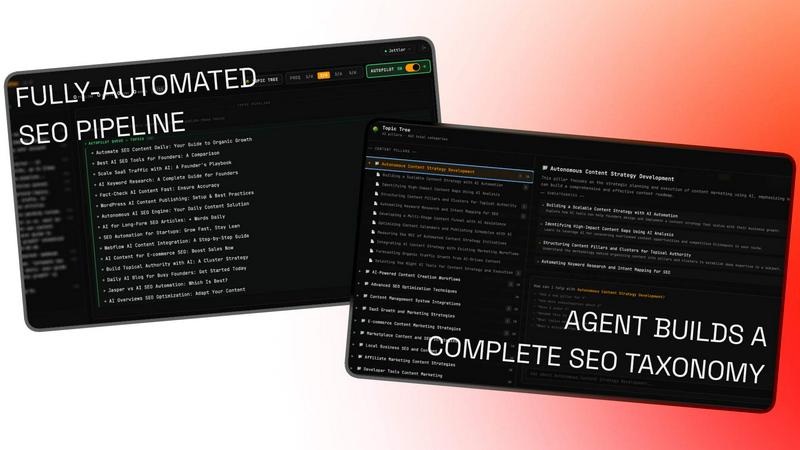
Jottler
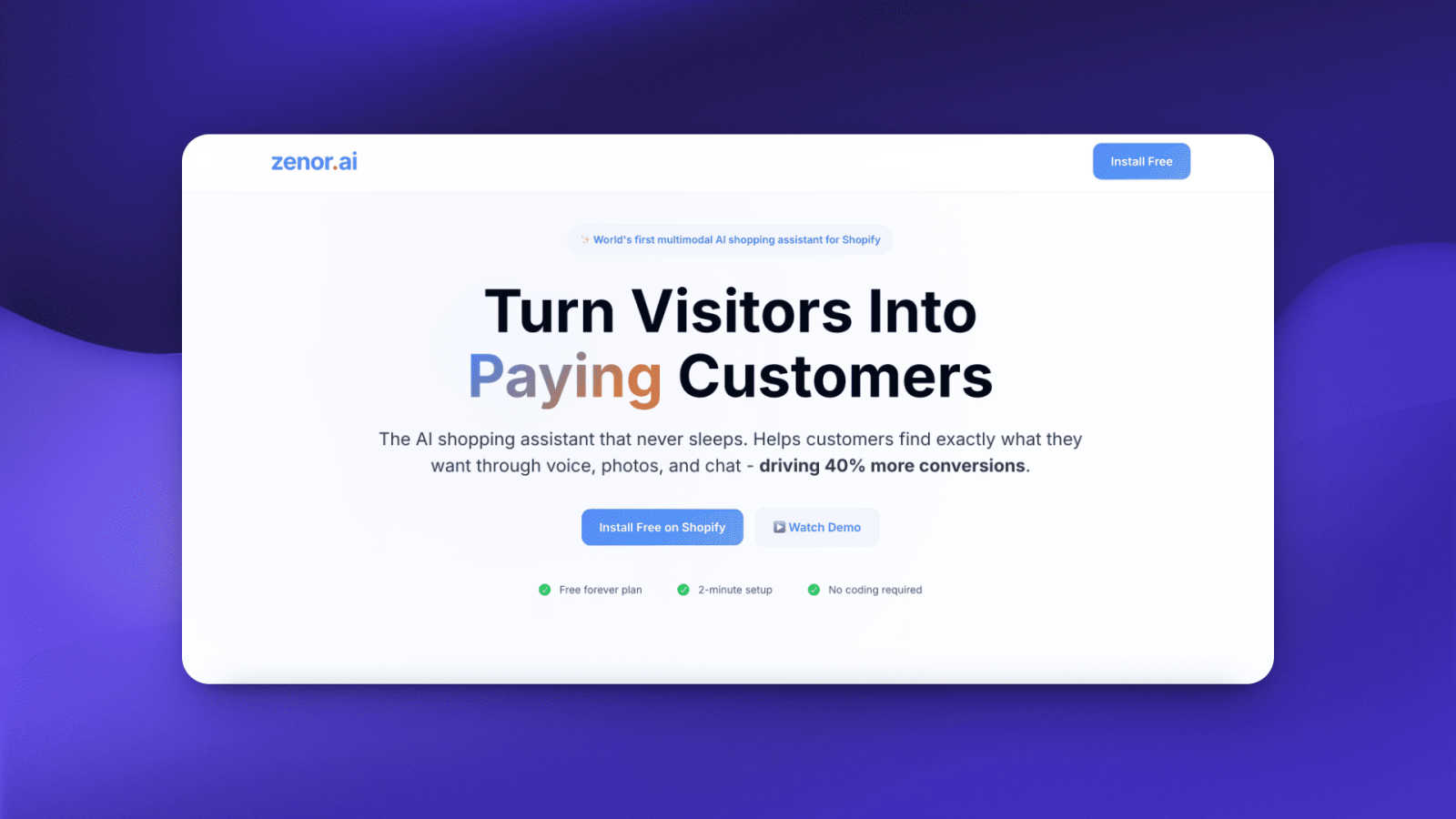
Zenor AI
Feature Comparison
Jottler
Fully Automated SEO Content Pipeline
Jottler operates a complete, hands-off content pipeline powered by 12 autonomous AI agents. It continuously scans for keyword opportunities, queues topics based on a strategic plan, generates full-length articles, and manages the publishing schedule. This end-to-end automation transforms a typically fragmented process involving multiple tools and manual steps into a single, set-and-forget system that consistently produces and deploys content to grow organic traffic.
AI-Powered Keyword Research & Topic Planning
The platform autonomously conducts deep keyword research to identify high-value, low-competition search opportunities tailored to your niche. It goes beyond simple keyword lists by clustering topics and building a strategic, long-term content calendar automatically. This ensures your content strategy is data-driven and aligned with what your target audience is actively searching for, maximizing potential traffic gains.
Deep Research & Fact-Checking Engine
Every article is built on substantive research, drawing data from 14 or more crawled sources to ensure depth and accuracy. Jottler incorporates a dedicated anti-hallucination engine that verifies claims, checks statistics, and removes unsourced information before publication. This results in authoritative, credible content that stands up to scrutiny from both readers and search engine algorithms, distinguishing it from thin AI-generated filler.
Direct CMS Publishing & Autopilot Scheduling
Jottler integrates directly with popular content management systems including WordPress, Webflow, Shopify, and Framer. Once configured, it publishes complete articles—including formatted text, meta tags, and AI-generated featured images—without any manual copy-pasting. Users can set a publishing frequency (from 1 to 5 articles per day) on autopilot, and the agent handles the entire queue and schedule autonomously.
Zenor AI
Multimodal Shopping Assistant
Zenor AI deploys a sophisticated chatbot that understands customer intent through text, voice, and visual queries. It seamlessly integrates with your Shopify catalog to provide instant, accurate product recommendations, answer questions about shipping and returns, and even add items to the cart or initiate checkout. This creates a conversational, intuitive shopping experience that mirrors in-store assistance, significantly reducing friction and abandoned carts.
Comprehensive AI Visibility Audit
This proprietary audit tool performs over 30 critical checks in under 60 seconds, with no installation required. It analyzes your store specifically for AI search engine readiness, going far beyond traditional SEO. The audit identifies if your store is blocking AI crawlers, evaluates the quality of your product descriptions for AI citation, and checks for the presence of advanced JSON-LD schema markup that Large Language Models (LLMs) use to understand and recommend products.
Done-For-You AI Optimization
Unlike tools that only identify problems, Zenor provides a complete implementation service. Their team handles all technical fixes required for AI visibility, including configuring your robots.txt to allow access to crawlers from platforms like ChatGPT and Perplexity, implementing rich, structured schema markup tailored for LLMs, and optimizing product content to be AI-ready. This turnkey approach ensures stores become visible in AI search results without requiring merchant technical expertise.
Competitor AI Visibility Benchmarking
Zenor's audit provides contextual intelligence by comparing your store's AI visibility score against direct competitors. This feature highlights your relative standing in the new AI search landscape, offering clear, prioritized insights into what specific gaps need to be closed first to gain a competitive advantage and capture market share from AI-driven product discovery.
Use Cases
Jottler
Startup Founders Seeking Efficient Growth
For startup founders with limited time and resources, Jottler acts as a full-time SEO content team. It allows them to establish a robust content marketing foundation from day one, driving organic traffic and lead generation without diverting focus from core product development, fundraising, or operational tasks. This enables efficient, scalable growth marketing.
Small Marketing Teams Scaling Output
Small or solo marketing teams can use Jottler to dramatically scale their content output without increasing workload. The tool handles the heavy lifting of research, writing, and publishing, allowing the team to focus on high-level strategy, promotion, and conversion optimization while maintaining a consistent stream of high-quality, SEO-optimized blog content.
SaaS Companies Building Topical Authority
SaaS companies in competitive niches can deploy Jottler to systematically build topical authority around their product category. By producing a high volume of deeply researched, long-form content on relevant topics, they can dominate search results for both bottom-of-funnel keywords and top-of-funnel educational queries, establishing thought leadership and driving qualified sign-ups.
Agencies Managing Multiple Client Blogs
Marketing agencies can leverage Jottler to manage and scale content production across multiple client websites from a single dashboard. The autonomous workflow ensures consistent, hands-off publishing for each client, improving service delivery efficiency and allowing the agency to offer a powerful, results-driven SEO content service without proportional increases in labor costs.
Zenor AI
Boosting Conversions for High-Consideration Products
For stores selling complex, feature-rich, or high-value items (e.g., electronics, skincare, supplements), the shopping assistant guides uncertain customers. By answering specific, technical questions in real-time and providing personalized recommendations, it shortens the decision-making process, builds trust, and directly increases conversion rates and average order value.
Capturing Traffic from AI Search Platforms
Merchants who are invisible to AI assistants like ChatGPT and Google AI are missing up to 40% of new product discovery. Zenor's optimization service ensures your products are indexed and cited when users ask AI for recommendations. For example, a store selling "organic face moisturizer for sensitive skin" will appear in AI answers, driving qualified, high-intent referral traffic directly to their product pages.
Reducing Customer Support Overhead
The AI assistant autonomously handles a high volume of repetitive pre- and post-purchase inquiries, such as "What's my order status?", "What is your return policy?", and "Do you ship to my country?". This 24/7 automated support frees human agents to tackle complex issues, improving operational efficiency and reducing support costs while maintaining instant customer satisfaction.
Future-Proofing Against Organic Traffic Decline
With a predicted major shift from traditional search to AI-powered answers, forward-thinking store owners use Zenor to proactively adapt. By auditing and optimizing their store's foundational signals for AI crawlers and LLMs now, they build resilience against the forecasted decline in organic Google traffic, securing a sustainable growth channel for the future.
Pricing Comparison
Jottler
Jottler offers tiered plans based on the number of articles published per day, with plans starting at $29 per month. The platform provides a visual agent interface where users can manage their content pipeline, view queued and published articles, and track word count. Every plan includes access to the full automated pipeline: AI keyword research, deep-source article writing, fact-checking, internal linking, image generation, and direct CMS publishing.
Zenor AI
Zenor AI operates on a transparent, value-based pricing model centered on its flagship AI Visibility service. The comprehensive AI Visibility Audit is completely free, providing a full report with over 30 checks and a competitor benchmark at no cost. For merchants who wish to implement all recommended fixes, Zenor offers a one-time implementation fee of $199. This fee covers the complete done-for-you service, including AI crawler configuration, advanced schema markup implementation, and optimization guidance, with no recurring monthly charges. This contrasts with many traditional Shopify SEO apps that typically charge ongoing monthly subscriptions ranging from $0 to $99, and broader AI marketing platforms that can cost between $29 to $489 per month, often without platform-specific or done-for-you services.
Overview
About Jottler
Jottler is an autonomous AI SEO agent engineered to automate the entire content marketing workflow, from initial keyword discovery to direct publishing. It functions as a comprehensive SEO engine designed specifically for founders, startups, and lean marketing teams who need to scale organic traffic without scaling their headcount or time investment. The core value proposition is the complete removal of manual complexity; users simply connect their website, and Jottler's system of 12 specialized AI agents takes over. It continuously researches high-value keyword opportunities, plans a long-term content strategy, and writes, fact-checks, and publishes long-form, optimized blog posts directly to connected content management systems. This creates a compounding effect on organic visibility, systematically building topical authority. Beyond traditional search, Jottler produces deeply researched, well-structured content designed to be cited as source material by AI models like ChatGPT and Copilot, amplifying brand visibility across both search engines and emerging AI answer platforms.
About Zenor AI
Zenor AI is a dual-solution platform engineered to future-proof Shopify stores in the age of AI-driven commerce. It addresses two critical fronts: AI-powered customer engagement and AI search visibility. First, as a multimodal shopping assistant, Zenor AI transforms the on-site shopping experience by allowing customers to interact with a store's catalog using natural language via text, voice, or image inputs. This AI assistant can answer product questions, handle FAQs about policies, recommend items, and facilitate checkout, directly increasing conversion rates and average order value while reducing support tickets. Second, and uniquely, Zenor provides a comprehensive AI Visibility Audit and optimization service. With Gartner predicting a 50% decline in traditional organic search traffic by 2028 and 40% of product discovery now happening through AI answers like ChatGPT, visibility in these new AI search ecosystems is paramount. Zenor ensures Shopify stores are correctly indexed and recommended by major AI platforms by auditing and fixing critical elements like AI crawler access, LLM-specific schema markup, and AI-ready product descriptions. Built exclusively for Shopify, it combines deep platform-specific expertise with cutting-edge AI optimization, offering a complete, done-for-you solution to capture the next wave of AI-originating customers.
Frequently Asked Questions
Jottler FAQ
What makes Jottler different from other AI writing tools?
Jottler is not just a writing tool; it is an autonomous SEO agent. While standard AI writers require manual prompts, editing, and publishing, Jottler automates the entire pipeline from keyword discovery to CMS publishing. Its multi-agent architecture handles research, fact-checking, internal linking, and scheduling autonomously, making it a true set-and-forget system for compounding organic traffic.
How does Jottler ensure content quality and avoid AI "hallucinations"?
Jottler employs a rigorous fact-checking and verification engine. Every article is built by crawling and synthesizing information from 14 or more credible sources. An anti-hallucination layer then cross-references all claims and statistics, removing any unsourced or potentially fabricated information before publication, ensuring the final content is accurate and authoritative.
Which CMS platforms does Jottler integrate with for publishing?
Jottler offers direct, automatic publishing integrations with major content management systems and website builders. This includes WordPress, Webflow, Shopify, DropInBlog, and Framer. Once connected, Jottler can publish complete articles with images and formatting directly to your site without any manual intervention required.
Can Jottler create content in languages other than English?
Yes, Jottler supports multi-language content creation. You can set your preferred language during the initial onboarding process, and the AI agent will generate all subsequent articles in that specified language, allowing for global SEO and content strategy execution.
Zenor AI FAQ
How is AI visibility different from traditional SEO?
Traditional SEO optimizes for search engine algorithms like Google's to rank on Search Engine Results Pages (SERPs). AI visibility optimizes for Large Language Models (LLMs) like those powering ChatGPT, Perplexity, and Google's AI Overviews, which generate conversational answers. This requires different technical signals, such as ensuring AI crawlers can access your site and providing detailed, structured data (schema) that LLMs can easily cite, rather than just targeting keywords for ranking.
What does the free audit check, and do I need to install anything?
The free audit performs over 30 checks in under 60 seconds with zero installation. It analyzes key areas for AI visibility: AI crawler access (checking if your robots.txt blocks platforms like GPTBot), AI-ready description quality, advanced JSON-LD schema markup for LLMs, core web vitals, and traditional SEO fundamentals. You simply enter your store URL; no Shopify API access, app installs, or code changes are required on your end.
What happens after the audit? Is optimization technical?
After the audit, Zenor offers a done-for-you optimization service. Their team handles all technical implementation, which typically includes: configuring your store's robots.txt file to allow all major AI crawlers, writing and implementing enhanced JSON-LD structured data tailored for LLM understanding, and providing guidance on optimizing product content. This process requires no coding or technical work from the merchant.
Why is this specific to Shopify? Can't any store use it?
While the principles of AI visibility apply broadly, Zenor's audit and optimization are built specifically for the Shopify platform. It checks for Shopify-specific issues, understands its theme structure and common app conflicts, and implements fixes that are compatible and optimized for Shopify's ecosystem. This deep platform specialization ensures more accurate audits and reliable, effective implementations compared to generic tools.
Alternatives
Jottler Alternatives
Jottler is an autonomous AI SEO agent designed to automate the entire content marketing workflow for busy founders and small teams. It belongs to the category of AI-powered SEO and content automation tools, which aim to reduce manual effort by handling keyword research, content creation, and publishing. Users often explore alternatives to tools like Jottler for several common reasons. These can include budget constraints, the need for specific integrations with their existing tech stack, or a desire for more hands-on control over certain aspects of the SEO process, such as editorial review or custom content strategies. When evaluating alternatives, key considerations should include the level of automation versus human oversight, the quality and depth of the AI-generated content, compatibility with your website's content management system, and the overall value relative to the investment. The right tool should align with your team's capacity and long-term growth goals.
Zenor AI Alternatives
Zenor AI is a multimodal shopping assistant for Shopify stores, falling into the category of conversational commerce and AI-powered customer experience tools. It allows shoppers to interact with a store using voice, text, or images to find products and get support. Businesses may seek alternatives for various strategic reasons. Common drivers include budget constraints, the need for different feature sets like advanced analytics or integration with non-Shopify platforms, or a preference for a solution with a more established market presence and longer track record. Some may also prioritize specific capabilities, such as a more robust virtual try-on feature that is already live. When evaluating alternatives, key considerations should include core functionality alignment with your business model, total cost of ownership, ease of implementation and use, quality of customer support, and the strength of data privacy and security measures. The goal is to find a tool that not only matches your technical requirements but also demonstrably supports your core business objectives of increasing conversion rates and improving customer satisfaction.