Coldreach vs Image to 3D AI
Side-by-side comparison to help you choose the right product.

Coldreach
Coldreach is an AI SDR that automatically finds high-intent leads and conducts personalized outreach to book sales meetings.
Last updated: March 19, 2026

Image to 3D AI
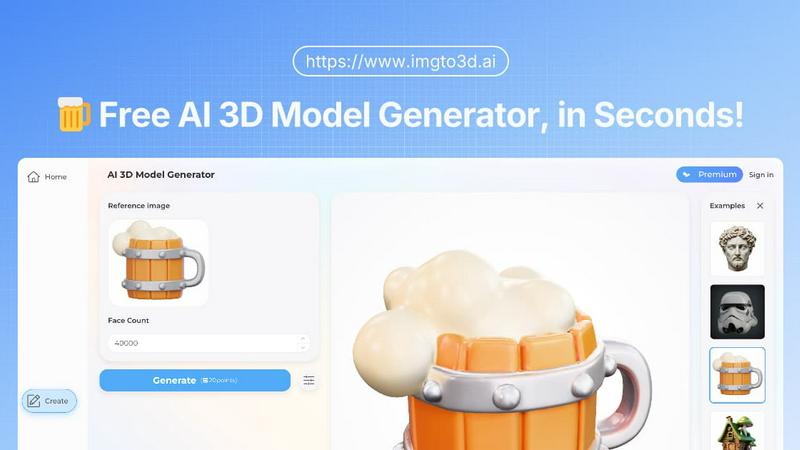
ImgTo3D.ai instantly converts any 2D image into a detailed 3D model for free, as noted by its 20,000 monthly users.
Last updated: March 1, 2026
Visual Comparison
Coldreach
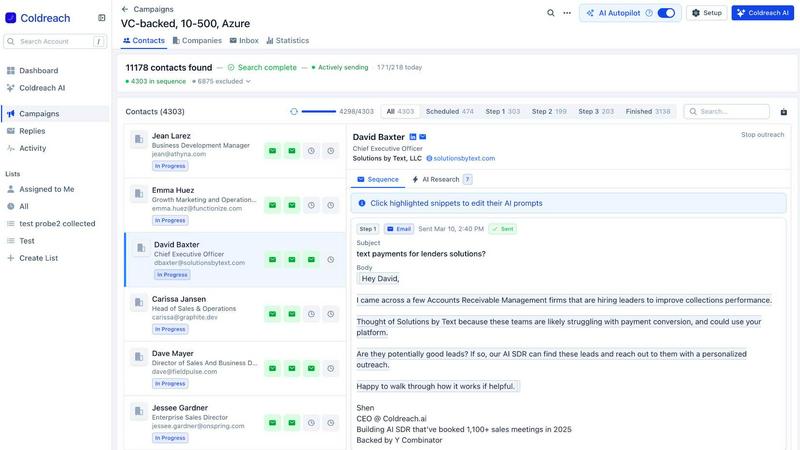
Image to 3D AI
Feature Comparison
Coldreach
Tailored Intent Signal Monitoring
Coldreach moves beyond static firmographic filters by allowing you to define custom, nuanced buying signals in plain English that indicate intent for your specific product. The AI continuously monitors 97 million accounts across multiple data sources, such as job descriptions mentioning a competing tool or news of a recent security breach, to surface only the most relevant and sales-ready leads. This 24/7 monitoring ensures you never miss a critical signal for engagement.
AI-Powered Personalized Outreach Sequences
The platform uses its deep research findings to automatically generate and send highly personalized outreach emails and LinkedIn messages. It goes beyond simple name insertion, crafting relevant messaging that references the specific pain points, current tools, or recent events it discovered during its research. Users can provide custom tone and instruction prompts to ensure the AI SDR maintains their brand voice without sounding robotic, scaling personalization effectively.
Automated Campaign Management & Lead Export
Users can build highly-targeted lead lists and launch outreach campaigns in minutes. Coldreach handles the entire outbound sequence, from initial research and vetting to sending messages and managing follow-ups on autopilot. Additionally, it offers weekly exports of freshly vetted, targeted account lists, allowing sales teams to focus on closing rather than prospecting, and integrates findings directly into existing CRM workflows.
Seamless Tech Stack Integration
Recognizing that sales teams already use numerous tools, Coldreach is built for seamless integration without adding complexity. It connects natively with major platforms including Salesforce, HubSpot, Outreach, Salesloft, Apollo, and Slack for notifications, as well as LinkedIn and Sales Navigator. This allows the AI SDR's insights and outputs to flow directly into existing sales engagement and revops ecosystems.
Image to 3D AI
AI-Powered Textured Image-to-3D Conversion
This core feature utilizes advanced deep learning algorithms to instantly transform any uploaded 2D image into a detailed 3D model complete with projected textures. The AI interprets depth, geometry, and surface details from a single static image, a complex task that traditionally requires photogrammetry with multiple photos or manual modeling. Users can select from different generation modes like "Turbo" and "Ultra" to balance speed and detail, making professional-grade 3D asset creation accessible in seconds without any manual sculpting.
Adaptive Polygon Density Control
The platform provides users with critical control over the final model's complexity by allowing adjustment of the face count, with options ranging from 5K to 40K polygons. This adaptive mesh optimization ensures an optimal balance between visual fidelity and performance. For instance, a game developer can create a low-poly model for real-time rendering, while a 3D printing enthusiast can generate a high-detail model, all from the same source image, preserving critical details through intelligent algorithmic processing.
Multi-Format Export for Professional Workflows
Image to 3D AI supports exporting the generated models in industry-standard formats, including OBJ, GLB, and STL. This versatility ensures seamless integration into downstream professional pipelines. OBJ and GLB files are perfect for game engines, AR/VR applications, and animation software, while the STL format is optimized for direct use in 3D printing, making the platform a unified solution for both digital and physical 3D creation.
Zero-Barrier Free Tier with Instant Access
A foundational feature is the permanently free AI 3D model generator that requires no software installation, user sign-up, or credit card. This eliminates all initial barriers to entry, allowing anyone to experiment and create. The free tier meets the needs of most casual users and serves as a full-featured proof of concept, embodying the platform's mission to democratize 3D technology, though it may involve processing queues during peak hours to manage service quality.
Use Cases
Coldreach
Targeting Companies Undergoing Specific Tech Changes
A SaaS company selling a modern data stack solution can use Coldreach to identify companies that have recently hired data engineers with experience in legacy systems like Oracle, or whose job postings mention a migration to cloud platforms like Snowflake. The AI SDR can then reach out with a message tailored to the challenges of data migration, positioning the product as the ideal modern solution.
Engaging Businesses After Publicly Disclosed Pain Points
A cybersecurity vendor can configure Coldreach to monitor news and SEC filings for mentions of recent data breaches, ransomware attacks, or compliance issues at target companies. The AI can immediately engage these high-intent leads with personalized outreach that demonstrates an understanding of their specific incident and offers a relevant solution, capitalizing on a clear moment of urgency.
Identifying Companies Scaling Specific Teams
A recruiting software or HR tech company can set signals to find organizations actively scaling departments relevant to their product, such as "currently hiring 3+ engineers" or "opened 5+ sales roles in the last quarter." Coldreach researches these hiring signals and reaches out to HR or department heads with messaging about streamlining the hiring process during a period of growth.
Prospecting Based on Operational Inefficiencies
A fintech company automating expense reports can instruct Coldreach to scan job descriptions within finance departments for phrases like "manages expenses in Excel" or "builds manual spreadsheets for reporting." By identifying companies still relying on manual, error-prone processes, the AI SDR can initiate a conversation about automation, directly addressing a confirmed operational pain point.
Image to 3D AI
Rapid Prototyping in Game Development
Indie game studios and developers use the platform to rapidly generate characters, environmental props, and assets in minutes instead of days. The ability to control polygon density is crucial, allowing for the creation of optimized, game-ready models that integrate directly into engines like Unity or Unreal Engine. This accelerates iteration cycles, slashing pre-production time and enabling small teams to compete with larger studios by focusing resources on gameplay and design rather than asset modeling.
Accessible 3D Printing and Product Design
Hobbyists, educators, and startup founders leverage the tool to convert photographs or sketches into printable 3D models. Users can create custom figurines, replacement parts, or artistic sculptures. The export in STL format ensures compatibility with most slicing software and 3D printers. This use case is particularly valuable for fields like heritage preservation, where photographs of objects or monuments can be transformed into physical replicas without expensive 3D scanning equipment.
Efficient Asset Creation for XR/VR/AR
Producers of virtual reality, augmented reality, and metaverse experiences require a high volume of optimized 3D assets that perform well in resource-constrained environments. This platform allows for the quick population of virtual worlds with textured models. The generated assets maintain visual quality while adhering to strict polygon budgets, which is essential for maintaining high frame rates and a smooth, immersive user experience in real-time applications.
Enhanced Creative Portfolio Development
Artists, graphic designers, and architects use Image to 3D AI to rapidly visualize concepts and expand their creative portfolios. A hand-drawn sketch or a concept art piece can be turned into a presentable 3D model in seconds, allowing creatives to demonstrate their ideas in a more tangible and impressive format without needing to invest weeks in learning complex 3D modeling software, thereby showcasing their vision rather than their technical modeling skills.
Overview
About Coldreach
Coldreach is an AI-powered Sales Development Representative (SDR) platform designed to transform cold outreach from a numbers game into a targeted, research-driven strategy. It automates the top-of-funnel sales process by conducting deep, real-time research on every potential lead before making contact. The platform scans a vast database of 97 million companies across five or more intent data sources—including job postings, news, SEC filings, company websites, and LinkedIn profiles—to identify genuine buying signals and pain points specific to your Ideal Customer Profile (ICP). This research ensures that outreach is only initiated with companies that have a verified need, are currently in-market, and have a status quo your product can improve. The AI SDR then crafts and sends hyper-personalized email and LinkedIn sequences, manages automated follow-ups, and utilizes a private deliverability setup to maximize inbox placement. Trusted by growth teams and backed by Y Combinator, Coldreach delivers an average reply rate of 3.8% across 500,000+ sampled emails, a figure it cites as 10x the industry average, by ensuring every message is timely, relevant, and valuable to the recipient.
About Image to 3D AI
Image to 3D AI, powered by ImgTo3D.ai, is a transformative artificial intelligence platform that automates the conversion of two-dimensional images into fully realized three-dimensional models. This technology addresses a significant bottleneck in digital content creation, where traditional 3D modeling requires extensive manual effort, specialized software expertise, and considerable time investment, often taking skilled artists hours or days per asset. By leveraging cutting-edge deep learning algorithms, the platform can process a single input—be it a photograph, digital artwork, or hand-drawn sketch—and generate a textured 3D model with geometry in a matter of seconds. This process democratizes 3D content creation, making it accessible to a broad audience beyond professional 3D artists. The primary value proposition lies in its unprecedented speed and accessibility, offering a zero-cost entry point with a free tier while enabling professional-grade output. According to platform statistics, this approach can reduce prototyping costs by up to 90% and accelerate asset creation workflows by 8x for independent studios. It is engineered for a diverse user base, including indie game developers, 3D printing enthusiasts, e-commerce managers, and XR/VR producers, serving as a strategic tool for rapid iteration and production in today's fast-paced digital economy.
Frequently Asked Questions
Coldreach FAQ
What is an AI SDR and how does Coldreach's work?
An AI SDR automates the repetitive, research-intensive tasks of a human Sales Development Representative: identifying qualified leads, conducting research, and executing personalized outreach. Coldreach's AI SDR distinguishes itself by performing deep, multi-source research on every lead—analyzing job postings, news, company websites, LinkedIn, and SEC filings—to understand their specific pain points and buying signals before crafting any message. This ensures outreach is fundamentally relevant, not just superficially personalized.
How is Coldreach different from other AI SDR or sales automation tools?
Most sales automation tools personalize outreach using only basic, static data like a lead's name, company, and title. Coldreach's core differentiator is its pre-emptive, investigative research engine. It doesn't just personalize a template; it uses research to decide if and when to reach out, and what to say. This focus on genuine buying intent and contextual relevance is why it reports a 3.8% average reply rate, which it states is 10x higher than typical cold email benchmarks.
What kind of buying signals can I track with Coldreach?
You can track a wide array of specific, customizable signals written in plain English. Examples include: "Currently hiring 3+ engineers with experience in Next.js," "Faced a cybersecurity attack in the last 12 months," "Mentions building expense reports in Excel in recent finance job postings," or "Onboarded a Data Engineer who mentioned Snowflake on LinkedIn in the last 3 months." You can also track website changes, 10-K report details, and conference attendance.
How does Coldreach ensure emails don't land in spam?
Coldreach employs a private deliverability setup, which is a dedicated infrastructure for managing email sending reputation, distinct from shared IP pools used by many bulk email services. This setup, combined with highly relevant content that recipients are more likely to engage with (leading to positive signals like opens and replies), helps achieve high inbox placement rates. The platform is designed to mimic the sending patterns of a human SDR to avoid spam filters.
Image to 3D AI FAQ
What kind of images work best with the AI 3D Model Generator?
For optimal results, upload clear, well-lit images featuring a single object against a relatively uncluttered background. The AI algorithm is trained to interpret depth and form from visual cues, so high-contrast photos with distinct edges and good lighting yield the most accurate 3D geometry. Simple sketches with defined outlines also work effectively. Avoid overly busy backgrounds or images with multiple overlapping objects, as this can confuse the depth perception algorithm.
What are the main differences between the Free and Pro tiers?
The free tier offers full access to the core AI generation technology with polygon control and OBJ export, but users may experience processing queues during peak traffic. The Pro tier, or "Pro Access," provides priority processing with no queues, higher generation limits, and the ability to export in multiple formats including GLB and STL. Pro users also gain access to advanced features for textured models, making it suitable for professional, high-volume production workflows.
How does the polygon density (face count) setting affect my model?
The polygon density, or face count, directly determines the level of detail and the file size of your 3D model. A lower count (e.g., 5K faces) creates a lighter, more performance-optimized model ideal for real-time applications like video games or VR. A higher count (e.g., 40K faces) captures finer details and smoother curves, which is better for close-up renders, high-quality visuals, or 3D printing where detail is paramount. The AI adaptively optimizes the mesh to preserve critical details at any chosen setting.
Are the generated 3D models ready for commercial use?
Yes, models generated using Image to 3D AI are typically free for personal and commercial use. However, it is the user's responsibility to ensure they have the necessary rights or licenses to the original 2D image source they are uploading. The platform grants you the rights to the 3D model derived from your input, but you must own or have permission to use the underlying image, especially for commercial projects, to avoid copyright infringement.
Alternatives
Coldreach Alternatives
Coldreach is an AI-powered sales development representative (SDR) agent that automates lead research and personalized outreach. It belongs to the growing category of AI assistants designed to augment and automate sales prospecting workflows. Businesses seek this technology to generate qualified pipeline with greater efficiency and personalization at scale. Users often explore alternatives to find a solution that aligns with their specific budget, required feature set, or integration needs with existing CRM and marketing stacks. Other common considerations include the desired level of human oversight, the depth of AI-driven research, and the platform's deliverability and compliance safeguards. When evaluating options in this category, prioritize platforms that demonstrate transparent performance metrics, such as reply rates. Key differentiators often involve the sophistication of pre-outreach research, the quality and adaptability of message personalization, and the technical infrastructure ensuring email deliverability. The goal is to find a system where automation enhances relevance, rather than replacing it.
Image to 3D AI Alternatives
Image to 3D AI is a specialized AI assistant that automates the conversion of 2D images into textured 3D models. This category of software, often termed AI-powered 3D generation, uses deep learning to interpret depth and form from a single photograph or sketch, drastically reducing the time and skill required for traditional 3D modeling. Users may seek alternatives for various practical reasons. These include budget constraints beyond a free tier, specific feature requirements like different export formats or integration with other software, or the need for a platform that operates on a different device or operating system. The intended use case, such as game development versus 3D printing, also heavily influences the search for a more tailored solution. When evaluating alternatives, key considerations should include the core AI's accuracy and output quality, the level of user control over the generated mesh and textures, supported file formats for export, and the overall cost structure. It is also prudent to assess the tool's performance with your specific types of input images and its ability to integrate into your existing digital content pipeline.