Gaeilgeoir AI vs Polym
Side-by-side comparison to help you choose the right product.

Gaeilgeoir AI
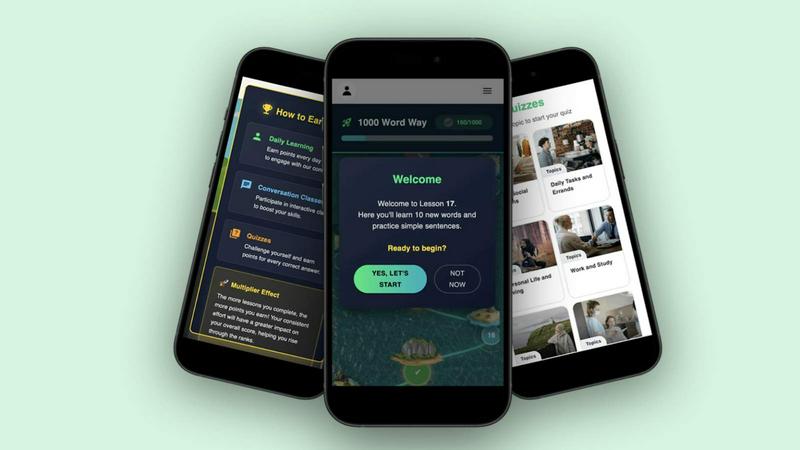
Gaeilgeoir AI is your personal, research-backed tutor for mastering real Irish conversations through structured, everyday practice.
Last updated: April 13, 2026

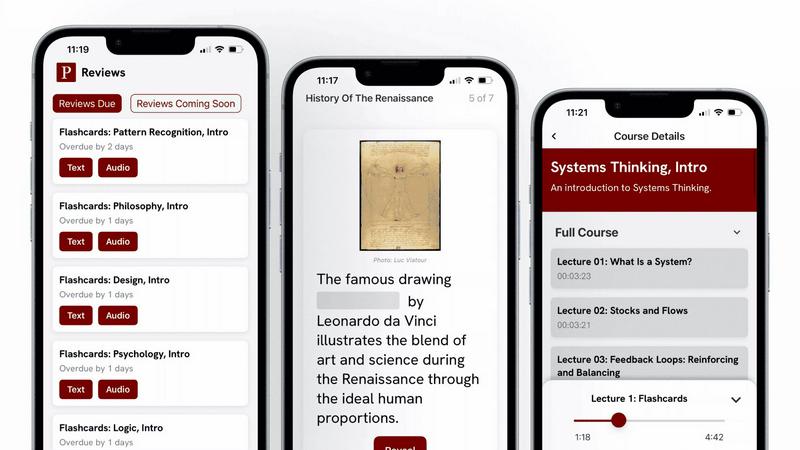
Polym is an audio app that uses proven cognitive science to help you actively learn and remember foundational knowledge.
Last updated: March 1, 2026
Visual Comparison
Gaeilgeoir AI
Polym
Feature Comparison
Gaeilgeoir AI
Guided Real-World Conversation Practice
This feature immerses learners in structured, scenario-based dialogues that mirror authentic daily interactions. Users practice conversations relevant to social settings, travel, dining, and work, moving beyond textbook phrases. The AI acts as a conversational partner, providing a safe space to make mistakes and learn through doing, which is critical for developing speaking fluency and pragmatic competence in a new language.
Interactive Vocabulary Builder & Personal Study List
Across the entire platform, users can click on any Irish word to instantly see its translation, pronunciation, and contextual meaning. They can then save these words to a personalized digital study list. This active curation empowers learners to focus on vocabulary relevant to their interests and weaknesses, facilitating more efficient review sessions and personalized progression.
Immersive Learning of High-Frequency Words
Gaeilgeoir AI employs a data-driven approach by focusing instruction on the 1,000 most commonly used words in Irish. This method, supported by linguistic research on frequency analysis, ensures learners build a strong foundational vocabulary that maximizes comprehension and utility in everyday conversations, allowing them to understand and engage with a significant portion of spoken and written Irish faster.
Gamified Progress & Motivation System
To sustain engagement, the platform incorporates a points-based reward system, leaderboards, and unlockable achievements. This gamification taps into proven motivational psychology, turning regular practice into a rewarding challenge. Earning points for completed lessons and quizzes helps maintain momentum, making consistent study a more enjoyable and habitual part of the learner's routine.
Polym
Scientifically-Backed Active Learning Framework
Polym's pedagogy is built on a foundation of robust cognitive science. It systematically employs retrieval practice, forcing the brain to actively recall information, which strengthens memory pathways more effectively than passive review. This is complemented by spaced repetition algorithms that schedule review sessions at optimal intervals to combat the forgetting curve, and interleaving, which mixes related topics to improve discrimination and application of concepts. This integrated approach is proven to significantly enhance long-term retention and recall.
Curated Medium-Form Audio Courses
The app provides in-depth, medium-form audio courses on a wide range of foundational subjects selected for their broad relevance. These courses distill complex topics like logical fallacies, statistical principles, and economic theories into digestible audio segments. Each course focuses on concepts and examples, offering a substantive learning experience that goes beyond simple definitions, making it ideal for deepening understanding during commutes, workouts, or downtime.
Audio Flashcards & Term Reviews
Beyond full courses, Polym features audio flashcards and abbreviated "term-only" courses. These tools are designed for efficient, focused review. Users can test their recall of key definitions, theorems, and concepts without narrative fluff, enabling rapid reinforcement of knowledge. This feature directly leverages the testing effect, a core component of retrieval practice, to cement information in memory through repeated, active recall attempts.
Audio-Optimized Technical & Mathematical Content
Recognizing that written technical material often fails in audio translation, Polym meticulously curates and adapts content for the listening medium. It focuses on the subset of technical and mathematical concepts—particularly the abstract principles—that are suitable for audio explanation. This unique approach helps learners grasp the fundamental ideas behind complex fields, strengthening their ability to apply concepts contextually rather than just memorizing formulas.
Use Cases
Gaeilgeoir AI
Heritage Learners Reconnecting with Roots
Individuals within the global Irish diaspora can use Gaeilgeoir AI to learn the language of their ancestors in a practical, engaging way. The platform's focus on real-life conversation and cultural context provides a meaningful connection to heritage, allowing users to participate more fully in family traditions, understand Gaelic phrases, and engage with Irish media and community events.
Secondary School Students Preparing for Exams
Students facing the Irish oral exam for the Leaving Certificate can utilize the platform for targeted practice. The AI conversation simulator provides endless opportunities to practice spoken responses to potential exam questions, while the instant pronunciation feedback helps refine accent and clarity, building the confidence and fluency required to perform well under exam conditions.
Adult Learners Seeking Flexible Education
Busy professionals or lifelong learners with irregular schedules benefit from the platform's 24/7 availability and modular lessons. Whether during a commute or a short break, users can complete a focused 5-minute scenario or a longer grammar lesson, allowing consistent progress without the constraints of fixed class times, aligning with self-directed learning principles.
Travelers and Cultural Enthusiasts
Travelers planning a trip to Gaeltacht regions or individuals interested in Irish culture can quickly learn practical phrases for navigation, dining, and social interactions. The scenario-based learning prepares them for authentic encounters, enhancing their travel experience and enabling deeper, more respectful engagement with Irish-speaking communities and cultural sites.
Polym
Professional Skill Augmentation
Professionals in data science, finance, engineering, and management use Polym to reinforce the core theoretical knowledge underpinning their fields. A data scientist can solidify their grasp of probability distributions and statistical inference through spaced audio reviews, ensuring these critical concepts are readily accessible for real-world problem-solving and decision-making, thereby enhancing job performance and analytical confidence.
Academic Study & Test Preparation
Students at university or those preparing for standardized tests (like the GRE, GMAT, or LSAT) utilize Polym as a complementary study tool. By interleaving reviews of logic, cognitive biases, and quantitative reasoning concepts via audio flashcards during their daily routine, they engage in additional, efficient practice sessions that improve retention beyond traditional textbook study, leading to better exam performance.
Lifelong Learning & Intellectual Curiosity
Aspiring polymaths and curious individuals committed to lifelong learning engage with Polym's broad curriculum to build a robust, interdisciplinary knowledge base. Listening to courses on philosophy, history, and AI ethics during daily commutes allows them to continuously explore new domains and connect ideas across subjects, fostering a more nuanced and comprehensive worldview without requiring dedicated reading time.
Knowledge Maintenance & Recall Strengthening
Individuals who have learned foundational subjects in the past but struggle with recall use Polym as a maintenance system. The app's spaced repetition algorithm automatically prompts users to review key terms and concepts from courses like economics or computer science at strategically timed intervals, effectively combating knowledge decay and keeping essential information fresh and accessible for years.
Overview
About Gaeilgeoir AI
Gaeilgeoir AI is a pioneering, AI-powered platform dedicated to teaching the Irish language (Gaeilge) through immersive, real-world application. Moving beyond traditional vocabulary drills and rote memorization, its core methodology is based on the principles of contextual learning and communicative language teaching, which research consistently shows leads to better long-term retention and practical usage (Lightbown & Spada, 2013). The platform simulates everyday scenarios—such as ordering food, greeting people, and discussing daily life—to teach users how the language is authentically spoken. It combines conversational AI practice with immediate pronunciation feedback and structured grammar guidance, creating a holistic learning environment. This approach is designed to help absolute beginners start speaking confidently from day one and assist intermediate learners in breaking through common plateaus by applying their knowledge in practical contexts. Gaeilgeoir AI serves a diverse audience, including members of the Irish diaspora reconnecting with their heritage, students preparing for high-stakes exams like the Leaving Cert, and lifelong learners fascinated by the language and culture. Its primary value proposition is delivering personalized, accessible, and effective Irish language instruction that fits modern lifestyles, making fluency an achievable goal.
About Polym
Polym is a revolutionary audio learning application engineered to fundamentally enhance how foundational knowledge is acquired, retained, and recalled. It is designed specifically for lifelong learners, aspiring polymaths, and professionals seeking to solidify their understanding of essential subjects that underpin critical thinking across disciplines. The app's core value proposition lies in its deliberate integration of three powerful, evidence-based cognitive science techniques: retrieval practice, spaced repetition, and interleaving. Unlike passive listening platforms, Polym transforms audio into an active learning medium through structured courses and audio flashcards. It offers medium-form content on a curated curriculum including Statistics, Probability, Logic, Economics, Computer Science, AI, Philosophy, and History. By focusing on abstract concepts and tailoring technical content for the audio format, Polym ensures that users can engage in effective, scientifically-backed study sessions anytime, anywhere, turning idle moments into opportunities for profound intellectual reinforcement and long-term memory consolidation.
Frequently Asked Questions
Gaeilgeoir AI FAQ
Can I use this service if I'm a total beginner?
Absolutely. Gaeilgeoir AI is designed to onboard complete beginners effectively. The curriculum starts with foundational greetings, essential phrases, and basic sentence structures, guiding you step-by-step. The immersive, scenario-based approach allows you to start understanding and speaking in context from your very first lesson, building confidence alongside competence.
How will this tool help me practice for the Leaving Cert Irish oral exam?
The platform is an excellent supplement for oral exam preparation. It provides a private, pressure-free environment to practice conversational Irish extensively. You can rehearse answers to common exam topics, receive instant feedback on your pronunciation, and strengthen your grasp of irregular verbs and sentence structure--all critical components assessed in the official Irish oral examination.
How are the quizzes different from standard textbook exercises?
Gaeilgeoir AI's quizzes are dynamically generated and integrated with the immersive learning path. Instead of isolated grammar drills, they often test comprehension and application within the context of the real-world scenarios you've practiced. This ensures you are tested on practical usage and recall, reinforcing how the language functions in conversation rather than in abstract exercises.
Is this platform appropriate and safe for all ages?
Yes, Gaeilgeoir AI is designed to be a safe and educational environment for learners of all ages. The content is focused on language acquisition and cultural education, with scenarios based on everyday, appropriate interactions. There are no uncontrolled social features, making it a secure tool for both younger students and adult learners.
Polym FAQ
What research supports the learning strategies Polym uses?
The methodologies in Polym are grounded in decades of cognitive psychology research. Retrieval practice (the testing effect) and spaced repetition are extensively documented for dramatically improving long-term retention compared to passive study. Interleaving has been shown to enhance the ability to discriminate between concepts and apply knowledge flexibly. A comprehensive entry point into this research is available through resources like the National Center for Biotechnology Information (NCBI), which reviews these evidence-based learning techniques (e.g., https://www.ncbi.nlm.nih.gov/pmc/articles/PMC9781761/).
What subjects does Polym cover?
Polym offers a curated curriculum focused on foundational, cross-disciplinary knowledge. Core subjects include Logic and Logical Fallacies, Cognitive Biases, Statistics, Probability, Scientific Research Methods, Algorithms, Economics, Philosophy, and History. This selection is designed to be relevant across a wide range of professional fields and personal intellectual pursuits, providing the conceptual tools for critical thinking and informed decision-making.
Who is the primary audience for Polym?
Polym is designed for a broad audience of motivated learners. This includes professionals seeking to reinforce job-relevant knowledge, students augmenting their academic studies, and lifelong learners or aspiring polymaths who are intellectually curious and want to build a durable understanding of essential subjects. It is for anyone who values the retention of foundational knowledge and prefers an efficient, audio-based learning modality integrated into their daily life.
How does Polym handle technical or mathematical content in audio format?
Polym addresses this challenge directly by focusing on the subset of technical and mathematical material that is suitable for audio presentation. Instead of attempting to convey dense equations or complex notation, courses emphasize abstract concepts, principles, definitions, and applied examples. This approach helps listeners grasp the fundamental "why" and "how" behind the math, strengthening conceptual understanding and application ability, which is often more valuable than rote calculation.
Alternatives
Gaeilgeoir AI Alternatives
Gaeilgeoir AI is an innovative platform in the language learning technology category, specifically designed to teach conversational Irish through AI-powered immersion. It focuses on practical, scenario-based learning to help users speak the language as it is used in daily life, moving beyond traditional vocabulary memorization. Users often explore alternatives for various reasons, including budget constraints, a need for different feature sets like offline access or classroom integration, or a preference for a learning methodology that emphasizes reading and writing over conversational practice. The specific platform compatibility, such as mobile app versus desktop, also influences the search for different tools. When evaluating an alternative, key considerations should include the pedagogical approach—whether it prioritizes conversation, grammar, or cultural context—the quality of feedback mechanisms, especially for pronunciation, and the overall value relative to cost. It's also prudent to assess the depth of content for your specific level, from beginner to advanced, and the flexibility of the learning structure.
Polym Alternatives
Polym is an audio-based learning application designed to enhance knowledge retention and recall. It falls within the education technology category, specifically focusing on foundational subjects for lifelong learners through active learning techniques like retrieval practice and spaced repetition. Users may seek alternatives for various reasons, including budget constraints, a preference for different content formats like video or text, the need for platform-specific apps, or a desire for a broader or more niche subject library. The search often stems from a need to find a tool that aligns more closely with individual learning styles and practical requirements. When evaluating alternatives, key considerations should include the scientific backing of the learning methodology, the quality and depth of the content library, the flexibility of the platform across devices, and the overall cost structure. The most effective tool will be one that not only delivers information but also employs proven strategies to ensure that knowledge is durably retained.