finban vs Fusedash
Side-by-side comparison to help you choose the right product.
finban empowers you to confidently manage liquidity, forecast scenarios, and streamline budgeting in one intuitive.
Last updated: February 27, 2026
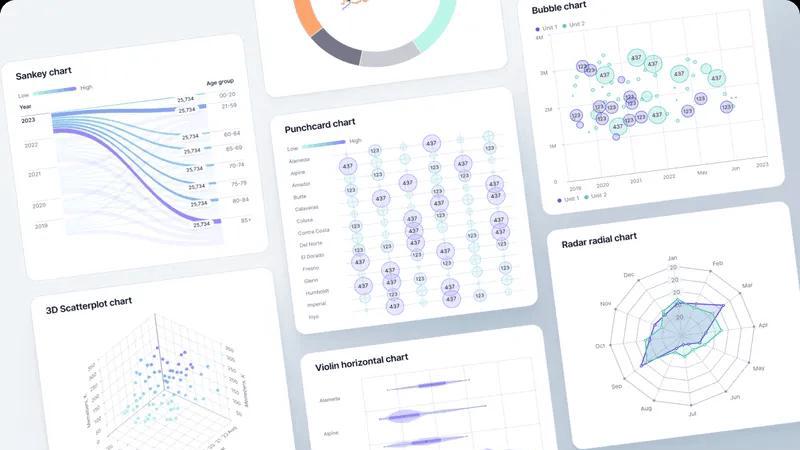
Fusedash is an AI-powered platform that transforms raw data into actionable dashboards and charts for instant team.
Last updated: March 4, 2026
Visual Comparison
finban

Fusedash

Feature Comparison
finban
Liquidity OS
finban's Liquidity OS provides detailed and precise cash flow management. It allows users to track incoming and outgoing cash on a daily basis, giving insights into how long current funds will last. This feature helps businesses avoid risky decisions during uncertain financial times.
Scenario Simulation
The scenario simulation feature allows users to model various "what if" situations to evaluate potential impacts on their liquidity. This capability enables users to make proactive decisions based on real-time data rather than relying on gut feelings, thus enhancing strategic planning.
Budget Tracking
Budget management is crucial for any organization, and finban excels at it by linking planned budgets with actual figures. Users can immediately see deviations and make necessary adjustments, ensuring that financial plans remain relevant and actionable.
Smart Forecasts
With finban’s smart forecasting, users can keep their financial projections current with minimal effort. The system updates forecasts based on real data, allowing businesses to respond quickly to changes and maintain accurate financial planning without extensive manual input.
Fusedash
Unified AI-Powered Workspace
Fusedash consolidates the entire data visualization workflow into a single platform, eliminating the need to juggle multiple tools. Users can create decision-ready dashboards, interactive charts, detailed geospatial maps, and narrative reports all from the same connected dataset. This integrated approach, which combines visualization, storytelling, and real-time monitoring, significantly reduces the time spent on rebuilding and reconciling reports across different systems, allowing teams to focus on deriving and acting on insights.
AI Chart Generator
This feature accelerates the initial stages of data analysis by enabling users to generate clear, appropriate charts from CSV files or connected APIs in minutes. The AI assists in selecting the optimal chart type, applying relevant comparisons, and refining labels to ensure the visual accurately tells the data's story. These AI-generated charts can be used as standalone visuals for quick reports or seamlessly dropped into comprehensive dashboards, promoting reusability and consistency.
Consistent Metric Definitions & Governance
A foundational feature of Fusedash is the ability to define core metrics, dimensions, and KPIs in a centralized manner. Once established, these definitions are automatically applied and reused across every view, dashboard, and report built on the platform. This enforced consistency is critical for data integrity, ensuring all stakeholders across departments are analyzing and making decisions based on the same trusted numbers, thereby eliminating conflicting data stories.
Smart AI Chat for Data Exploration
Fusedash incorporates a natural language interface that allows users to interact with their data conversationally. Users can ask questions in plain language, request specific breakdowns by segment or region, and receive AI-suggested metrics and chart types. This feature lowers the barrier to entry for data exploration and can instantly turn conversational insights into shareable, persistent dashboard views, streamlining the path from question to actionable visual.
Use Cases
finban
Financial Planning for Startups
Startups often face cash flow uncertainties. finban helps them establish clear financial forecasts and liquidity plans, enabling founders to make informed decisions about hiring, spending, and growth strategies.
Nonprofit Fundraising Analysis
Nonprofits can leverage finban to analyze various funding sources and their impacts on cash flow. By understanding the timing and amounts of incoming funds, organizations can optimize their fundraising efforts and allocate resources more effectively.
Multi-Entity Financial Oversight
For businesses operating multiple entities or branches, finban provides a consolidated view of cash flow and financial metrics across all organizations. This feature allows for better oversight and decision-making at the corporate level.
Real-Time Financial Monitoring
Businesses can utilize finban to monitor their financial health in real time. By aggregating data from various sources, companies can quickly identify trends, monitor performance against budgets, and react promptly to any financial challenges.
Fusedash
Executive & Leadership Reporting
Leadership teams require a high-level, consistent view of organizational health. Fusedash enables the creation of executive dashboards that combine real-time KPI monitoring with narrative "storytelling" sections. This provides context on what changed, why it matters, and what the next steps are, ensuring all leaders are aligned on performance and strategy without sifting through conflicting reports from different departments.
Marketing Performance Analysis
Marketing teams can use Fusedash to unify data from various channels (social media APIs, ad platforms, CRM systems) into a single dashboard. They can track campaign KPIs, use the AI chart generator for rapid analysis of A/B test results, and employ geospatial maps to visualize regional performance. The consistent definitions ensure that metrics like CAC (Customer Acquisition Cost) or ROAS (Return on Ad Spend) are calculated uniformly across all reports.
Operational & Real-Time Monitoring
Operations and support teams need live visibility into key processes. Fusedash's real-time interface allows for the creation of monitoring dashboards that track live metrics, such as website uptime, customer support ticket volume, or production line output. Teams can set alerts and drill down into specific time periods or segments to diagnose issues as they occur, moving from passive observation to proactive management.
Cross-Departmental Data Democratization
Organizations seeking to foster a data-driven culture can deploy Fusedash as a shared platform. Different teams—sales, finance, product—can build their own tailored views (dashboards, charts, reports) from the same governed dataset. The AI chat feature empowers non-analyst employees to ask their own data questions, reducing the bottleneck on data specialists and enabling faster, more widespread insight discovery.
Overview
About finban
finban is a cutting-edge liquidity management tool designed to empower businesses with real-time financial insights and decision-making capabilities. Targeted primarily at CFOs, financial managers, and small to medium-sized enterprises, finban provides a comprehensive platform for planning, forecasting, and analyzing cash flow without the chaos associated with traditional spreadsheet methods like Excel. Its main value proposition lies in its ability to simplify financial planning, enabling users to visualize their liquidity status and make informed decisions regarding hiring, taxes, projects, and investments. With features such as scenario simulation, budget tracking, and consolidated views of multiple accounts, finban transforms financial management into a straightforward, data-driven process. The platform's user-friendly interface and integration capabilities further enhance its utility, allowing companies to connect their financial data seamlessly and reduce the risk of errors.
About Fusedash
Fusedash is an AI-powered data visualization and business intelligence platform engineered to eliminate data silos and reporting inconsistencies within modern organizations. It functions as a unified workspace where teams can transform raw, connected data from disparate sources into clear, interactive, and actionable insights. The platform is specifically designed for teams burdened by manual reporting cycles, conflicting data narratives, and the inefficiency of rebuilding the same analytical logic across multiple, disconnected tools like spreadsheets, standalone BI software, and presentation decks. Its core value proposition, as supported by industry research on data-driven decision-making, is the establishment of a single source of truth. By allowing users to define key metrics and KPIs once, Fusedash ensures these consistent definitions are reused across every dashboard, chart, map, and narrative report. This governance model not only accelerates report creation but also guarantees alignment across the organization—from executive leadership to marketing and operations teams. Furthermore, Fusedash integrates advanced AI capabilities, including natural language data chat and smart visualization assistance, to democratize data exploration and make sophisticated analysis accessible to non-technical users. Ultimately, it empowers organizations to move beyond passive monitoring to active understanding, enabling users to drill down into the "why" behind performance shifts and drive unified action based on trusted data.
Frequently Asked Questions
finban FAQ
What is finban?
finban is a liquidity management tool that simplifies financial planning and decision-making for businesses by providing real-time insights into cash flow, forecasts, and budgets, all without the complexity of traditional spreadsheet methods.
How does finban help with budgeting?
finban connects planned budgets to actual financial performance, enabling users to see discrepancies in real time. This immediate feedback allows organizations to adjust their budgets proactively, ensuring financial goals are met.
Can I integrate finban with my existing tools?
Yes, finban offers a variety of integrations with popular accounting and financial tools, allowing users to aggregate their financial data in one place. This reduces the need for manual data entry and minimizes errors, enhancing overall financial management.
Is there a trial period available for finban?
Yes, finban offers a 14-day free trial, allowing potential users to explore its features and capabilities before committing to a subscription. This trial provides an excellent opportunity to evaluate how finban can meet specific financial management needs.
Fusedash FAQ
What types of data sources can I connect to Fusedash?
Fusedash offers flexible data integration capabilities. You can start by uploading static CSV files for one-time analysis or connect directly to live data sources via API integrations. The platform is designed to combine multiple datasets—including enriching your views with public data for geographic or market context—into a single, coherent workspace for analysis and reporting.
How does Fusedash ensure data consistency across my organization?
Fusedash employs a centralized metric definition system. When you define a key performance indicator (KPI), such as "Monthly Recurring Revenue," you establish its calculation formula, data source, and filters once. This definition is then locked and reused automatically in every dashboard, chart, and report that references that KPI, ensuring absolute consistency and eliminating version control issues common in spreadsheet-based reporting.
Is the AI Chat feature suitable for users without technical or SQL knowledge?
Absolutely. The Smart AI Chat feature is specifically designed to democratize data access. Users can ask questions using natural, plain language (e.g., "What were sales in the Northwest region last quarter?" or "Show me a trend of website traffic by source"). The AI interprets the query, fetches the relevant data, and can suggest appropriate visualizations, making advanced data exploration accessible to business users without coding skills.
Can I share the dashboards and reports created in Fusedash with external stakeholders?
Yes, Fusedash includes robust sharing and collaboration functionalities. You can share interactive dashboards or snapshot reports with both internal team members and external stakeholders, such as clients or investors. Access can be controlled, and views can be customized with specific filters to ensure each audience sees the most relevant information without exposing underlying sensitive data.
Alternatives
finban Alternatives
finban is a robust financial management tool designed to help businesses manage their liquidity effectively. As a product in the Business Intelligence category, it empowers users to make informed decisions regarding hiring, taxes, projects, and investments, all while avoiding the complexities often associated with traditional Excel spreadsheets. Users may seek alternatives to finban for various reasons, including pricing constraints, specific feature requirements, or compatibility with their existing platforms. When evaluating alternatives, it is essential to consider factors such as ease of use, integration capabilities, customer support, and overall functionality to ensure the chosen solution meets the unique needs of your business.
Fusedash Alternatives
Fusedash is an AI-powered business intelligence and data visualization platform. It is designed to help teams consolidate data from various sources into a unified workspace, creating consistent dashboards, charts, and reports that serve as a single source of truth for organizational decision-making. Users may explore alternatives to Fusedash for several common reasons. These include budget constraints and specific pricing model needs, the requirement for specialized features or deeper integrations with an existing tech stack, and differing preferences for user interface complexity or scalability for larger enterprise deployments. The search often stems from a need to find the optimal balance of power, accessibility, and cost for a team's unique data maturity and workflow. When evaluating alternatives, key considerations should include the platform's core data modeling capabilities, ensuring metric definitions remain consistent across reports. Assess the ease of use for both analysts building views and business users consuming insights, and verify robust data security and governance features. Finally, consider the total cost of ownership, including implementation effort and the platform's ability to scale with your data volume and team growth.