Fallom vs qtrl.ai
Side-by-side comparison to help you choose the right product.

Fallom delivers AI-native observability for LLMs, enabling real-time tracking and cost analysis for optimal performance.
Last updated: February 28, 2026

qtrl.ai
qtrl.ai empowers QA teams to scale testing with AI agents while maintaining full control and governance throughout.
Last updated: March 4, 2026
Visual Comparison
Fallom
qtrl.ai
Feature Comparison
Fallom
Real-Time Observability
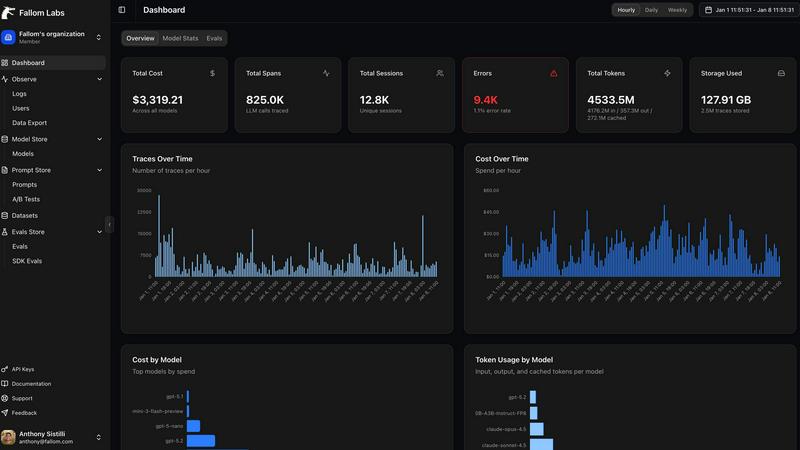
Fallom provides real-time observability for AI agents, allowing users to track tool calls, analyze timing metrics, and debug with confidence. This feature enables teams to monitor LLM calls and their respective outputs live, ensuring quick identification of any issues that may arise during AI operations.
Cost Attribution
With Fallom, organizations can track spending per model, user, and team, offering full transparency for budgeting and chargeback purposes. This feature allows teams to monitor their AI expenditures closely, leading to more informed financial decisions and better resource allocation.
Compliance Ready
Fallom is designed to meet regulatory requirements by providing comprehensive audit trails that support compliance with various regulations, including the EU AI Act, SOC 2, and GDPR. This feature ensures that organizations can operate within legal frameworks while maintaining the integrity of their AI operations.
Session Tracking
This feature groups traces by session, user, or customer, providing complete context for AI interactions. By enabling effective session tracking, Fallom allows teams to analyze user behavior more accurately and understand how different users interact with AI agents over time.
qtrl.ai
Autonomous QA Agents
qtrl.ai features autonomous QA agents that can execute instructions on demand or continuously across multiple environments. These agents operate within predefined rules, ensuring compliance while performing real browser executions instead of simulations. This capability allows teams to efficiently scale their testing efforts without losing oversight.
Enterprise-Grade Test Management
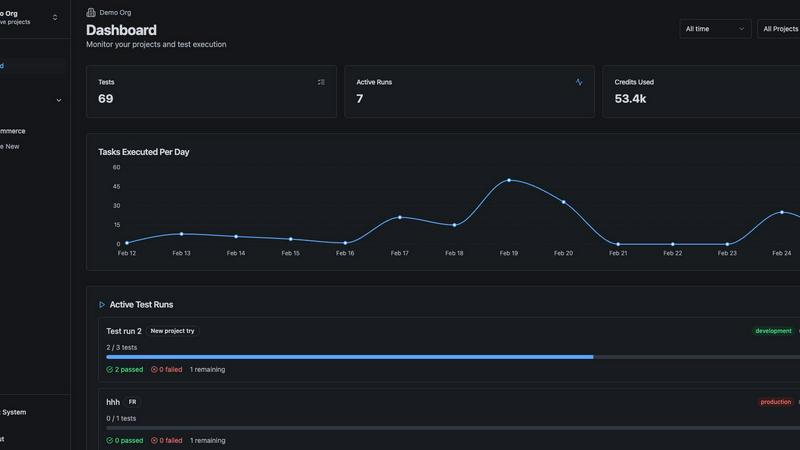
With a centralized system for managing test cases, plans, and runs, qtrl.ai provides comprehensive traceability and audit trails. This feature supports both manual and automated workflows, making it particularly well-suited for enterprises that require stringent compliance and governance in their QA processes.
Progressive Automation
Starting with human-written instructions, qtrl.ai allows teams to gradually incorporate AI-generated tests. As teams connect requirements, qtrl.ai automatically generates and executes tests, all of which remain fully reviewable. This progressive approach enables teams to scale their automation intelligently and securely.
Adaptive Memory
qtrl.ai employs adaptive memory to build a living knowledge base of the application, learning from exploration, test execution, and reported issues. This feature powers smarter, context-aware test generation that becomes increasingly effective with each interaction, thereby enhancing the overall quality assurance process.
Use Cases
Fallom
Debugging AI Workflows
Teams can leverage Fallom to debug complex AI workflows in real-time. By gaining visibility into each LLM call and its associated data points, engineers can quickly identify bottlenecks and optimize performance, ensuring smoother operations.
Financial Management
Organizations can utilize the cost attribution features of Fallom to manage their AI budgets effectively. By tracking spending at granular levels, teams can make data-driven decisions regarding model usage and resource allocation, ultimately improving financial efficiency.
Regulatory Compliance
With the growing focus on AI regulations, Fallom enables organizations to maintain compliance with necessary legal frameworks. Its comprehensive audit trails and logging capabilities ensure that all interactions with AI models are documented and traceable, minimizing legal risks.
Performance Testing
Fallom can be employed for performance testing of LLM outputs, allowing teams to run evaluations and catch regressions before deploying updates to production. This proactive approach to testing ensures that the AI systems remain reliable and effective.
qtrl.ai
Product-Led Engineering Teams
Product-led engineering teams can utilize qtrl.ai to manage their testing processes efficiently. By leveraging both manual and automated testing capabilities, these teams can ensure rapid product development cycles without sacrificing quality.
QA Teams Scaling Beyond Manual Testing
For QA teams transitioning from manual testing to automation, qtrl.ai offers a seamless path forward. Teams can start with basic automation and gradually adopt more advanced features, ensuring a controlled and manageable scaling process.
Companies Modernizing Legacy QA Workflows
Organizations looking to modernize outdated QA workflows can benefit greatly from qtrl.ai. The platform integrates easily with existing tools and supports CI/CD pipelines, making it an ideal choice for companies aiming to enhance efficiency while maintaining quality standards.
Enterprises Requiring Governance and Traceability
Enterprises that need to adhere to strict governance and audit requirements can rely on qtrl.ai's comprehensive traceability and audit trails. This ensures that all test activities are documented, providing the necessary transparency and accountability for compliance purposes.
Overview
About Fallom
Fallom is an innovative AI-native observability platform designed specifically for the unique demands of monitoring and optimizing Large Language Model (LLM) and AI agent workloads in production environments. As organizations progressively incorporate intricate AI chains into their core applications, traditional Application Performance Monitoring (APM) tools often prove inadequate, lacking the necessary granular, semantic visibility to manage these non-deterministic systems effectively. Fallom bridges this critical gap by providing end-to-end tracing for every LLM call, capturing vital data points such as prompts, outputs, tool calls, token usage, latency, and cost per call. This comprehensive visibility empowers engineering, DevOps, and product teams to transform opaque AI operations into transparent, debuggable, and cost-controllable processes. Utilizing a single OpenTelemetry-native SDK, Fallom allows teams to instrument their applications swiftly, enabling real-time monitoring, expedited debugging of agentic workflows, and accurate attribution of AI spending across various models, teams, and customers. Additionally, Fallom ensures compliance with evolving regulations, such as the EU AI Act, by offering enterprise-grade audit trails essential for regulatory adherence.
About qtrl.ai
qtrl.ai is an innovative quality assurance (QA) platform meticulously crafted to aid software teams in scaling their QA efforts while maintaining control and governance. By integrating enterprise-grade test management with robust AI automation, qtrl.ai serves as a centralized hub where teams can efficiently organize test cases, plan test runs, and trace requirements to coverage. Its real-time dashboards provide critical visibility into test outcomes, highlighting what has been tested, what is passing, and identifying potential risks, which is essential for engineering leads and QA managers.
What distinguishes qtrl.ai is its progressive AI layer, which introduces intelligent automation in a phased manner. Teams can begin with manual test management and gradually transition to leveraging built-in autonomous agents. These agents can create UI tests from plain English descriptions, adapt to application changes, and execute tests across various browsers and environments at scale. This adaptability makes qtrl.ai ideal for product-led engineering teams, QA groups seeking to move beyond manual testing, organizations modernizing outdated workflows, and enterprises that prioritize compliance and audit trails. Ultimately, qtrl.ai aims to reconcile the slow nature of manual testing with the intricate complexities of traditional automation, providing a reliable pathway to accelerated and more intelligent quality assurance processes.
Frequently Asked Questions
Fallom FAQ
What types of organizations can benefit from using Fallom?
Fallom is ideal for engineering, DevOps, and product teams within organizations that leverage Large Language Models and AI agents in their applications. It is particularly useful for those experiencing challenges with traditional APM tools.
How quickly can I set up Fallom?
Fallom offers an OpenTelemetry-native SDK that allows users to set up monitoring in under five minutes. This quick integration makes it accessible for teams looking to enhance their AI observability without significant downtime.
What compliance regulations does Fallom support?
Fallom supports various compliance regulations, including the EU AI Act, SOC 2, and GDPR. Its features are designed to meet the evolving regulatory landscape, ensuring organizations can operate within legal frameworks.
Can I use Fallom with multiple AI providers?
Yes, Fallom is designed to work with every AI provider through its single SDK, ensuring compatibility and eliminating vendor lock-in. This feature allows organizations to maintain flexibility in their AI strategy while benefiting from robust observability.
qtrl.ai FAQ
What makes qtrl.ai different from traditional QA platforms?
qtrl.ai stands out by integrating AI automation with robust test management in a progressive manner. This allows teams to maintain control while gradually adopting automated testing, unlike traditional platforms that often require a complete shift to automation.
Can teams start with manual testing on qtrl.ai?
Yes, qtrl.ai is designed to accommodate teams at various stages of their testing journey. Teams can begin with manual test management and introduce automation as they become more comfortable, making the transition smooth and manageable.
How does qtrl.ai ensure compliance and traceability?
qtrl.ai provides comprehensive traceability and audit trails for all test management activities. This feature supports enterprises in maintaining compliance with regulatory standards by documenting every step of the QA process.
Is qtrl.ai suitable for small teams as well as large enterprises?
Absolutely. qtrl.ai is flexible and scalable, making it suitable for small teams looking to improve their QA processes as well as large enterprises that require stringent governance and automation capabilities.
Alternatives
Fallom Alternatives
Fallom is an AI-native observability platform designed specifically for monitoring and optimizing Large Language Model (LLM) and AI agent workloads in production environments. As organizations increasingly adopt complex AI systems, traditional Application Performance Monitoring (APM) tools often lack the necessary granular visibility and contextual understanding of these non-deterministic processes. Consequently, users frequently seek alternatives to Fallom for various reasons, including pricing, feature sets, and compatibility with specific platform needs. When searching for alternatives to Fallom, it is essential to consider several critical factors. Users should assess the comprehensiveness of observability features, the ability to provide real-time insights, and the level of compliance support for regulated industries. Additionally, the ease of integration with existing systems and the robustness of audit trails for regulatory compliance are paramount in making an informed decision.
qtrl.ai Alternatives
qtrl.ai is a cutting-edge platform in the quality assurance (QA) category, designed to empower software teams by enhancing their testing capabilities through AI-driven automation while maintaining control and governance. It serves as a centralized hub for organizing test cases, planning test runs, and tracking quality metrics, ensuring teams have clear visibility into their testing processes. Users often seek alternatives to qtrl.ai for various reasons, including pricing structures, feature sets, and specific platform requirements. When evaluating other options, it is essential to consider factors such as ease of integration with existing workflows, the level of automation offered, and the ability to manage compliance and auditing effectively. Finding a solution that fits seamlessly with team dynamics while offering robust support and scalability is crucial for long-term success.