Dubvid vs Vidgo API
Side-by-side comparison to help you choose the right product.

Dubvid
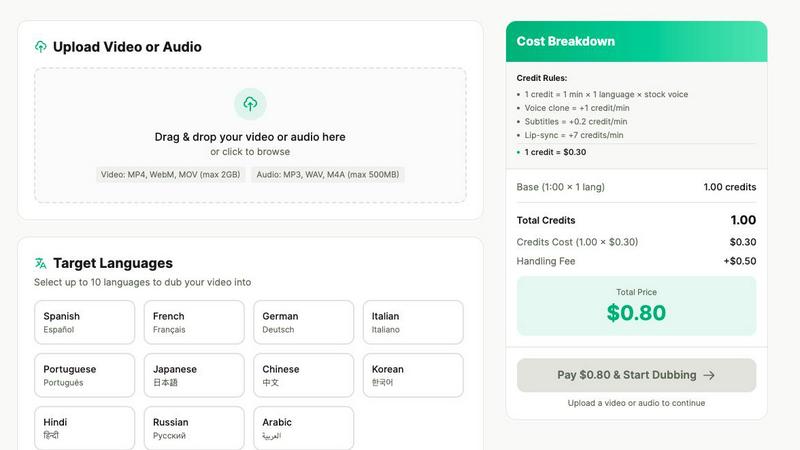
Dubvid quickly dubs audio and video into multiple languages with natural voices and optional lip-sync for global impact.
Last updated: February 27, 2026

Vidgo API
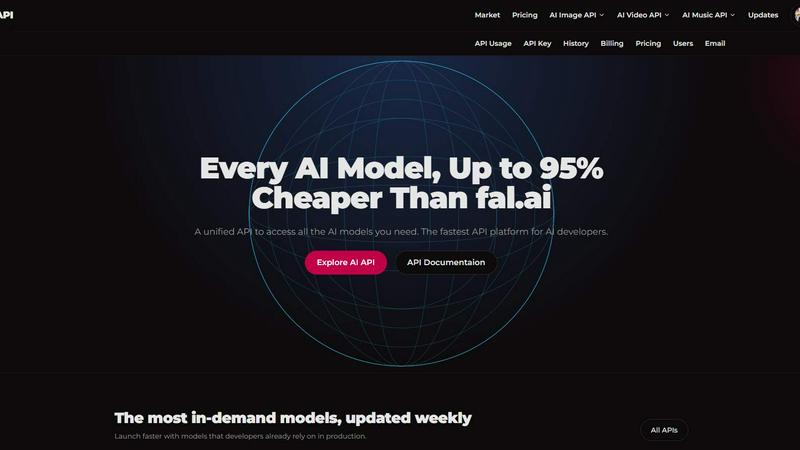
Vidgo API provides unified, low-cost access to diverse AI models for rapid development.
Last updated: February 28, 2026
Visual Comparison
Dubvid
Vidgo API
Feature Comparison
Dubvid
AI-Powered Dubbing
Dubvid harnesses the power of artificial intelligence to provide accurate and natural-sounding dubbing in multiple languages. This feature ensures that the essence of the original audio is maintained, allowing for a seamless viewing experience for international audiences.
Voice Cloning Capabilities
Users have the option to clone their own voice or choose from a variety of stock AI voices. This flexibility allows for a personalized touch in dubbed content, making it feel more authentic and relatable to the target audience.
Optional Lip-Sync
Dubvid offers an optional lip-sync feature, which aligns dubbed audio with the mouth movements of the original video. This advanced technology enhances the realism of dubbed content, especially for talking-head videos, making them more engaging and professional.
User-Friendly Interface
The platform is designed with simplicity in mind, allowing users to easily upload videos, select languages, and download the localized content in just a few steps. This intuitive design is perfect for both tech-savvy users and those less familiar with editing software.
Vidgo API
Unified AI Model Marketplace
Vidgo API consolidates access to a curated selection of over 36 state-of-the-art AI models for video, image, and music generation into one dashboard. This marketplace is continuously updated with the "most in-demand models, updated weekly," such as Kling 2.6 for motion control and Hailuo 02 for ultra-realistic video. Developers can browse, test, and integrate these models without negotiating separate contracts or navigating different API standards, significantly accelerating the prototyping and development cycle for AI-powered media features.
Cost-Effective & Predictable Pricing
A defining feature of Vidgo API is its aggressive, transparent pricing model designed as a cost-effective alternative. The platform explicitly positions itself as offering services "up to 95% cheaper than fal.ai," with per-request costs clearly listed for each model (e.g., Sora 2 at $0.15 per request). This predictable, pay-per-use structure allows development teams to forecast expenses accurately and scale their AI media generation without encountering prohibitive costs, a common barrier cited in industry reports on generative AI adoption.
Production-Ready Reliability & Performance
Built for enterprise and developer teams, Vidgo API guarantees high availability with a 99.9% uptime SLA and optimizes for speed with an average response time of 120ms. This performance consistency is critical for applications requiring real-time or near-real-time media generation. The platform provides "stable throughput" and "smart" routing, ensuring that integrations remain robust under load, a necessity for maintaining user experience in production applications as noted in software reliability engineering principles.
Simplified Developer Integration
The platform is designed with a developer-first approach, featuring a single authentication flow, consistent API endpoints across all models, and clear, comprehensive documentation. The integration process is standardized: developers use one API key, one billing account, and a uniform request structure to access any model. Example code snippets, like the provided cURL command for task submission, demonstrate the straightforward workflow, reducing integration time from days to minutes and lowering the technical barrier to implementing advanced AI capabilities.
Use Cases
Dubvid
Content Creators
Dubvid is ideal for content creators who wish to reach a broader audience by dubbing their videos into various languages. This feature enables YouTubers, TikTokers, and Instagrammers to increase their visibility and engagement across different demographics.
Educators
Teachers and educators can utilize Dubvid to translate their lessons and tutorials into multiple languages. This capability allows for the sharing of educational content with global learners, making quality education accessible to a wider audience.
Marketing Teams
Businesses looking to localize their marketing materials can leverage Dubvid to quickly adapt promotional videos for international markets. By dubbing their content, companies can connect with diverse consumer bases without the long turnaround times typically associated with traditional localization methods.
Podcasters
Dubvid simplifies the process for podcasters who want to release their episodes in new languages. This allows creators to broaden their audience and improve engagement by providing content that speaks directly to listeners in their native language.
Vidgo API
Dynamic Content Creation for Marketing & Social Media
Marketing agencies and social media managers can leverage Vidgo API to generate high volumes of tailored visual and audio content rapidly. By utilizing text-to-video models like Wan 2.6 or image-editing capabilities of Seedream 4.5, teams can produce platform-specific ads, promotional videos, and engaging social posts. The significant cost savings enable A/B testing of different creative concepts at scale, allowing data-driven optimization of campaign performance, a best practice highlighted in modern digital marketing strategies.
Enhanced Features for Software & App Development
SaaS companies and app developers can integrate AI media generation directly into their products. For instance, a design tool could use the image API for instant mockup generation, while a video editing app could offer AI-powered scene extension using models like Sora 2 Pro. The unified API allows development teams to add multiple AI features without building complex backend integrations for each service, accelerating feature deployment and improving product competitiveness in fast-moving tech markets.
Prototyping and Production in Media & Entertainment
Film studios, game developers, and independent creators can use Vidgo API for storyboarding, concept art generation, and soundtrack creation. Motion control models like Kling 2.6 can animate character designs, while Suno v5 can generate original, studio-quality music scores. This provides a powerful, affordable toolkit for pre-visualization and rapid iteration during creative development, a process that traditionally requires significant time and resource investment according to entertainment production studies.
Automated Asset Generation for E-commerce & Retail
E-commerce platforms can automate the creation of product visuals and demonstration videos. Using image-to-video models, a retailer can transform static product photos into engaging lifestyle videos. The API's cost structure makes it feasible to generate unique media for thousands of product listings, enhancing online storefronts and improving conversion rates. Research in e-commerce consistently shows that high-quality, dynamic media directly correlates with increased customer engagement and sales.
Overview
About Dubvid
Dubvid is an advanced AI-driven platform tailored for video and audio dubbing, designed to empower creators, businesses, and brands to communicate effectively with a global audience. By allowing users to upload their original videos, Dubvid offers the ability to select from a range of target languages for dubbing. The platform utilizes sophisticated artificial intelligence to translate and replicate the original voice, ensuring that the natural tone, pacing, and emotional nuances are preserved. This innovative solution eliminates the necessity for traditional recording studios, voice actors, or complicated editing processes, making it accessible for everyone, from individual content creators to large organizations. Whether you are a YouTuber looking to broaden your audience, an educator aiming to share knowledge on a global scale, or a marketing team focused on rapid localization of content, Dubvid enables you to expand your reach internationally in mere minutes, rather than weeks. With support for over 10 languages, Dubvid facilitates the breaking down of language barriers, allowing users to engage diverse audiences effortlessly.
About Vidgo API
Vidgo API is a comprehensive, unified platform that provides developers and creative teams with streamlined access to a vast marketplace of cutting-edge AI models for video, image, and music generation through a single, consistent REST API. It addresses a critical pain point in the AI development landscape: the fragmentation and complexity of integrating multiple, disparate AI services. By aggregating over 36 top-tier models—including industry leaders like OpenAI's Sora 2, Google's Nano Banana Pro, ByteDance's Seedream 4.5, and Suno v5—Vidgo API eliminates the need for developers to manage separate accounts, authentication keys, and billing systems for each AI capability. Its core value proposition is threefold: significant cost reduction, operational simplicity, and production-grade reliability. Independent analysis of its pricing structure indicates services are offered at 15-95% lower cost than competing platforms like Fal.ai, providing a compelling economic advantage for scaling applications. The platform is engineered for production environments, boasting a 99.9% uptime SLA and an average response time of 120ms, ensuring consistent performance for user-facing applications. With comprehensive documentation and dedicated support, Vidgo API empowers businesses to efficiently enhance their digital content pipelines, from marketing and entertainment to software development and social media.
Frequently Asked Questions
Dubvid FAQ
How does Dubvid ensure the quality of the dubbing?
Dubvid utilizes advanced AI technology to analyze the original audio and recreate it in the target language while preserving the natural tone and emotion. This results in high-quality dubbing that resonates with viewers.
What formats are supported for uploading videos?
Dubvid supports a variety of video formats, including MP4, MOV, and WebM, allowing users the flexibility to upload their content without worrying about compatibility issues.
Is there a limit to how many languages I can dub my content into?
Users can select multiple target languages for dubbing their content. The platform allows for dubbing into as many languages as needed, making it a versatile choice for global outreach.
Are there any hidden fees associated with using Dubvid?
Dubvid operates on a straightforward credits-based system, with clear pricing outlined for various features. Users only pay for what they use, ensuring transparency without unexpected costs.
Vidgo API FAQ
What AI models are available on Vidgo API?
Vidgo API provides access to a growing marketplace of over 36 leading AI models spanning video, image, and music generation. This includes cutting-edge models such as OpenAI's Sora 2 and Sora 2 Pro for video, Google's Nano Banana Pro and ByteDance's Seedream 4.5 for images, and Suno v5 for music. The catalog is frequently updated with new and in-demand models, ensuring developers have access to the latest advancements in generative AI technology through a single integration point.
How does the pricing compare to other AI API providers?
Vidgo API is positioned as a highly cost-effective solution, with public pricing indicating savings of 15% to 95% compared to competitors like Fal.ai. Pricing is transparent and on a per-request basis for each specific model, allowing for precise cost control. For example, generating a video with Sora 2 costs $0.15 per request, while using the Nano Banana Pro image model costs $0.05 per request. This model can lead to substantial cost reductions at scale for development teams.
Is Vidgo API suitable for production applications?
Yes, Vidgo API is explicitly built for production use. The platform guarantees 99.9% uptime, offers consistent endpoints, and maintains an average response time of 120ms to ensure reliable performance for user-facing applications. Features like callback URLs for asynchronous task handling and comprehensive documentation support stable integration. This focus on reliability and predictable performance makes it a viable backbone for commercial applications requiring dependable AI media generation.
How do I get started and integrate the API?
Getting started is a streamlined three-step process. First, sign up for an account to instantly generate an API key with no waitlist. Second, browse the API marketplace to select the best models for your use case. Third, integrate using the provided documentation, which includes consistent endpoints and code examples. You can submit a generation task with a simple cURL command or SDK, and scale your usage without changing the integration as your needs grow.
Alternatives
Dubvid Alternatives
Dubvid is an AI-powered platform that specializes in dubbing audio and video content into multiple languages, making it an essential tool for content creators, businesses, and educators. Its innovative technology focuses on maintaining natural voice quality, tone, and pacing while translating content, allowing users to expand their reach to global audiences effortlessly. Users often seek alternatives to Dubvid due to various reasons, including pricing concerns, differences in features, or specific platform compatibility needs. When choosing an alternative, it is crucial to consider the quality of voice synthesis, the number of supported languages, ease of use, and the overall efficiency of the dubbing process to ensure a seamless content localization experience.
Vidgo API Alternatives
Vidgo API is a unified platform providing access to a diverse array of AI models for video, image, and music generation through a single REST API. It belongs to the development tools category, specifically designed for integrating advanced AI media capabilities into applications. This makes it a key resource for developers and creative teams building AI-focused projects. Users often explore alternatives for several strategic reasons. These include seeking different pricing structures or specific billing models that better fit their budget, requiring niche features or specialized models not available in a generalist platform, or needing integration with a particular existing tech stack or ecosystem. The decision is typically driven by the unique technical and financial requirements of a project. When evaluating alternatives, key considerations should include the breadth and specialism of the available AI models, the clarity and reliability of the API documentation and developer support, the overall cost-effectiveness and transparency of the pricing model, and the platform's performance metrics, such as generation speed and output quality. A thorough assessment ensures the selected tool aligns with both immediate project goals and long-term scalability.