diffray vs Skene
Side-by-side comparison to help you choose the right product.

diffray
Diffray's multi-agent AI catches real bugs with 87% fewer false positives than single-agent tools.
Last updated: February 28, 2026

Skene is a code-native growth engine that automates product-led growth directly within your codebase.
Last updated: February 28, 2026
Visual Comparison
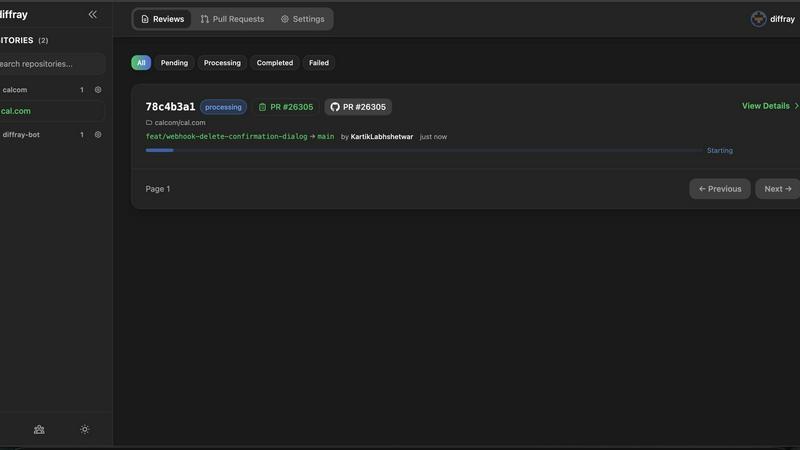
diffray
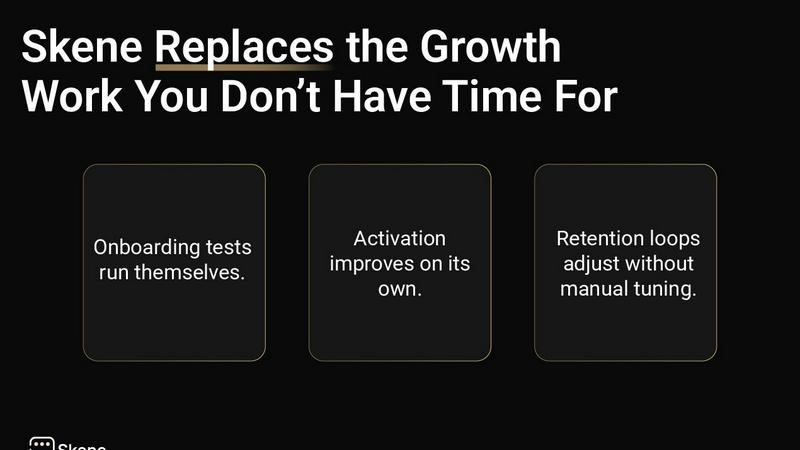
Skene
Feature Comparison
diffray
Multi-Agent Specialized Architecture
Unlike monolithic AI models, diffray employs a system of over 30 independent, specialized agents. Each agent is fine-tuned for a specific review category, such as detecting SQL injection vulnerabilities, identifying memory leaks, enforcing React best practices, or optimizing image loading. This division of labor ensures expert-level analysis in each domain, leading to more nuanced findings and significantly fewer irrelevant alerts, which research in software engineering shows is critical for maintaining developer trust in automated tools.
Full-Codebase Context Awareness
diffray analyzes pull requests with an understanding of the broader codebase context. It doesn't just review the changed lines in a vacuum; it cross-references them with existing functions, dependencies, and architectural patterns. This context allows it to identify issues like breaking API contracts, duplicated logic, or violations of established project conventions that simpler diff-only tools would completely miss, providing insights that are both relevant and immediately actionable.
Quantifiable Reduction in False Positives
A core differentiator of diffray is its empirically verified accuracy. By leveraging its multi-agent system and deep context analysis, the platform achieves an 87% reduction in false positive alerts. This metric, crucial for developer adoption, means engineers spend less time sifting through erroneous warnings and more time addressing legitimate problems, directly increasing productivity and the perceived value of the automated review process.
Integrated Performance and SEO Auditing
Beyond traditional bug detection, diffray includes dedicated agents for performance and web-centric concerns. It can flag inefficient database queries, suggest lazy loading for components, identify unoptimized assets, and check for common SEO pitfalls in front-end code, such as missing meta tags or poor heading structures. This makes it a comprehensive quality gate for full-stack development teams.
Skene
Codebase-Integrated Signal Detection
Skene derives growth signals directly from your application's source code, creating a context layer for AI-driven optimization. By analyzing the repository structure, it automatically identifies key user flows, components, and potential friction points without requiring manual tagging or external scripts. This deep integration ensures that growth instrumentation is version-controlled, performant, and never becomes a "black box" that breaks with deployments, providing a single source of truth for both your product and growth logic.
Autonomous Growth Loop Orchestration
The platform acts as a self-learning engine that autonomously observes user behavior, identifies bottlenecks in journeys like onboarding, and implements data-driven optimizations. Skene can automatically generate, A/B test, and deploy improved versions of user flows, creating a continuous feedback loop for metrics such as activation and retention. This removes the manual burden of hypothesis testing and implementation, allowing the system to systematically improve conversion paths without constant developer intervention.
Prompt-Driven Growth Implementation
Growth workflows are managed through natural language prompts within your existing development environment, such as Cursor or a terminal. Developers can instruct Skene to analyze code, generate growth manifests, or implement specific optimizations using simple commands like uvx skene-growth analyze .. This shifts growth work from managing disparate SaaS dashboards to a programmable, code-first workflow that integrates seamlessly with modern development practices.
Owned Infrastructure & Performance
Skene replaces legacy stacks of third-party snippets and widgets with owned code that you control, version, and deploy. By eliminating external JavaScript bloat and siloed data pipelines, it preserves your application's core performance and security posture. This architecture ensures that growth tooling enhances rather than hinders site speed and user experience, while keeping all data and logic within your ecosystem.
Use Cases
diffray
Accelerating Enterprise Development Cycles
Large organizations with multiple development teams and high PR volume use diffray to standardize code quality and speed up merges. By providing consistent, instant first-pass reviews, diffray acts as a tireless senior engineer on every PR, enabling human reviewers to focus on higher-level architectural and design discussions. This reduces bottlenecks and helps maintain velocity at scale.
Onboarding Junior Developers
diffray serves as an excellent mentoring tool for new team members. By providing immediate, educational feedback on code style, security practices, and common pitfalls, it helps junior developers learn best practices and internalize team standards more quickly, reducing the mentoring burden on senior staff while improving the quality of contributions from day one.
Enhancing Open Source Project Maintenance
Maintainers of open-source projects can integrate diffray to automatically screen community contributions. It efficiently filters out submissions with obvious bugs, security issues, or style violations before human maintainers invest time in review. This ensures a higher baseline quality for incoming PRs and protects the project's integrity.
Pre-Deployment Quality Gate
Teams can configure diffray as a mandatory check in their CI/CD pipeline. Every PR must pass diffray's automated review before it can be merged, acting as an automated quality gate that enforces coding standards, catches regressions, and prevents known bug patterns or vulnerabilities from reaching production, thereby strengthening the overall security and stability of the application.
Skene
Automated Onboarding Flow Optimization
For product teams aiming to improve user activation, Skene automatically analyzes the onboarding journey within the code, identifies where users drop off, and deploys tailored improvements. It can test different guidance strategies, UI tweaks, or feature introductions to maximize the rate at which new users reach the "aha!" moment, all without engineering writing new code for each experiment.
Continuous Retention & Lifecycle Automation
Skene enables the creation of self-optimizing lifecycle campaigns based on actual user behavior derived from the product. It can detect signs of churn risk or feature underutilization and automatically trigger in-app messages, email sequences, or feature prompts to re-engage users, turning the product itself into the primary driver of customer retention and expansion.
Product-Led Customer Success
Customer success teams can leverage Skene's deep product integration to move beyond reactive support. The platform identifies users struggling with specific features or workflows and can proactively deliver contextual, in-app guidance or resources. This transforms the product into a scalable success tool, ensuring users derive value independently and reducing support ticket volume.
Data-Driven Feature Adoption Campaigns
For launching new features or increasing adoption of existing ones, Skene analyzes which user segments are not utilizing key functionality. It then automatically designs and targets in-product campaigns or tutorials to specific user cohorts, measuring impact on usage metrics and iterating on the messaging and placement to drive organic feature discovery and usage.
Overview
About diffray
diffray is a sophisticated AI-powered code review assistant engineered to transform the efficiency and effectiveness of software development workflows. It is designed for development teams and engineering organizations seeking to enhance code quality, accelerate release cycles, and reduce developer burnout associated with manual code review processes. At its core, diffray utilizes a revolutionary multi-agent architecture, deploying over 30 specialized AI agents, each an expert in a distinct domain such as security vulnerabilities, performance bottlenecks, bug patterns, language-specific best practices, and SEO considerations for web code. This targeted, ensemble approach allows diffray to conduct a deeply contextual analysis of pull requests (PRs), understanding the proposed changes in relation to the entire codebase rather than in isolation. The result is a dramatic improvement in diagnostic accuracy: diffray reduces false positives by 87% and triples the detection of genuine, critical issues compared to generic, single-model AI tools. By delivering precise, actionable insights directly into the developer's workflow, diffray empowers teams to slash average PR review time from 45 minutes to just 12 minutes per week, according to user reports. Its primary value proposition lies in elevating code quality through intelligent, context-aware automation, making it an indispensable asset for modern software engineering teams committed to excellence and operational efficiency.
About Skene
Skene is an AI-powered, fully automated Product-Led Growth (PLG) infrastructure that fundamentally reimagines growth tooling by integrating directly with a product's codebase. It functions as a self-learning growth engine, eliminating the need for external scripts, siloed dashboards, and manual optimization. The platform operates by first analyzing a user's code to understand the product's structure and user flows. It then automatically observes user behavior to detect friction points and drop-offs in critical journeys like onboarding and activation. Using this intelligence, Skene autonomously creates, A/B tests, and deploys improved versions of these flows, continuously optimizing for key metrics like activation and retention without human intervention. Its core value proposition is turning growth into a programmable, owned layer of infrastructure rather than a collection of brittle third-party services. Primarily built for indie developers, early-stage startups, and established PLG companies, Skene serves as a "growth team in a box." It enables technical teams to scale their product's growth loops efficiently without adding headcount or sacrificing the technical control, performance, and data ownership intrinsic to their core product.
Frequently Asked Questions
diffray FAQ
How does diffray's accuracy compare to other AI code review tools?
diffray's multi-agent architecture is specifically designed to address the accuracy shortcomings of single-model tools. By using specialized agents and full-codebase context, it reduces false positives by 87% and detects three times more real issues, as validated by user data. This leads to higher developer trust and adoption, as the feedback is precise and relevant.
Does diffray support my programming language and framework?
diffray's ensemble of specialized agents includes support for a wide array of popular programming languages, including JavaScript/TypeScript, Python, Java, Go, C#, and PHP, along with major frameworks like React, Angular, Vue.js, Django, and Spring. The platform's architecture allows for the continuous addition of new language and framework-specific agents.
How does diffray integrate into our existing development workflow?
diffray integrates seamlessly with popular development platforms like GitHub, GitLab, and Bitbucket. It operates as a GitHub App or GitLab integration, posting review comments directly on your pull requests. This requires minimal setup and allows developers to receive and act on feedback within their existing tools without context switching.
Is my source code kept private and secure when using diffray?
Yes, diffray is built with enterprise-grade security in mind. The tool typically operates by receiving only the diff and necessary context from your pull request via secure APIs. Reputable AI code review vendors implement strict data handling policies, encryption in transit and at rest, and do not train models on private customer code. You should always review the vendor's specific security whitepaper and data privacy policy for detailed assurances.
Skene FAQ
What is PLG software?
PLG (Product-Led Growth) software is designed to help users discover value in a product without manual intervention from sales or customer success teams. It automates the user journey, guiding users to activation, driving feature adoption, and strengthening retention through the product experience itself. According to industry frameworks, effective PLG turns the product into the primary acquisition, conversion, and expansion channel.
How is Skene different from traditional customer experience software?
Traditional tools like walkthrough builders require manual tour creation, constant maintenance, and rely on brittle UI selectors that break with every code deploy. Skene is fundamentally different; it reads your codebase to understand your product's structure and automatically generates and maintains onboarding, analytics, and automation. When you push new code, Skene's understanding and implementations update themselves, eliminating maintenance overhead and selector fragility.
How long does it take to set up Skene?
Setup is designed to take less than 60 seconds. You simply connect your GitHub or GitLab repository with read-only access. Skene then automatically analyzes your codebase to generate an initial set of PLG flows and signals. No initial code changes, API modifications, or snippet installations are required to begin receiving insights and automation.
Is my source code secure with Skene?
Absolutely. Security is a core tenet of Skene's architecture. The platform only requires read-only access to your repository. All code analysis occurs in a secure, isolated environment. Your code is not used for training models, and the infrastructure is designed to ensure that your proprietary logic and data remain within your controlled ecosystem, aligning with enterprise security standards.
Alternatives
diffray Alternatives
diffray is a multi-agent AI code review tool in the software development category, designed to automate and enhance the code review process. It utilizes a specialized architecture to analyze pull requests, significantly reducing false positives and improving issue detection. Users may seek alternatives for various reasons, including budget constraints, specific feature requirements not met by diffray, or the need for integration with platforms outside its current support. Different team sizes, tech stacks, and development workflows also drive the search for a fitting solution. When evaluating alternatives, key criteria include the accuracy of feedback to minimize noise, the depth of codebase context awareness, ease of integration into existing CI/CD pipelines, and the overall value proposition regarding time savings and code quality improvement. The goal is to find a tool that aligns with both technical requirements and team processes.
Skene Alternatives
Skene is a code-native growth engine, representing a new category of fully automated Product-Led Growth (PLG) infrastructure. It integrates directly into an application's codebase to automate the analysis, testing, and optimization of user journeys like onboarding and activation, functioning as a self-learning system. Users may explore alternatives for several reasons. These include budget constraints, a need for more traditional marketing tools, or a preference for platforms with a visual, no-code interface rather than a code-native approach. The specific stage of a company, its technical resources, and its desired level of control over growth experiments are also key decision factors. When evaluating alternatives, consider the core methodology: code-native versus API-based or pixel-tracking solutions. Assess the depth of automation, from basic analytics to automated A/B testing and deployment. Security posture, integration requirements, and the ability to scale with your product's technical complexity are also critical dimensions for comparison.