Customer Feedback vs Fusedash
Side-by-side comparison to help you choose the right product.

Customer Feedback
Customer Feedback converts authentic reviews into proven sales tools, boosting trust and closing rates.
Last updated: March 3, 2026

Fusedash is an AI-powered platform that transforms raw data into actionable dashboards and charts for instant team.
Last updated: March 4, 2026
Visual Comparison
Customer Feedback

Fusedash
Feature Comparison
Customer Feedback
Multi-Channel Feedback Aggregator
This feature automates the collection of user feedback from a diverse array of sources into a single dashboard. Businesses can deploy customizable widgets and forms on their websites, apps, or products while simultaneously aggregating existing public reviews from platforms like Google and G2. This eliminates the manual, time-consuming process of "chasing" feedback across disparate channels, ensuring a comprehensive and unified view of the customer voice without requiring any coding expertise from the user.
AI-Powered Insight & Trend Detection
At the heart of the platform is an artificial intelligence engine that analyzes raw, qualitative feedback to identify patterns, emerging trends, and common pain points. Instead of drowning in thousands of individual comments, product teams receive synthesized reports highlighting what users are collectively requesting or complaining about. This allows for rapid, evidence-based prioritization of product roadmaps, ensuring development efforts are aligned with genuine user demand and market needs.
Social Proof & Conversion Display Widgets
Customer Feedback provides tools to strategically display curated, high-impact testimonials and reviews on critical web pages, such as pricing and checkout. The platform's philosophy, supported by conversion psychology, is that "3 trustable reviews with a 4.6 rating beats 1,000 5-star ratings." These widgets build credibility and reduce purchase friction by showcasing authentic social proof where it matters most, directly influencing buying decisions and boosting sales conversion rates.
Closed-Loop Update & Announcement System
This feature facilitates the final, crucial step in the feedback loop: acting and communicating. Teams can easily share product updates and new feature releases directly with their user base, announcing that specific customer suggestions have been implemented. This public acknowledgment demonstrates that the company is actively listening, which fosters user loyalty, increases engagement, and encourages further valuable feedback, creating a virtuous cycle of co-creation.
Fusedash
Unified AI-Powered Workspace
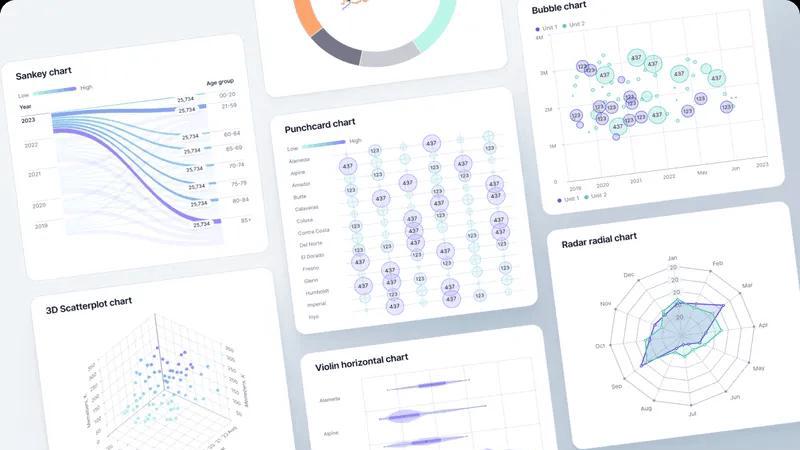
Fusedash consolidates the entire data visualization workflow into a single platform, eliminating the need to juggle multiple tools. Users can create decision-ready dashboards, interactive charts, detailed geospatial maps, and narrative reports all from the same connected dataset. This integrated approach, which combines visualization, storytelling, and real-time monitoring, significantly reduces the time spent on rebuilding and reconciling reports across different systems, allowing teams to focus on deriving and acting on insights.
AI Chart Generator
This feature accelerates the initial stages of data analysis by enabling users to generate clear, appropriate charts from CSV files or connected APIs in minutes. The AI assists in selecting the optimal chart type, applying relevant comparisons, and refining labels to ensure the visual accurately tells the data's story. These AI-generated charts can be used as standalone visuals for quick reports or seamlessly dropped into comprehensive dashboards, promoting reusability and consistency.
Consistent Metric Definitions & Governance
A foundational feature of Fusedash is the ability to define core metrics, dimensions, and KPIs in a centralized manner. Once established, these definitions are automatically applied and reused across every view, dashboard, and report built on the platform. This enforced consistency is critical for data integrity, ensuring all stakeholders across departments are analyzing and making decisions based on the same trusted numbers, thereby eliminating conflicting data stories.
Smart AI Chat for Data Exploration
Fusedash incorporates a natural language interface that allows users to interact with their data conversationally. Users can ask questions in plain language, request specific breakdowns by segment or region, and receive AI-suggested metrics and chart types. This feature lowers the barrier to entry for data exploration and can instantly turn conversational insights into shareable, persistent dashboard views, streamlining the path from question to actionable visual.
Use Cases
Customer Feedback
SaaS Product Roadmap Validation
Product managers at software companies can use the platform to validate their development priorities. By collecting feature requests and pain points directly within the application via widgets, and analyzing them with AI, they can deprioritize internally assumed "must-have" features in favor of what the data shows users actually need. This evidence-based approach minimizes wasted engineering resources and ensures new releases drive higher adoption and satisfaction.
E-commerce Checkout Conversion Optimization
E-commerce store owners can integrate the platform's display widgets to showcase product reviews and ratings directly on product pages and the checkout funnel. Displaying authentic, aggregated positive feedback at these critical decision points reduces cart abandonment. Studies, such as those cited by Baymard Institute, indicate that lack of trust is a primary cause of abandonment, which this use case directly addresses by providing transparent social proof.
Marketing & Social Proof Campaigns
Marketing teams can leverage the tool to systematically collect and showcase customer success stories. By aggregating positive reviews and transforming them into case studies, testimonials for landing pages, and social media content, marketers can build powerful, trust-based campaigns. This turns satisfied customers into brand advocates, providing credible content that is more persuasive than traditional advertising.
Customer Success & Retention Programs
Customer success teams can utilize the platform to monitor sentiment trends and identify at-risk accounts showing dissatisfaction in feedback. More proactively, they can use the announcement system to inform specific user segments about updates that address their previously voiced concerns. This targeted communication shows users they are heard, directly improving retention rates and turning critics into loyal promoters.
Fusedash
Executive & Leadership Reporting
Leadership teams require a high-level, consistent view of organizational health. Fusedash enables the creation of executive dashboards that combine real-time KPI monitoring with narrative "storytelling" sections. This provides context on what changed, why it matters, and what the next steps are, ensuring all leaders are aligned on performance and strategy without sifting through conflicting reports from different departments.
Marketing Performance Analysis
Marketing teams can use Fusedash to unify data from various channels (social media APIs, ad platforms, CRM systems) into a single dashboard. They can track campaign KPIs, use the AI chart generator for rapid analysis of A/B test results, and employ geospatial maps to visualize regional performance. The consistent definitions ensure that metrics like CAC (Customer Acquisition Cost) or ROAS (Return on Ad Spend) are calculated uniformly across all reports.
Operational & Real-Time Monitoring
Operations and support teams need live visibility into key processes. Fusedash's real-time interface allows for the creation of monitoring dashboards that track live metrics, such as website uptime, customer support ticket volume, or production line output. Teams can set alerts and drill down into specific time periods or segments to diagnose issues as they occur, moving from passive observation to proactive management.
Cross-Departmental Data Democratization
Organizations seeking to foster a data-driven culture can deploy Fusedash as a shared platform. Different teams—sales, finance, product—can build their own tailored views (dashboards, charts, reports) from the same governed dataset. The AI chat feature empowers non-analyst employees to ask their own data questions, reducing the bottleneck on data specialists and enabling faster, more widespread insight discovery.
Overview
About Customer Feedback
Customer Feedback is an all-in-one software platform engineered to transform unstructured user opinions into a strategic asset for business growth. It addresses the critical market gap where companies collect feedback but struggle to analyze and act upon it efficiently, often wasting resources on the wrong features. The tool is designed for product managers, marketers, and customer success teams at businesses of all sizes who aim to foster a data-driven culture of continuous improvement. Its core value proposition is the seamless integration of automated feedback collection, AI-powered sentiment and trend analysis, and public-facing social proof displays. By consolidating reviews from channels like Google, G2, and direct user widgets, Customer Feedback enables companies to "close more sales by letting your Customers do the Pitching for you." Research from the Harvard Business Review underscores that leveraging customer testimonials can significantly reduce perceived risk and increase conversion, a principle this tool operationalizes by displaying authentic reviews at key conversion points like checkout pages. Ultimately, it moves organizations from passively chasing feedback to proactively building trust, enhancing products, and retaining an excited customer base.
About Fusedash
Fusedash is an AI-powered data visualization and business intelligence platform engineered to eliminate data silos and reporting inconsistencies within modern organizations. It functions as a unified workspace where teams can transform raw, connected data from disparate sources into clear, interactive, and actionable insights. The platform is specifically designed for teams burdened by manual reporting cycles, conflicting data narratives, and the inefficiency of rebuilding the same analytical logic across multiple, disconnected tools like spreadsheets, standalone BI software, and presentation decks. Its core value proposition, as supported by industry research on data-driven decision-making, is the establishment of a single source of truth. By allowing users to define key metrics and KPIs once, Fusedash ensures these consistent definitions are reused across every dashboard, chart, map, and narrative report. This governance model not only accelerates report creation but also guarantees alignment across the organization—from executive leadership to marketing and operations teams. Furthermore, Fusedash integrates advanced AI capabilities, including natural language data chat and smart visualization assistance, to democratize data exploration and make sophisticated analysis accessible to non-technical users. Ultimately, it empowers organizations to move beyond passive monitoring to active understanding, enabling users to drill down into the "why" behind performance shifts and drive unified action based on trusted data.
Frequently Asked Questions
Customer Feedback FAQ
How quickly can I start displaying reviews on my website?
You can be up and running in under 5 minutes. The process involves creating an account, connecting your review sources (like Google My Business), and embedding a simple, code-free snippet on your chosen web pages (e.g., checkout, pricing). The platform handles the aggregation and display automatically, requiring no technical development work.
What makes this different from a simple review widget?
Unlike basic widgets that only display static reviews, Customer Feedback is an all-in-one system. It combines automated collection from multiple channels, AI-driven analysis to find actionable insights, and strategic display tools. The key difference is its focus on the entire lifecycle: from capturing feedback and understanding it to acting on it and closing the loop with users, thereby driving both product improvement and sales.
Is my data and my customers' data secure?
Yes, data security is a priority. The platform employs standard industry practices to protect information. For specific details on data handling, encryption, and compliance, you should refer to the product's Privacy Policy and Terms of Use, which outline the security measures and data processing agreements in place to safeguard user and business data.
Do I need a credit card to try the free plan?
No, you can start with the free trial without providing a credit card. The website explicitly states "TRY IT FREE" and "No credit card required," allowing you to explore the core features, collect feedback, and test the display widgets before committing to a paid plan. This lowers the barrier to entry for businesses to evaluate the tool's value.
Fusedash FAQ
What types of data sources can I connect to Fusedash?
Fusedash offers flexible data integration capabilities. You can start by uploading static CSV files for one-time analysis or connect directly to live data sources via API integrations. The platform is designed to combine multiple datasets—including enriching your views with public data for geographic or market context—into a single, coherent workspace for analysis and reporting.
How does Fusedash ensure data consistency across my organization?
Fusedash employs a centralized metric definition system. When you define a key performance indicator (KPI), such as "Monthly Recurring Revenue," you establish its calculation formula, data source, and filters once. This definition is then locked and reused automatically in every dashboard, chart, and report that references that KPI, ensuring absolute consistency and eliminating version control issues common in spreadsheet-based reporting.
Is the AI Chat feature suitable for users without technical or SQL knowledge?
Absolutely. The Smart AI Chat feature is specifically designed to democratize data access. Users can ask questions using natural, plain language (e.g., "What were sales in the Northwest region last quarter?" or "Show me a trend of website traffic by source"). The AI interprets the query, fetches the relevant data, and can suggest appropriate visualizations, making advanced data exploration accessible to business users without coding skills.
Can I share the dashboards and reports created in Fusedash with external stakeholders?
Yes, Fusedash includes robust sharing and collaboration functionalities. You can share interactive dashboards or snapshot reports with both internal team members and external stakeholders, such as clients or investors. Access can be controlled, and views can be customized with specific filters to ensure each audience sees the most relevant information without exposing underlying sensitive data.
Alternatives
Customer Feedback Alternatives
Customer Feedback is a comprehensive analytics and customer support tool designed to help businesses systematically gather, analyze, and act on user insights. It leverages AI to transform qualitative feedback into actionable data, enabling product-led growth and community engagement. Businesses often explore alternatives to find a solution that aligns more closely with their specific budget, desired feature set, or integration needs within their existing tech stack. Key factors prompting a search for other options include pricing structures, the depth of AI analysis required, customization limits of feedback widgets, or the need for native integrations with other critical business platforms. The decision often hinges on the scale of feedback volume and the internal resources available for managing the tool. When evaluating alternatives, prioritize solutions that offer robust data collection methods, intelligent analysis to surface genuine trends, and clear workflows for closing the feedback loop with users. Security compliance and transparent pricing models are also critical considerations for protecting customer data and ensuring a positive return on investment.
Fusedash Alternatives
Fusedash is an AI-powered business intelligence and data visualization platform. It is designed to help teams consolidate data from various sources into a unified workspace, creating consistent dashboards, charts, and reports that serve as a single source of truth for organizational decision-making. Users may explore alternatives to Fusedash for several common reasons. These include budget constraints and specific pricing model needs, the requirement for specialized features or deeper integrations with an existing tech stack, and differing preferences for user interface complexity or scalability for larger enterprise deployments. The search often stems from a need to find the optimal balance of power, accessibility, and cost for a team's unique data maturity and workflow. When evaluating alternatives, key considerations should include the platform's core data modeling capabilities, ensuring metric definitions remain consistent across reports. Assess the ease of use for both analysts building views and business users consuming insights, and verify robust data security and governance features. Finally, consider the total cost of ownership, including implementation effort and the platform's ability to scale with your data volume and team growth.