
AssiPilot vs claude ide
Side-by-side comparison to help you choose the right product.

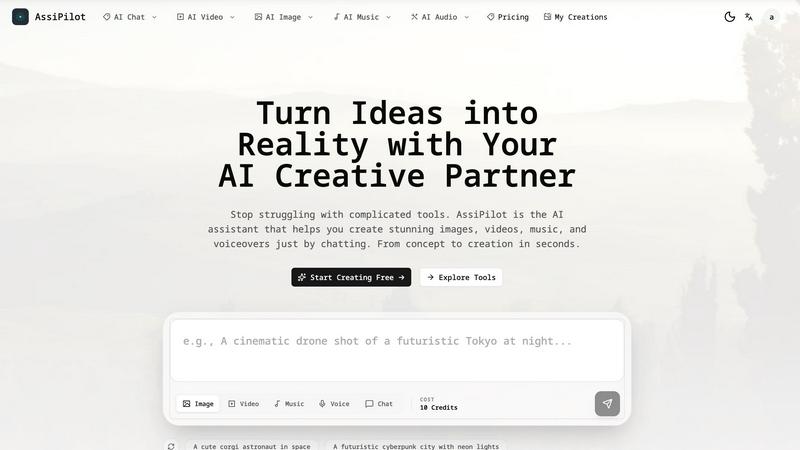
AssiPilot is an all-in-one AI platform that transforms your ideas into images, videos, music, and voiceovers through simple conversation.
Last updated: March 11, 2026

claude ide
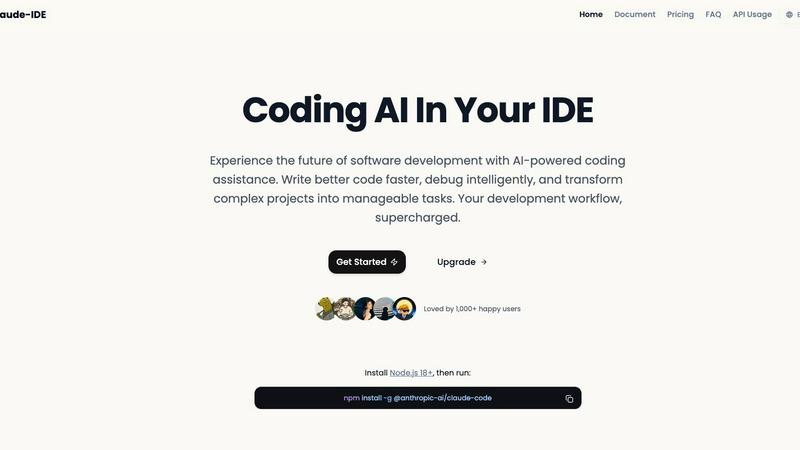
Claude IDE embeds powerful AI coding assistance directly in your terminal and VS Code for streamlined development.
Last updated: February 28, 2026
Visual Comparison
AssiPilot
claude ide
Feature Comparison
AssiPilot
Unified Multi-Modal AI Studio
AssiPilot integrates over 50 state-of-the-art AI models into one browser-based interface, eliminating the need for multiple subscriptions. The platform intelligently routes user requests to specialized engines like Flux for images, Kling for video, and ElevenLabs for voice, ensuring users always have access to the best-in-class technology for each creative modality without needing to manage separate accounts or workflows.
Conversational Prompt Interface
The platform features a built-in AI chat assistant that guides the creative process. Users can describe their vision in simple, conversational language (e.g., "I need a video for my travel vlog"), and AssiPilot helps refine the idea and translate it into detailed, effective prompts. This smart prompting system lowers the barrier to entry, making professional-grade results accessible to non-experts.
Seamless Asset Integration & Iteration
Created assets are not siloed. Users can seamlessly move outputs between tools, such as using a generated image as an input for a video or adding a synthesized voiceover to a music track. The platform also supports rapid, conversational refinement—users can simply ask for changes like "make it brighter" or "slower pace" to iterate towards the perfect final asset.
Commercial Rights & High-Definition Export
AssiPilot grants users 100% commercial ownership of all generated content, enabling use in client work, monetized YouTube channels, and advertising campaigns. All assets can be exported in professional-quality formats, including 1080p/4K video and high-resolution images suitable for both digital and print media, with automatic cloud storage for all creations.
About claude ide
Intelligent Whole-Codebase Understanding
Claude IDE's most significant feature is its ability to comprehend an entire project's architecture, dependencies, and inter-file relationships. Unlike basic code completion tools that analyze single files, Claude IDE ingests the full context of a codebase. This allows it to make accurate, coordinated suggestions and execute edits across multiple files while maintaining consistency and functionality. This deep understanding is powered by Anthropic's Claude Opus model, enabling the assistant to grasp project purpose and structure without manual context file selection, as demonstrated in its ability to analyze and explain complex projects like Excalidraw within seconds.
Seamless Terminal and IDE Integration
The tool is designed for zero friction, operating directly within a developer's primary environments. It can be installed globally via npm (npm install -g @anthropic-ai/claude-code) and invoked from the command line, and it offers deep plugins for VS Code and JetBrains IDEs. This integration philosophy eliminates the disruptive need to switch between a coding window and a separate AI chat interface, keeping the developer in a state of flow. All interactions, from code generation to executing complex edits, happen within the terminal or IDE sidebar, enhancing productivity.
End-to-End Development Workflow Management
Claude IDE extends beyond simple code generation to manage complete software development tasks. It integrates with version control platforms like GitHub and GitLab, enabling a streamlined workflow from issue reading to code submission. Developers can instruct Claude IDE to read an issue, write the corresponding code, execute tests, and even prepare and submit a Pull Request (PR), all through conversational commands in the terminal. This turns the AI into a proactive partner in the development cycle.
Powerful Multi-File Editing Capability
Leveraging its whole-codebase understanding, Claude IDE can execute sophisticated refactoring and feature implementation tasks that span numerous files. It ensures that changes made in one part of the codebase are correctly reflected in all dependent modules, maintaining architectural integrity. This capability is crucial for large-scale code modifications, dependency updates, or implementing new features that touch multiple components, reducing the risk of human error and saving considerable manual effort.
Use Cases
AssiPilot
Rapid Prototyping for Indie Products
Indie hackers and startup founders can use AssiPilot to quickly generate logo concepts, app interface mockups, and product demo videos. This allows for fast validation of ideas and the creation of compelling pitch materials without the need for expensive design agencies or lengthy production timelines, significantly reducing time-to-market.
Dynamic Content for Social Media Marketers
Digital marketers and social media managers can leverage the platform to produce a high volume of A/B testable ad creatives, engaging short-form videos, and branded graphics. The ability to quickly generate variations in style, tone, and format enables data-driven optimization of campaigns and consistent content output.
Production for Content Creators
Video bloggers, educators, and influencers can streamline their production pipeline by generating custom background music, creating B-roll or intro sequences from text prompts, and producing clear voiceovers in multiple languages. This consolidates post-production tasks into one tool, cutting down editing time and resource requirements.
Efficient Storyboarding & Pre-Visualization
Creative teams and agencies can use AssiPilot to rapidly visualize concepts and create detailed storyboards for client presentations or internal planning. Generating scene imagery, mood-setting audio, and narrative voiceovers on-demand facilitates clearer communication and alignment before committing to full-scale production.
claude ide
Rapid Codebase Familiarization and Onboarding
For developers joining a new project or reviewing unfamiliar code, Claude IDE can instantly analyze and provide a comprehensive overview of the codebase. As shown in the provided example, it can explain the project's purpose, architecture, key components, and technology stack in seconds. This dramatically reduces the learning curve and onboarding time, allowing developers to become productive contributors much faster than through manual code exploration.
From Issue Triage to Pull Request Creation
Claude IDE can manage the entire lifecycle of a feature or bug fix. A developer can present a GitHub issue to Claude IDE within the terminal. The AI can read the issue requirements, plan the implementation, write the necessary code across relevant files, run associated tests to verify functionality, and finally, craft and submit a well-documented Pull Request. This creates a highly efficient, single-threaded workflow for task completion.
Complex Refactoring and Code Maintenance
When a project requires significant architectural changes, dependency upgrades, or widespread code style updates, Claude IDE is an invaluable tool. Developers can describe the refactoring goal (e.g., "Replace all uses of library X with library Y" or "Restructure the data layer into a repository pattern"), and Claude IDE will intelligently execute the changes across all affected files, ensuring the code remains functional and consistent.
Intelligent Debugging and Problem-Solving
When encountering a bug or unexpected behavior, developers can ask Claude IDE to analyze the relevant code sections, error logs, and stack traces. Using its deep context, it can hypothesize the root cause, suggest specific fixes, and even implement the corrective code. This transforms debugging from a time-consuming, solitary task into an interactive, assisted process.
Overview
About AssiPilot
AssiPilot is a comprehensive, all-in-one AI creative platform engineered to democratize high-quality content production. It consolidates multiple generative AI capabilities—including image, video, music, and voice synthesis—into a single, intuitive workflow powered by natural language prompts. This unified approach directly addresses the significant inefficiency and cost associated with managing disparate, specialized AI tools, a common pain point identified in creative workflows. The platform is strategically designed for agile creators and businesses, including indie hackers, SaaS founders, content creators, and digital marketers, who require rapid, cost-effective production of marketing visuals, demo videos, background scores, and voiceovers. Its core value proposition lies in drastically reducing the time, technical complexity, and financial investment needed to go from a conceptual idea to polished, commercially viable assets, thereby accelerating product launches and promotional campaigns.
About claude ide
Claude IDE is a sophisticated AI-powered coding assistant designed to integrate directly into a developer's existing workflow, fundamentally enhancing the software development lifecycle. It is not a standalone Integrated Development Environment (IDE) but rather an intelligent agent that embeds itself within popular development environments like the terminal, Visual Studio Code, and JetBrains IDEs. Its core value proposition lies in leveraging Anthropic's Claude Opus model to provide deep, context-aware assistance by analyzing entire codebases, as opposed to operating on isolated code snippets. This holistic understanding enables developers to perform complex, multi-file refactoring, debug intricate issues, and rapidly familiarize themselves with new projects. According to its documentation, Claude IDE is engineered for a broad spectrum of users, from solo developers and students to professional teams, offering a cost-effective alternative to expensive proprietary tools. By minimizing context switching and operating within familiar tools, it significantly boosts productivity, allowing developers to focus on building higher-quality software with intelligent support for tasks ranging from code explanation to full feature implementation and pull request management.
Frequently Asked Questions
AssiPilot FAQ
What commercial rights do I have for content created with AssiPilot?
You retain full, 100% commercial ownership of all images, videos, music, and voiceovers you generate on the AssiPilot platform. This means you are free to use the assets for any purpose, including client projects, commercial advertising, YouTube monetization, and product branding, without owing royalties or requiring additional licenses.
How does AssiPilot ensure the quality of its AI-generated outputs?
AssiPilot aggregates and provides access to dozens of leading, cutting-edge AI models, such as Flux for images and ElevenLabs for voice. By continuously integrating top-tier technologies, the platform ensures users receive state-of-the-art results. Furthermore, the conversational prompt helper refines basic ideas into detailed instructions optimized for these models, enhancing output quality.
Can I edit or refine my creations after the initial generation?
Yes, iterative refinement is a core functionality. The chat-based interface allows for continuous editing through natural language commands. You can ask for specific adjustments like changing colors, altering the pacing of a video, adjusting the emotion of a voiceover, or generating new variations until the asset meets your exact specifications.
Is there a limit to how many assets I can create?
Asset generation operates on a credit-based system, which varies by subscription plan. Details on credit allowances, rollover policies, and the resolution of outputs are clearly outlined in the platform's pricing tiers. Users can monitor their credit usage within their account dashboard to manage their creative workflow effectively.
claude ide FAQ
What is Claude IDE and how is it different from GitHub Copilot?
Claude IDE is an AI coding assistant that integrates into terminals and IDEs, powered by Anthropic's Claude Opus model. Its key differentiator is its focus on whole-codebase understanding and end-to-end task management. While Copilot primarily offers inline code completions, Claude IDE operates conversationally and can execute complex, multi-file edits and manage full workflows from issue to PR, acting more as an autonomous coding partner than just a suggestion tool.
How do I install and start using Claude IDE?
Installation is straightforward for users with Node.js 18 or above installed. You simply run the command npm install -g @anthropic-ai/claude-code in your terminal. This installs the CLI tool globally. After installation, you can invoke it directly from your terminal or integrate it into your VS Code or JetBrains IDE using the provided extensions. Authentication with an Anthropic API key is required to begin using its features.
Does Claude IDE work with private repositories and code?
Yes, Claude IDE is designed to work with private codebases. According to Anthropic's policies, data sent via the API is not used for training their models without explicit permission. The tool operates locally within your development environment and communicates with the API to process your code context, allowing it to be used securely on proprietary and private projects.
What are the system requirements and supported platforms?
The primary requirement is having Node.js version 18 or higher installed on your system. Claude IDE itself runs as a global Node.js package. It is platform-agnostic and works on Windows, macOS, and Linux. For IDE integration, it supports Visual Studio Code and the suite of JetBrains IDEs (like IntelliJ IDEA, WebStorm, PyCharm), in addition to its core terminal/CLI interface.
Alternatives
AssiPilot Alternatives
AssiPilot is an all-in-one AI creative platform that allows users to generate images, videos, music, and voiceovers through natural language prompts. It belongs to the category of multimodal AI assistants, which aim to consolidate multiple creative workflows into a single, streamlined interface. This consolidation is its primary value proposition, designed to save time and reduce the complexity of managing separate specialized tools. Users may explore alternatives to AssiPilot for various reasons. Common considerations include specific budgetary constraints, the need for more advanced features in a particular creative domain like high-fidelity image generation or professional-grade audio editing, or a preference for a different user interface and workflow. Some may also seek tools that offer greater transparency in data usage or different subscription models. When evaluating an alternative, it's crucial to assess your core creative needs. Determine if you require a true all-in-one solution or if a collection of best-in-class, specialized tools would yield better results. Key factors to compare include output quality across different media types, the flexibility of pricing plans, integration capabilities with your existing software stack, and the overall user experience that aligns with your technical proficiency.
claude ide Alternatives
Claude IDE is an advanced AI coding assistant that falls into the category of AI-powered development tools. It integrates directly into a developer's terminal and popular integrated development environments (IDEs) like VS Code and JetBrains, providing intelligent code understanding and multi-file editing capabilities to streamline the software development process. Users often explore alternatives to such tools for a variety of reasons. Common factors include budget constraints and pricing models, the need for specific features not offered, compatibility with different operating systems or development stacks, and preferences for a different user interface or workflow integration. The rapidly evolving landscape of AI development tools also prompts developers to regularly assess the market for the most effective solution. When evaluating an alternative, key considerations should include the depth of the tool's codebase analysis, the quality and context-awareness of its suggestions, and the seamlessness of its integration into your existing development environment. It is also prudent to assess the tool's security posture, its support for your primary programming languages, and the overall value proposition relative to its cost.