CastBandit vs Storydoc
Side-by-side comparison to help you choose the right product.

CastBandit turns your podcast into an interactive AI chatbot for deeper listener engagement.
Last updated: March 1, 2026

Storydoc is an AI-native platform that automates the creation of interactive, data-driven business presentations and documents to enhance engagement.
Last updated: March 26, 2026
Visual Comparison
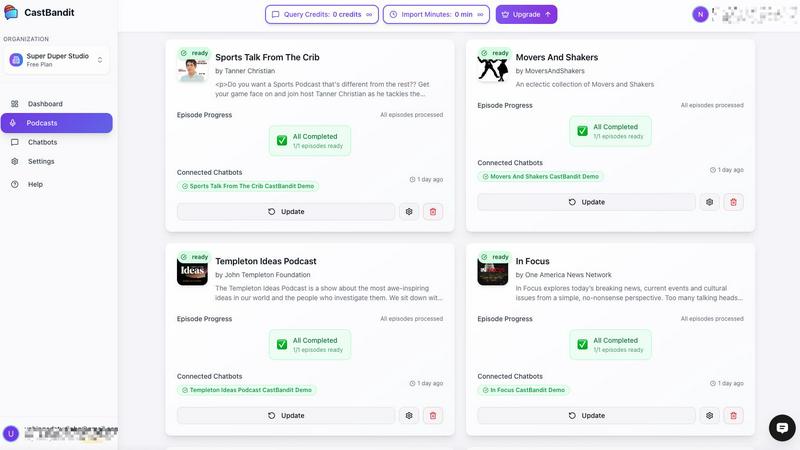
CastBandit
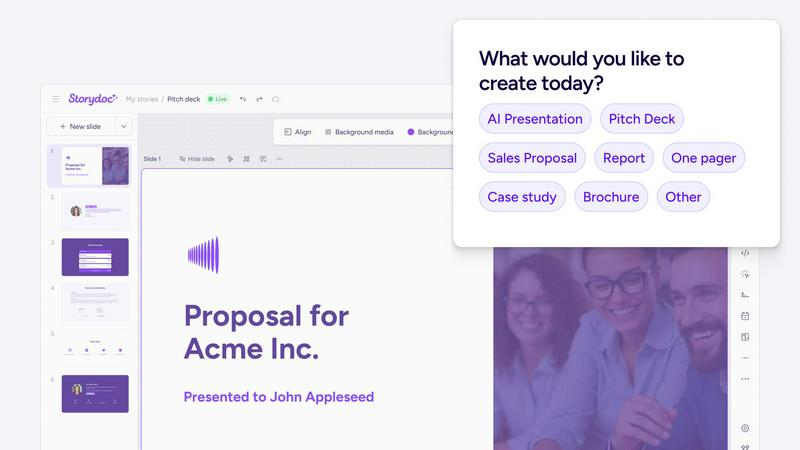
Storydoc
Feature Comparison
CastBandit
One-Click Podcast Import & Sync
The setup process is designed for simplicity and efficiency. Podcasters can initiate the entire process by pasting their show's RSS feed URL. CastBandit automatically detects and imports the entire back catalog. Furthermore, it maintains a continuous sync with the feed, ensuring that new episodes are automatically processed and integrated into the chatbot's knowledge base without requiring manual intervention, keeping the AI assistant always up-to-date.
AI-Powered Content Intelligence
This feature forms the core of CastBandit's capability. The platform employs leading-edge AI models to perform several critical tasks: high-accuracy speech-to-text transcription, generation of intelligent episode summaries, extraction of key moments and discussed entities (like people, places, or resources), and semantic indexing of the content. This deep processing allows the chatbot to understand context and intent, delivering precise, grounded answers rather than generic responses.
Customizable, Embeddable Chat Widget
CastBandit provides a flexible, white-label-ready chatbot interface that can be seamlessly integrated into any website. Users receive an embeddable code snippet to add a chat widget or sidebar to their site. The widget is mobile-responsive and works across platforms like WordPress, Squarespace, and Wix. On paid plans, creators can fully white-label the experience by removing CastBandit branding and customizing the color theme to match their podcast's identity.
Transparent Usage & Team Management
The platform offers clear, predictable monitoring tools for creators. Usage is tracked via a monthly credit system for queries and import minutes, with real-time dashboards and configurable overage protection. Additionally, CastBandit supports team collaboration through multi-user accounts with role-based permissions (e.g., Owner, Admin), allowing co-hosts or studio colleagues to manage the chatbot and view insights collaboratively.
Storydoc
AI-Powered Document Creation
Storydoc's core AI engine allows users to generate complete, professionally structured business documents in seconds. By simply inputting a topic or goal, the platform produces a beautiful first draft complete with narrative flow and visual placeholders, eliminating the need for design or copywriting expertise. This feature democratizes high-quality content creation, enabling teams to move from concept to client-ready material with unprecedented speed and consistency.
Interactive & Dynamic Elements
Documents are transformed from static pages into engaging experiences. Users can embed live components such as Calendly schedulers, YouTube videos, clickable buttons, dynamic CTAs, and data capture forms directly within the document. This interactivity guides the viewer through a narrative, reduces friction for next steps, and turns a passive review into an active conversation, directly contributing to higher conversion rates.
Personalization & Automation at Scale
Storydoc enables mass personalization through smart workflows and integrations. Using connectors via Zapier and Make, teams can pull live data from their CRM or other databases to dynamically populate fields like company name, metrics, or tailored recommendations. This allows for the scalable creation of personalized documents for every lead or deal stage without manual rebuilding, ensuring relevance and impact.
Deep Engagement Analytics
The platform provides granular insights into how documents are consumed. Creators can track every open, scroll depth, time spent on sections, and click on embedded elements. This data, as cited in internal case studies, reveals what content resonates and what gets skipped, enabling data-driven optimizations to messaging and strategy to improve performance continuously.
Use Cases
CastBandit
For Independent Podcasters
Solo creators and small teams can use CastBandit to dramatically increase the lifespan and utility of their content. By making every past episode instantly searchable, they can cater to new listeners who want to explore specific topics mentioned in recent shows, effectively turning their entire catalog into an evergreen resource. This drives deeper engagement, encourages binge-listening, and can lead to increased download metrics that are attractive to potential sponsors.
For Podcast Networks and Studios
Networks managing multiple shows can leverage CastBandit to create a unified, intelligent assistant for their entire brand or for individual shows. This allows them to offer superior audience service, enabling fans to ask questions across a library of content. It also provides network managers with aggregated insights into which topics and episodes generate the most queries, informing content strategy and cross-promotional opportunities.
For Educational and Niche Topic Shows
Podcasts focused on detailed subjects like history, science, technology, or business advice contain dense information. CastBandit allows listeners to act as researchers, asking specific questions ("What did episode 42 say about quantum computing basics?") and getting direct answers with citations. This transforms the podcast from a linear listening experience into an on-demand reference tool, adding immense value for the audience.
For Driving Community and Listener Insight
Beyond direct Q&A, the chatbot serves as a continuous feedback mechanism. By analyzing the types of questions listeners ask most frequently, podcasters gain direct, unsolicited insight into what topics resonate, what confuses the audience, and what content gaps may exist. This data is invaluable for planning future episodes, creating supplementary content, and truly understanding audience interests.
Storydoc
Sales Proposals & Pitch Decks
Sales teams use Storydoc to create interactive proposals and pitch decks that stand out. By embedding demo videos, live pricing calculators, and instant meeting booking links, they reduce follow-up friction. Engagement tracking shows which parts of the pitch capture attention, allowing reps to tailor their follow-up conversations, leading to reported increases in closed-won deals and faster sales cycles.
Marketing & Lead Generation Collateral
Marketing professionals leverage the platform for high-conversion one-pagers, case studies, and interactive reports. By turning static content into engaging assets with embedded forms for gated content or newsletter sign-ups, they capture leads directly within the document. The interactive format significantly increases reported reading time and information retention compared to traditional PDFs.
Investor & Board Reporting
Startups and enterprises utilize Storydoc to create compelling quarterly business reviews and investor updates. The ability to weave together financial charts, video messages from executives, and interactive data visualizations tells a more powerful story of performance and trajectory, making complex information accessible and engaging for key stakeholders.
Recruitment & Employer Branding
HR and recruiting teams, as demonstrated by clients like Teach For America, build interactive recruiting pitch decks and company profiles. These documents showcase culture through embedded team videos, link directly to application forms, and provide an immersive view of career opportunities, helping to attract and win over top talent in competitive markets.
Overview
About CastBandit
CastBandit is an innovative AI-powered platform designed to solve a critical challenge in the podcasting industry: content discoverability. As podcast libraries grow, valuable insights and discussions become buried in back catalogs, leading to lost listener engagement, downloads, and revenue opportunities. CastBandit directly addresses this by transforming static podcast archives into interactive, conversational AI chatbots. By simply connecting a podcast's RSS feed, the platform uses advanced speech-to-text and natural language processing (NLP) models to transcribe, summarize, and index episode content. This creates a searchable knowledge base that listeners can query in natural language, receiving instant, timestamped answers that direct them to relevant moments across the entire catalog. This functionality not only enhances audience engagement by turning passive listeners into active participants but also drives sustained value from existing content. Primarily built for podcast creators, networks, and studios, CastBandit's core value proposition lies in its ability to increase episode discovery, boost repeat visits, and unlock new monetization potential by keeping every episode perpetually relevant and accessible.
About Storydoc
Storydoc is an AI-native platform that fundamentally transforms how businesses create and share critical documents. It moves beyond static PDFs and slides by enabling the creation of interactive, data-driven presentations, pitch decks, proposals, and reports. Designed for sales, marketing, and business development professionals, its core value proposition is turning passive document reads into actionable, engaging experiences that accelerate decision-making. By centralizing creation, personalization, and analytics, Storydoc empowers teams to produce on-brand collateral 10x faster while embedding elements like calendars, videos, and forms directly into the content. This interactivity, backed by deep engagement tracking, has been shown to significantly increase meeting bookings and deal velocity. Trusted by over 400,000 users, including enterprises like Meta and Gong, Storydoc prioritizes enterprise-grade security with ISO 27001 compliance and GDPR adherence, making it a scalable solution for companies of all sizes.
Frequently Asked Questions
CastBandit FAQ
How does CastBandit ensure the accuracy of the chatbot's answers?
CastBandit employs a grounded generation approach. Instead of generating answers from a general AI model, it first uses semantic search to find the most relevant transcribed segments from your actual podcast episodes. The AI then formulates its response based strictly on this sourced content, significantly reducing hallucinations and ensuring answers are accurate and directly tied to what was said on the show.
What happens when I publish a new episode?
Once your RSS feed is connected, CastBandit operates continuously. When a new episode is detected in your feed, it is automatically queued for processing. The system transcribes, summarizes, and indexes the new content, seamlessly integrating it into your existing chatbot's knowledge base. This typically happens within hours of the episode going live, ensuring your AI assistant is always current.
Can I customize the chatbot's personality or responses?
While the core answers are derived from your content, CastBandit allows for configuration of the chatbot's behavior. You can set a custom greeting, as shown in the demo ("Hi! I'm your podcast AI assistant..."), and guide the types of interactions. Advanced control over the AI's tone and direct customization of answer generation are areas typically explored in enterprise-tier offerings.
Is my podcast data secure with CastBandit?
Data security is a priority. The processing of your audio and transcripts is handled through secure connections. You maintain ownership of your content. CastBandit's systems are designed to use your data solely for the purpose of powering your interactive chatbot and providing you with insights, not for training general-purpose AI models or sharing with third parties.
Storydoc FAQ
How does Storydoc's AI creation work?
Storydoc's AI uses advanced language models trained on business communication best practices. You provide a brief description of your document's purpose, target audience, and key points. The AI then generates a complete narrative structure with relevant sections, persuasive copy, and a visual layout optimized for engagement, serving as a professional first draft you can then customize and enhance with interactive elements.
What kind of integrations does Storydoc support?
Storydoc offers native and no-code integrations to fit into existing tech stacks. Key integrations include live data pulls from CRMs like Salesforce and HubSpot via Zapier and Make, embedded scheduling with Calendly and Google Calendar, and multimedia from YouTube and Vimeo. For security and access, it supports secure SSO (Single Sign-On) and can integrate with cloud storage platforms.
Is Storydoc secure for sensitive business data?
Yes, Storydoc is built with enterprise-grade security. It is ISO 27001 certified, demonstrating a robust international standard for information security management. It complies with GDPR for data privacy and offers secure SSO authentication. Documents and data are protected with encryption in transit and at rest, making it suitable for handling sensitive sales, financial, and client information.
Can I use Storydoc with my team for collaboration?
Absolutely. Storydoc includes powerful collaboration tools that allow teams to work seamlessly. Multiple users can edit, comment, and provide feedback on documents in real-time within a centralized workspace. This ensures content consistency, streamlines the approval process, and maintains brand control across all departments, from marketing to sales to leadership.
Alternatives
CastBandit Alternatives
CastBandit is a specialized AI tool in the podcast marketing category that transforms audio content into an interactive, queryable chatbot. This enhances content discoverability and listener engagement by allowing audiences to ask questions and get directed to specific episodes and timestamps. Users may seek alternatives for various reasons, including budget constraints, the need for different feature sets like integrated analytics or broader content support, or a preference for platforms that offer a different deployment model. Evaluating the total cost of ownership, the accuracy of the underlying AI transcription, and the level of customization for the chatbot interface are critical factors in this decision. When assessing other solutions, prioritize platforms with robust, research-backed AI models for accurate speech-to-text conversion, as this directly impacts answer quality. Security protocols for handling audio data and the flexibility to tailor the chatbot's behavior to your brand voice are also essential considerations for a professional implementation.
Storydoc Alternatives
Storydoc is an AI-powered platform in the interactive content and presentation software category. It automates the creation of dynamic business documents like proposals and pitch decks, moving beyond static files to embed interactive elements and track engagement. Users may explore alternatives for various reasons, including budget constraints, specific feature requirements like advanced design control or native CRM integrations, or a need for a platform better suited to their company's existing tech stack and workflow preferences. When evaluating alternatives, key considerations include the core functionality for document creation and automation, the level of interactivity and personalization offered, integration capabilities with essential business tools, robust analytics for tracking performance, and enterprise-grade security and compliance certifications.