BarBrain vs DemandBird
Side-by-side comparison to help you choose the right product.

BarBrain
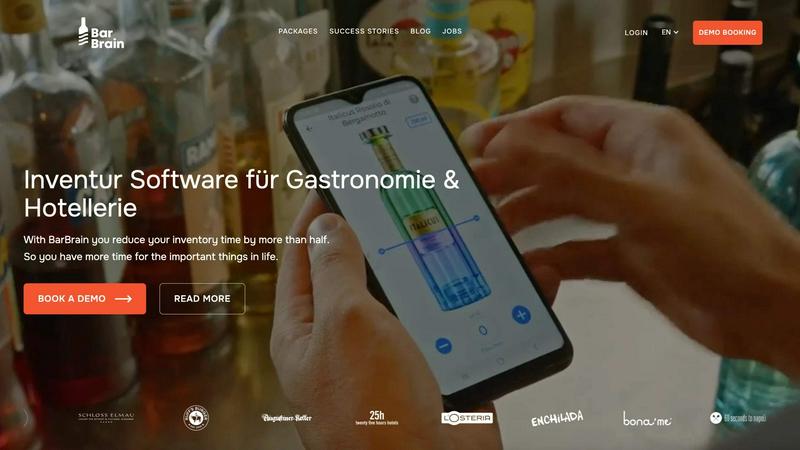
BarBrain is an inventory software that reduces counting time by over 50% for precise, data-driven restaurant and hotel management.
Last updated: April 4, 2026

DemandBird
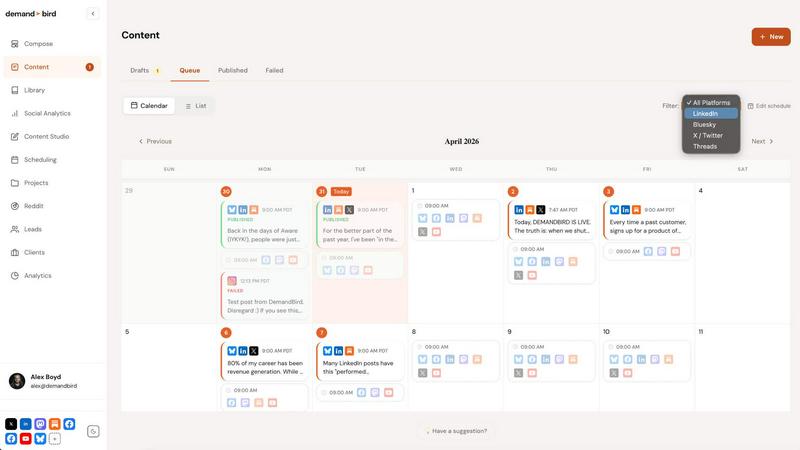
DemandBird is a social media scheduler that uses AI to adapt one post for all platforms, saving time and increasing reach.
Last updated: April 4, 2026
Visual Comparison
BarBrain
DemandBird
Feature Comparison
BarBrain
Parallel Counting on Multiple Devices
BarBrain allows teams to conduct inventory counts simultaneously on multiple iOS and Android devices. This collaborative functionality drastically accelerates the stocktaking process, enabling staff to split up and cover different sections or storage areas at the same time. The data syncs in real-time, consolidating into a single, unified count and eliminating the need to manually compile sheets from different team members, which is a common source of error and delay.
Extensive Pre-Loaded Product Catalog
The software includes a comprehensive catalog of over 30,000 hospitality-specific products, ranging from spirits, wines, and AFGs (alcohol-free goods) to food items and housekeeping supplies. This vast database allows users to quickly add items to their inventory without manually entering details, significantly speeding up the initial setup and ongoing product management. The BarBrain team also offers personalized support to help tailor the catalog to a specific business's needs.
Automatic Inventory Reporting
Upon completion of a count, BarBrain automatically generates a detailed, finalized inventory report. This feature completely eliminates the hours typically spent on post-count data entry, calculation, and reconciliation in spreadsheets. Managers instantly receive accurate data on stock levels, usage, and valuation, providing a clear financial snapshot without any manual intervention or risk of transcription errors.
Fill-Level Slider for Open Items
A critical feature for accurate F&B inventory, BarBrain includes an intuitive fill-level slider to record partial units like open bottles of liquor, wine, or food containers. With a single tap, staff can estimate the remaining quantity, moving beyond the inaccuracy of counting only full units. This granular tracking is essential for calculating true pour costs, identifying spillage, and managing perishable waste effectively.
DemandBird
AI-Powered Content Repurposing
This core feature automates the most time-consuming aspect of multi-platform publishing. Upon receiving your primary content, DemandBird's AI generates platform-specific variants. It intelligently shortens text for X/Twitter's character limits, adopts a professional tone for LinkedIn, and adjusts the narrative style for platforms like Bluesky or Substack. This ensures your core message is communicated effectively everywhere without requiring manual rewriting, maintaining consistency while respecting each network's conventions.
Smart Scheduling with Optimal Timing
DemandBird moves beyond basic calendar scheduling by incorporating intelligent timing algorithms. The system can queue posts across all connected platforms based on optimal engagement times for each specific channel. Users can set up a content drip campaign for the week, and DemandBird will automatically schedule each adapted post to publish at the time most likely to reach its intended audience, maximizing visibility and impact without manual time-slot management.
Voice Training & Personalization
To combat generic AI output, DemandBird offers a voice training capability. By analyzing your past writing samples or published content, the system learns your unique style, tone, and frequently used terminology. This ensures that every AI-adapted post, regardless of the target platform, retains your authentic voice and brand personality. The result is content that sounds like you wrote it natively for each channel, not like a robotic translation.
Unified Cross-Platform Analytics
This feature provides a consolidated dashboard for performance measurement. Instead of logging into five different platform analytics tools, users can view key metrics like engagement, reach, and clicks for all their content across LinkedIn, X, Bluesky, and others in one place. This holistic view is critical for understanding which content themes resonate on which platforms, enabling data-driven strategy adjustments and proving overall campaign ROI efficiently.
Use Cases
BarBrain
Independent Bars and Restaurants
For single-location, owner-operated venues, BarBrain transforms a chaotic, day-long monthly chore into a streamlined process. It provides the data clarity needed to control costs without requiring a dedicated inventory manager. By identifying exact pour costs and pinpointing waste, independent owners can directly improve profitability, make smarter purchasing decisions, and compete more effectively in a challenging market.
Multi-Unit Restaurant Groups
BarBrain enables centralized, consistent inventory control across multiple locations. Management can standardize counting procedures and compare performance, costs, and shrinkage between different sites from a single dashboard. This unified overview is vital for scaling operations efficiently, enforcing compliance, and identifying best practices or problem areas across the entire portfolio.
Hotels and Resorts
In the hotel sector, BarBrain supports a full-scope F&B inventory, covering everything from minibar items and banquet stock to restaurant and room service supplies. Its ability to manage inventory across various outlets (e.g., multiple bars, restaurants, and event spaces) within one property or a chain provides the comprehensive oversight needed for complex hospitality operations to maintain service standards and financial control.
Nightclubs and High-Volume Venues
For fast-paced environments like nightclubs where speed and high stock turnover are critical, BarBrain's parallel counting feature allows for rapid, accurate closes. The software helps manage large volumes of premium spirits and beverages, tracking usage in real-time to prevent shrinkage and ensure pricing aligns with actual consumption, protecting margins during peak business hours.
DemandBird
Scaling Content for Marketing Agencies
Marketing agencies managing multiple client accounts can use DemandBird to dramatically scale their content output without sacrificing quality or client-specific voice. A single campaign cornerstone, like a whitepaper or blog post, can be rapidly transformed into a full week of platform-native social content for each client. This increases service value, improves client retention through consistent visibility, and allows agencies to handle more accounts with the same creative resources.
Building a Cohesive Founder/Brand Presence
Solo founders, executives, and serious creators building a personal brand can leverage DemandBird to maintain an active, professional presence across key networks without it becoming a full-time job. By writing one substantial piece of thought leadership, they can ensure it is intelligently broken down into a LinkedIn article, a Twitter thread, a Bluesky commentary, and a Substack snippet, all scheduled to publish strategically, reinforcing their expertise consistently.
Repurposing High-Performing Content
Teams can use DemandBird's content library to resurface and remix past top-performing posts. The AI can take a successful LinkedIn post from six months ago and re-adapt it for current contexts or different platforms, extending the lifespan and ROI of proven content. This turns the library into a strategic asset, ensuring great ideas continue to deliver value long after their initial publication date.
Streamlining Enterprise Social Media Workflows
For larger organizations with dedicated social teams, DemandBird streamlines the approval and publishing pipeline. Content can be drafted, adapted for all necessary channels in one interface, and placed in a unified scheduling queue. This eliminates the chaos of managing multiple platform-specific drafts and spreadsheets, reducing errors and accelerating the time from content creation to scheduled publication.
Overview
About BarBrain
BarBrain is a specialized inventory management software engineered exclusively for the hospitality industry, including bars, restaurants, nightclubs, and hotels. It directly addresses the chronic inefficiencies of manual stocktaking, which traditionally consumes hours of labor, is prone to human error, and fails to account for the unique complexities of food and beverage (F&B) operations. Unlike generic warehouse software, BarBrain is built with an intrinsic understanding of hospitality-specific needs such as tracking partial bottles, managing recipe-based costs, and handling perishable goods. The platform enables businesses to conduct inventory counts in minutes instead of hours, providing real-time visibility into cost per drink, dish profitability, waste, and shrinkage. By digitizing and streamlining the entire inventory process, BarBrain delivers reliable, actionable data that empowers owners and managers to protect margins, optimize ordering, and make informed financial decisions. Trusted by over 1,000 establishments, its core value proposition is delivering 100% reliable numbers and reducing inventory time by more than half, freeing up critical resources for core business operations.
About DemandBird
DemandBird is a sophisticated social media scheduling platform engineered to solve the core inefficiency plaguing multi-channel content strategies: the arduous process of content adaptation. Traditional tools like Buffer or Hootsuite require users to manually create and format finished posts for each platform, a bottleneck that consumes significant time and creative energy. DemandBird redefines this workflow by acting as an intelligent content repurposing engine. Users input a core piece of content or an idea once, and DemandBird's AI automatically rewrites, restructures, and optimizes it for a diverse range of platforms including LinkedIn, X (Twitter), Bluesky, and Substack. It meticulously adjusts tone, length, and format to match each platform's unique audience and best practices, saving creators an estimated 45 minutes per post. Beyond creation, it provides smart scheduling with optimal timing, unified cross-platform analytics, and a content library for strategic reuse. Designed for marketing teams, agencies, and serious individual creators who manage a high-volume, multi-channel presence, DemandBird transforms content distribution from a fragmented, manual task into a streamlined, outcome-focused operation.
Frequently Asked Questions
BarBrain FAQ
How much time can BarBrain save on inventory?
BarBrain customers report reducing their inventory time by more than 75% on average. This significant time saving is achieved through features like parallel counting on multiple devices, a pre-loaded product catalog for quick item selection, and the automatic generation of reports, which eliminates all manual post-count data processing.
Is BarBrain suitable for tracking both food and beverage items?
Yes, BarBrain is designed as a comprehensive F&B inventory solution. Its catalog includes thousands of food products and its fill-level slider is specifically useful for tracking open or perishable food items. It provides a complete view of all consumable stock, from spirits and wine to kitchen ingredients and housekeeping supplies.
Can I use BarBrain without any technical training?
Absolutely. BarBrain is built to be intuitive and requires no formal training manuals. The interface is designed to work the way hospitality staff naturally operate. Furthermore, the company offers a personalized demo and setup assistance to ensure you can start your first digital count quickly and confidently.
How does BarBrain help improve profitability?
BarBrain improves profitability by providing precise, real-time data on your actual cost of goods sold (CoGS). It flags waste and shrinkage as it happens, allows for accurate recipe costing, and optimizes supplier orders to prevent over-purchasing. This data-driven insight stops revenue leakage and protects your margins effectively.
DemandBird FAQ
How does DemandBird's AI ensure adaptations sound like me?
DemandBird offers a "Voice Training" feature where you can feed it examples of your existing writing, such as past blog posts, social captions, or even uploaded documents. The AI analyzes your sentence structure, vocabulary, tone, and stylistic quirks to build a unique profile. When it repurposes content, it applies this learned profile, ensuring the output maintains your authentic voice while technically optimizing for each platform's requirements.
Which social media platforms does DemandBird support?
Based on the provided information, DemandBird natively supports major professional and conversational platforms including LinkedIn, X (formerly Twitter), Bluesky, and Substack. The platform is built to handle "every platform" from one interface, suggesting ongoing expansion. For the most current and comprehensive list, visiting the official DemandBird website is recommended.
Can I edit the AI-generated adaptations before they schedule?
Absolutely. DemandBird's workflow is designed for AI-assisted efficiency, not fully automated control. After the AI generates platform-specific adaptations, you are presented with each version in a clean review interface. You can fully edit, tweak, or completely rewrite any post before it is added to the scheduling queue, giving you final creative approval over all content.
How does the smart scheduling determine "optimal timing"?
While specific algorithms are proprietary, smart scheduling typically uses a combination of factors. This can include general best-practice data for each platform (e.g., B2B LinkedIn posts on weekday mornings), and it may integrate with your account's historical performance data to identify when your specific audience is most active and engaged, thereby scheduling posts to maximize potential reach and interaction.
Alternatives
BarBrain Alternatives
BarBrain is a specialized inventory management software designed specifically for the hospitality industry, falling under the productivity and management category. It addresses the unique challenges of tracking liquor, ingredients, and perishables in bars and restaurants, moving beyond generic warehouse solutions to focus on pours, recipes, and real-time cost analysis. Users may explore alternatives for several practical reasons. Common drivers include budget constraints, the need for different feature sets like integrated point-of-sale (POS) or accounting modules, or specific platform requirements such as a preference for on-premise software over cloud-based solutions. The scale of an operation, from a single venue to a large franchise, also significantly influences the search for a suitable tool. When evaluating alternatives, key considerations should include the software's core competency in hospitality inventory, its ability to calculate accurate pour costs and recipe yields, and the ease of the counting process. Scalability, real-time reporting capabilities, and the quality of customer support are also critical factors. The goal is to find a system that reduces administrative time while providing actionable data to directly improve profit margins.
DemandBird Alternatives
DemandBird is a social media management platform specializing in AI-powered content repurposing and multi-channel scheduling. It belongs to the category of advanced social media automation tools designed to streamline the creation and distribution of content across networks like LinkedIn, X/Twitter, and Substack. Businesses often evaluate such tools as part of their regular tech stack reviews. Users may explore alternatives to DemandBird for several common reasons. These can include budget constraints, the need for integration with a specific niche platform not currently supported, or a desire for a different balance between AI automation and hands-on editorial control. The feature set, particularly around analytics depth or team collaboration, can also prompt a search for other options. When assessing alternatives, key considerations should include the core capability for cross-platform content adaptation, the sophistication of the scheduling and analytics engine, and the overall value relative to pricing. It's crucial to match the tool's strengths—whether that's volume publishing, brand voice consistency, or repurposing efficiency—with your primary content marketing objectives and team workflow.