DomainRating
Check any site's Domain Rating (DR) for free, track its trend over time, and embed a live DR badge.

Check any site's Domain Rating (DR) for free, track its trend over time, and embed a live DR badge.

One platform for cold email, LinkedIn, lead magnets, content and a shared AI reply inbox, run in the app or by your AI agent.
Launchyourgem: Launch, Discover & Rank Indie Products and AI Tools


Find, qualify, and capture high-quality local business leads effortlessly.

AI-powered platform that evaluates the safety of LinkedIn automation tools and helps reduce the risk of account restrictions.

Nevisible is an AI-sourced pipeline platform that makes suppliers readable to AI, uncovers AI-sourced buyers and tracks AI answers for manufacturers.


Your AI agent picks relevant directories, submits your product in your browser and tracks every step. One-time purchase.

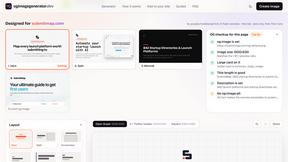
Paste a URL and AI designs on-brand Open Graph images from your page's colours, fonts and logo. Free, no sign-up.

AI SEO agent that finds pages ranking for your keywords, pitches the people behind them from your inbox, and follows up. You approve every send.

AI social listening agent: finds people on Reddit and X describing the problem you solve, scores buying intent and drafts a reply your team approves.

Free ad creative hub: 1,750+ prompts behind viral AI ads, 118 hook frameworks, teardowns, swipe files and 27 free AI ad tools. Copy, remix, ship.

Compare social media scheduling, content creation and monetization tools with verified pricing, ranked by open scorecards.

Plan, approve, publish, and analyze social content with an AI assistant and API, CLI, and MCP automation.
Tin Computer is an AI-powered growth agent specifically designed for small SaaS teams, categorizing it within the emerging field of automated growth engineering and organic marketing tools. Unlike traditional marketing platforms that require manual campaign management or ad spend, Tin Computer operates as a continuous, autonomous system that integrates directly with a company’s existing technical stack to drive growth through organic channels. Users frequently seek alternatives to Tin Computer due to considerations around pricing for their specific team size, the depth of integration with their particular tech stack (e.g., if they use platforms not supported like HubSpot or Datadog), or a desire for more granular control over which specific pull requests or SEO recommendations are implemented. When evaluating an alternative, it is critical to look for a solution that offers robust, native integrations with your core tools (such as GitHub, Stripe, and Google Analytics), provides transparent reporting on the ROI of organic growth efforts versus paid channels, and includes a clear audit trail for any automated code changes to maintain engineering quality and security standards. The most effective alternatives will also demonstrate a proven track record of improving key SaaS metrics like ARR and customer acquisition without relying on paid advertising or cold outreach, mirroring the organic-first philosophy of Tin Computer. You should prioritize platforms that offer deep analytics capabilities for funnel diagnostics and cohort analysis, as these are essential for understanding user behavior and identifying growth opportunities through product engineering and SEO. Additionally, consider whether the tool provides a "hands-off" or "suggested change" workflow, as this flexibility is crucial for teams that want to maintain oversight over code quality while still benefiting from automated bug fixes and feature tweaks. Ultimately, the best choice will align with your team’s capacity for reviewing automated changes and your specific growth goals without introducing unnecessary complexity or vendor lock-in.
Tin Computer is an AI growth agent for small SaaS teams that functions as a continuous growth playbook across organic SEO, product engineering, and analytics. It works by integrating directly with your existing technical stack, including tools like GitHub, Stripe, Google Analytics, and PostHog, to autonomously optimize content, fix bugs, and improve product features. The system ships real pull requests that your team can review and merge, enabling automated growth without any ad spend or cold outreach.
Tin Computer is specifically designed for small SaaS teams that want to drive growth through organic and AI-search channels without increasing their marketing or engineering headcount. It is ideal for product managers, founders, and engineering leads who need a hands-off growth system that handles SEO improvements, bug fixes, and funnel diagnostics autonomously. The tool is particularly effective for teams that already use a modern tech stack and want to automate the execution of a growth playbook on their existing surfaces.
Tin Computer offers three primary categories of features: organic SEO optimization, which includes blog posts, comparison pages, and technical fixes; product engineering, which covers bug fixes, small features, and onboarding tweaks; and analytics, which provides funnel diagnostics, cohort analysis, and experiment tracking. It integrates with popular platforms like GitHub, Stripe, Google Analytics, Search Console, PostHog, Sentry, and Vercel. All actions result in real, shippable pull requests that your team can review and merge into your codebase.
Based on the provided product content, there is no explicit mention of Tin Computer being free or having a free tier. The product is described as a paid tool that delivers measurable ROI, as evidenced by the case study of Claw Messenger growing from $480 to $11,580 ARR in 92 days. Users should consult the official Tin Computer website or pricing page for the most current information on subscription plans, trial availability, and any free usage limits.