
Image3D AI
Image3D AI effortlessly transforms any 2D image into precise 3D models for printing and digital applications.
Visit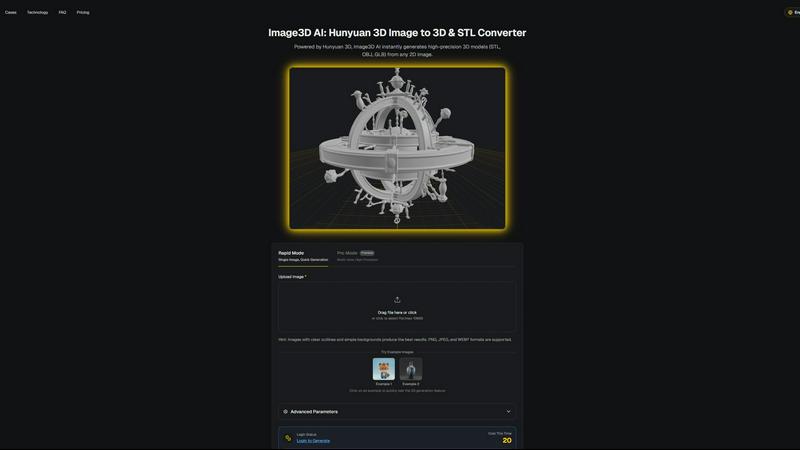
About Image3D AI
Image3D AI is an innovative software solution that revolutionizes the field of 3D modeling by harnessing the power of advanced artificial intelligence. Designed for users ranging from hobbyists to seasoned professionals, Image3D AI allows anyone to create high-fidelity 3D assets from 2D images in mere seconds. Built on Tencent's proprietary Hunyuan 3D engine, this state-of-the-art technology converts static images into production-ready 3D models, addressing a significant bottleneck in digital content creation. Traditional 3D modeling often requires hours of specialized skill and manual labor, making it inaccessible to many. Image3D AI democratizes this process, allowing users to upload single or multi-view images and receive instantly usable models. This versatile tool serves various industries, including 3D printing, gaming, e-commerce, architecture, and design, streamlining workflows and significantly reducing the time and technical barriers involved in transitioning from concept to a tangible 3D model.
Features of Image3D AI
Rapid Mode
Rapid Mode allows users to generate 3D models quickly from a single image. This feature is ideal for those needing fast results without compromising on quality, making it suitable for logos or sketches.
Pro Mode
Pro Mode takes 3D generation to the next level by enabling the use of multi-view images. This feature enhances the precision of the generated models, making it perfect for real-world objects and complex designs.
Multiple Output Formats
Image3D AI supports various output formats, including STL, OBJ, and GLB. This flexibility ensures that users can seamlessly integrate their 3D models into different applications, whether for printing, editing, or web use.
Best Practices Guide
The built-in Best Practices Guide offers users essential tips to enhance the quality of their 3D conversions. By providing guidance on image selection and generation modes, users can maximize their results effectively.
Use Cases of Image3D AI
Game Development
Game developers can leverage Image3D AI to rapidly generate 3D assets for their projects. With support for PBR materials, these assets can be imported directly into popular game engines like Unity or Unreal Engine.
E-commerce
E-commerce managers can convert product images into interactive 3D models, enhancing online shopping experiences. These models can be used for AR previews or online showcases, providing customers with a more immersive view of products.
3D Printing
For 3D printing enthusiasts, Image3D AI serves as a powerful image to STL converter. Users can generate high-precision, print-ready files that are compatible with various 3D printers, streamlining their workflow from design to production.
Architecture and Design
Architects and designers can quickly create architectural models using Image3D AI. This tool saves them time by eliminating the need to model from scratch, allowing for more focus on creativity and design enhancements.
Frequently Asked Questions
What types of images work best for 3D conversion?
Images with clear outlines and simple backgrounds yield the best results. High-contrast images are recommended, while blurry or low-light photos should be avoided to ensure accurate model generation.
How long does it take to generate a 3D model?
Using Rapid Mode, users can expect to generate a 3D model in approximately 60 seconds. This quick turnaround time allows for efficient workflow integration.
What file formats can I download my 3D models in?
Image3D AI allows users to download their models in several formats, including STL for 3D printing, OBJ for editing in 3D software, and GLB for web and AR applications.
Is there a limit to the size of images I can upload?
Yes, there is a size limit of 10MB for image uploads. It is advisable to use high-quality images within this limit to achieve optimal results.
Similar to Image3D AI

Qwen Image Edit Online for prompt-based image editing, generation, and creative production.

AI-native presentation and visual content platform that turns prompts, documents, images, videos, and data into polished, shareable decks.


StopScroll is an AI thumbnail maker that generates YouTube thumbnail concepts from a URL, title, or prompt.

HubVanta AI helps creators generate images and videos with advanced AI tools for visual content workflows.

Free online AI image and deepfake checker. Upload a photo for AI-generated and deepfake scores, a clear verdict, and optional generator hints.